Arundel: A Castle Town Frozen in Time
Arundel
Arundel: A Fairy-tale Day Trip from London

One of the most stunning castles I’ve ever visited is Arundel Castle, a medieval fortress that feels straight out of a storybook and makes for a perfect day trip from London. I went there with two good friends in June 2022, probably the best time to go, when the gardens are blooming.
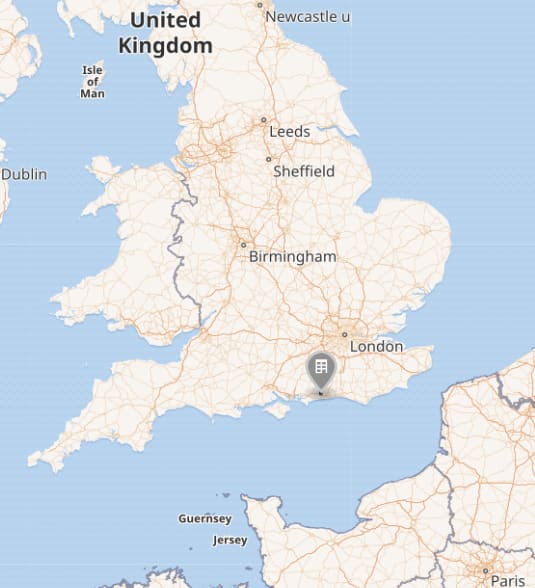
The castle sits in Arundel, a small historic market town in West Sussex, about 90 kilometres southwest of London (1 hour 40 minutes by train from Central London). The town itself is cute and atmospheric, but it is the castle that really makes the train journey work making. Founded in 1067, Arundel Castle has been beautifully restored and remains one of England’s best-preserved, still-inhabited castles, offering amazing views of the River Arun and the lush countryside beyond.
[content_table]
Getting to Arundel
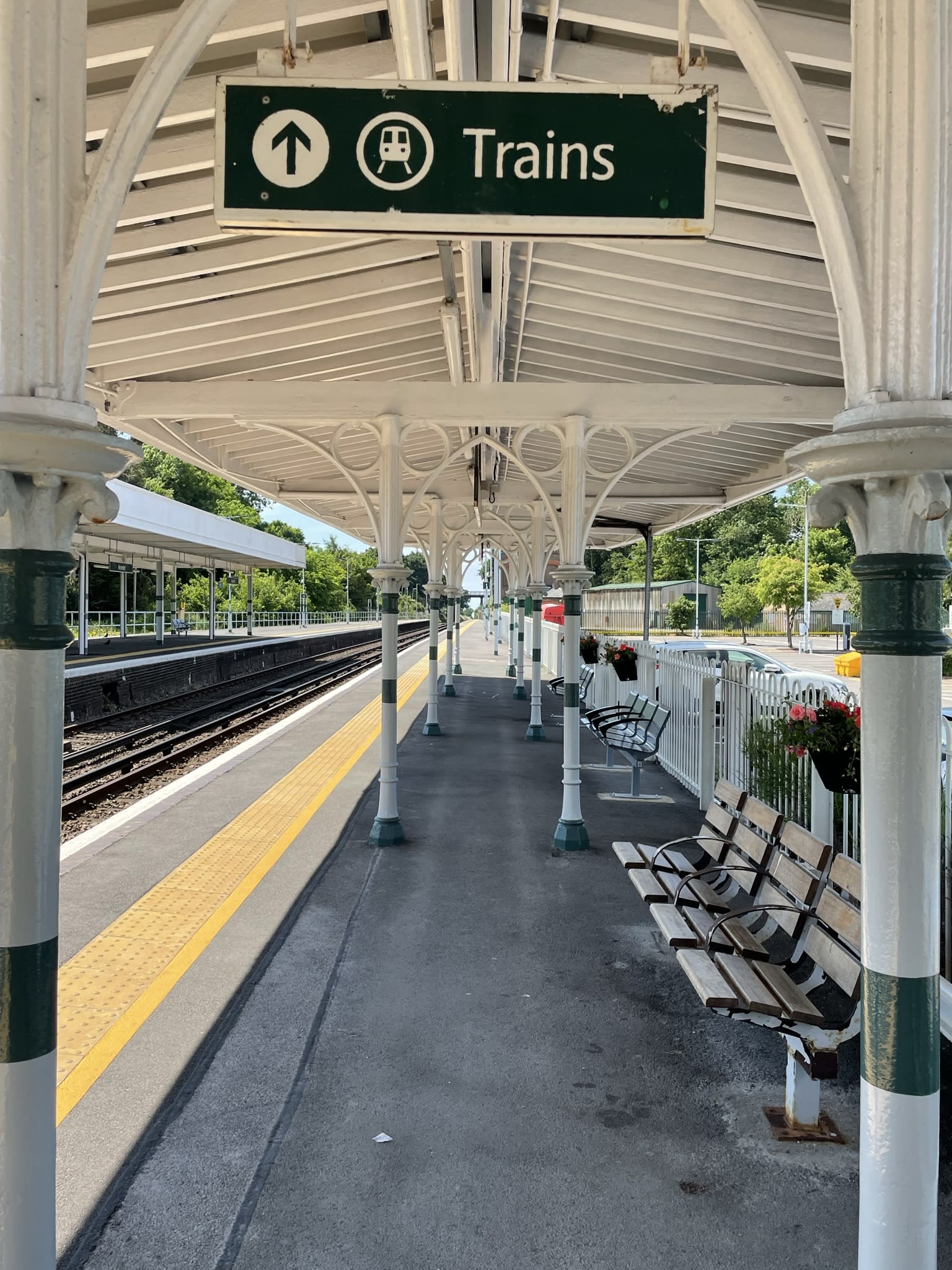
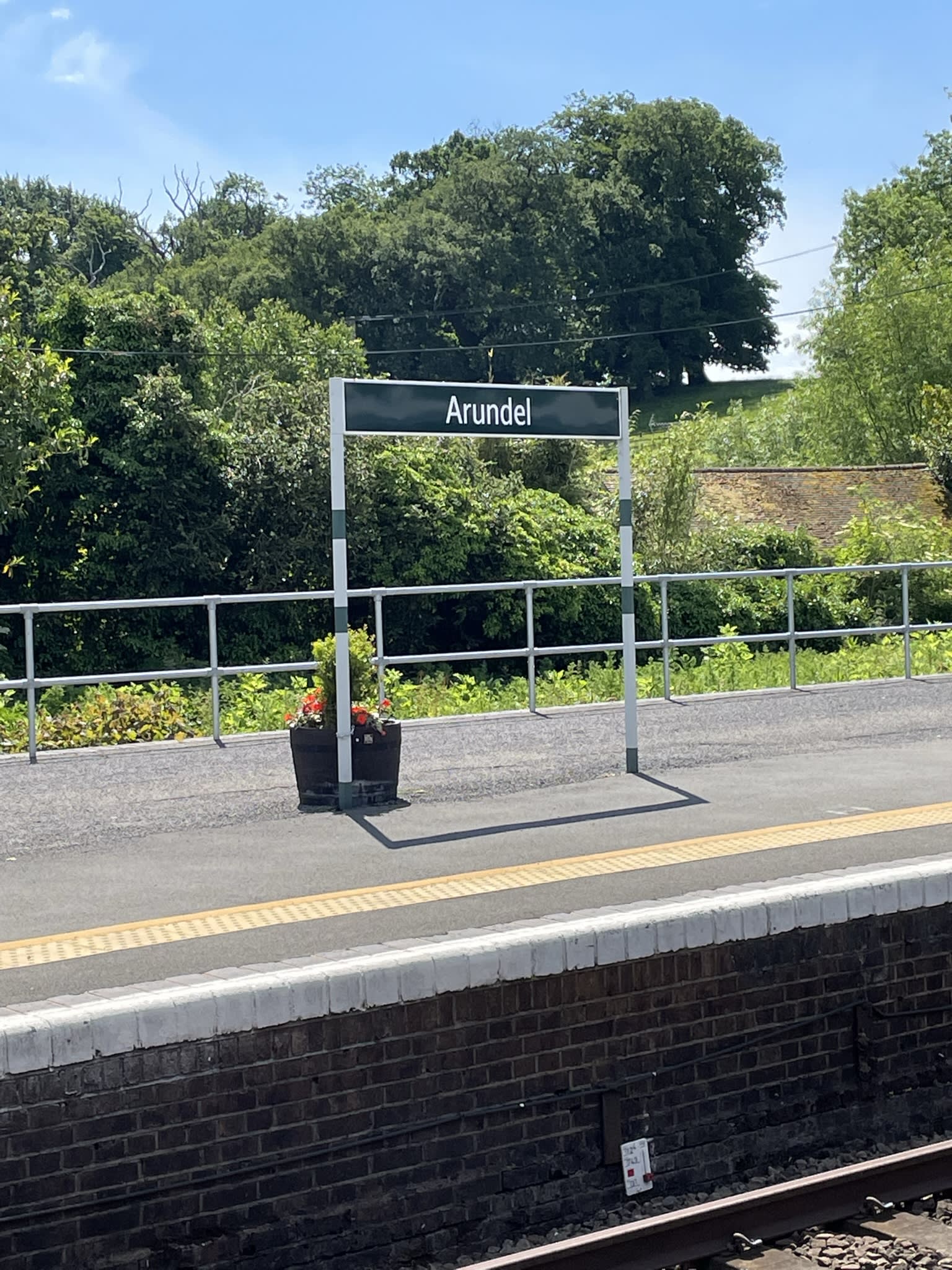
We purchased round trip tickets from London Victoria to Arundel station at £34,50 (tip: get an extra 30% discount if you qualify for a railcard). At around 11 am we were arriving at the tiny Arundel Station, and we caught a first glimpse of the monumental castle from afar.
[carousel]
[/carousel]
The castle is a short walk away from the train station, through the little town:

Intro to Arundel Castle
There are nearly 1,000 years of history at this great castle, situated in magnificent grounds overlooking the River Arun in West Sussex and built at the end of the 11th century by Roger de Montgomery, Earl of Arundel.
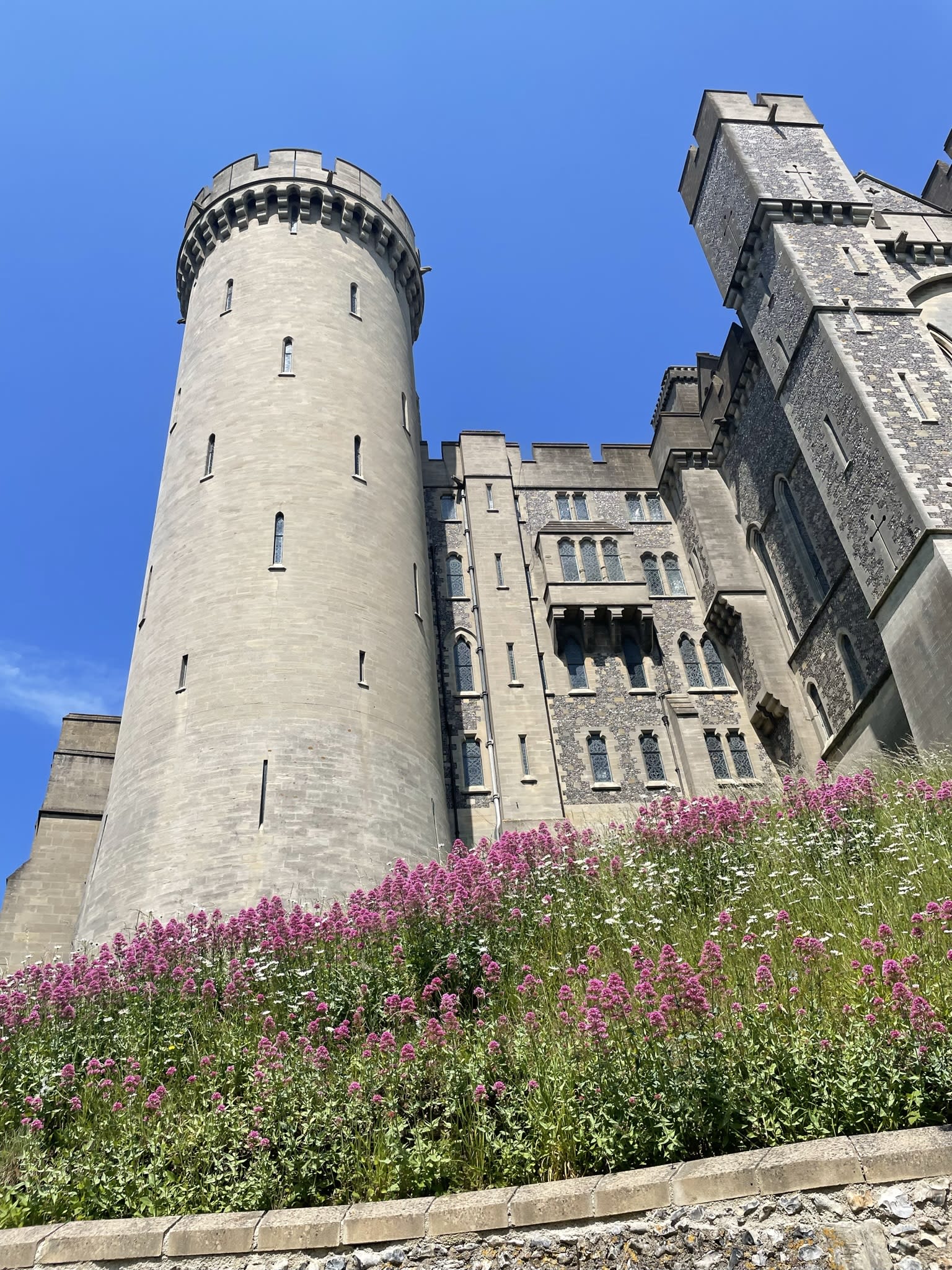
The castle evolved over time from a wooden fortress, into a stone fortress and then a grand stately home. In the 19th century, the castle was lavishly restored in Gothic Revival style by Henry, 15th Duke of Norfolk. The current structure that you can see as you approach from the train station is a romantic, fairy-tale residence, that still keeps its medieval core.
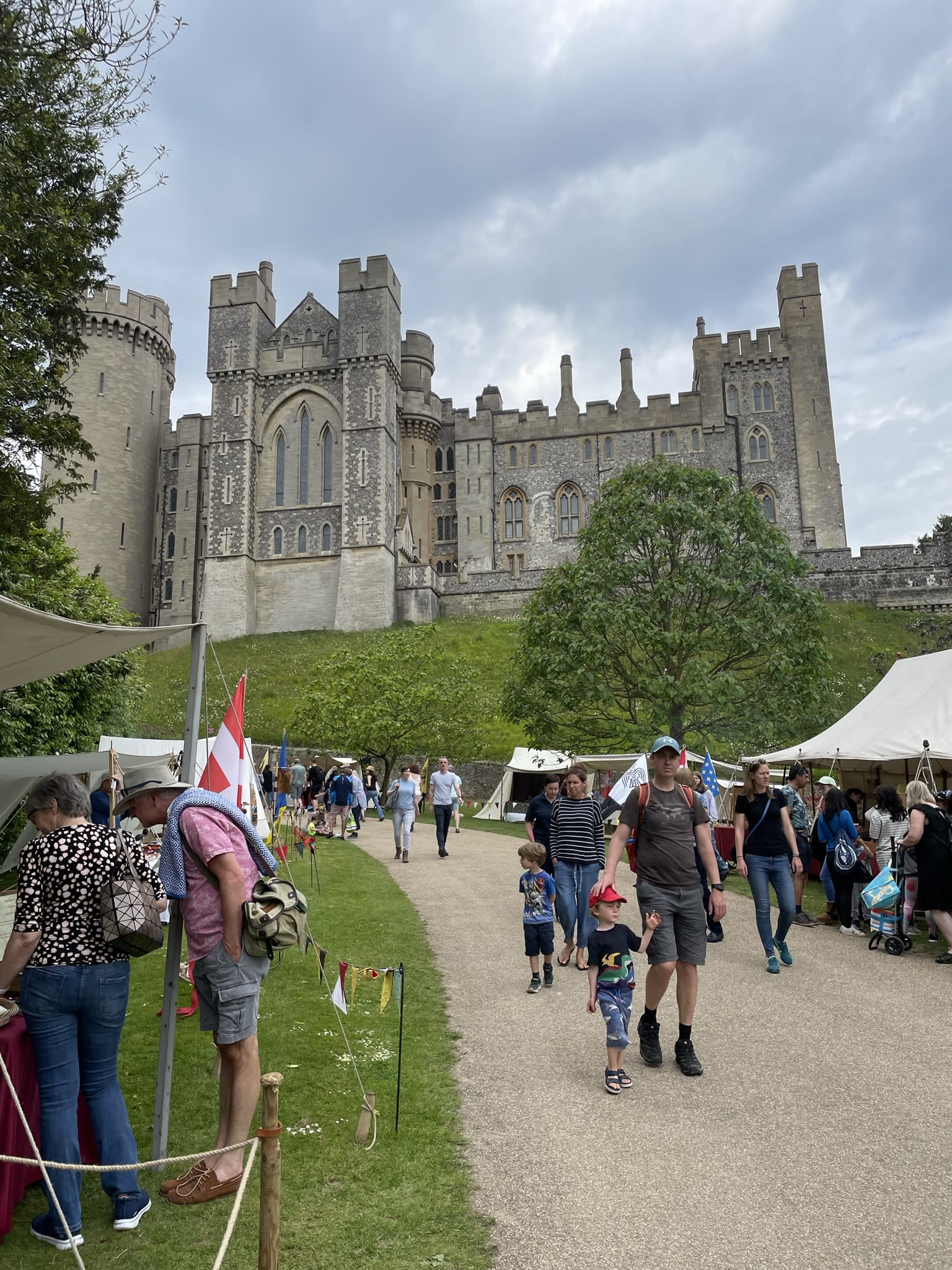
Touring the castle fortifications
The castle is HUGE, as you can gather from the following map. It recommend allowing plenty of time to visit thoroughly, we spent about 6 hours and I could’ve stayed longer.
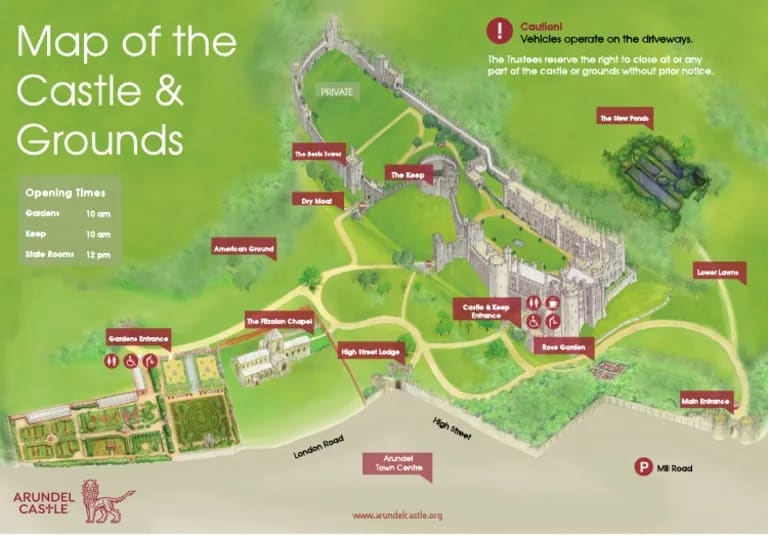
We started by touring the medieval defences: walls, towers, the Barbican and the Keep.
The Castle Keep
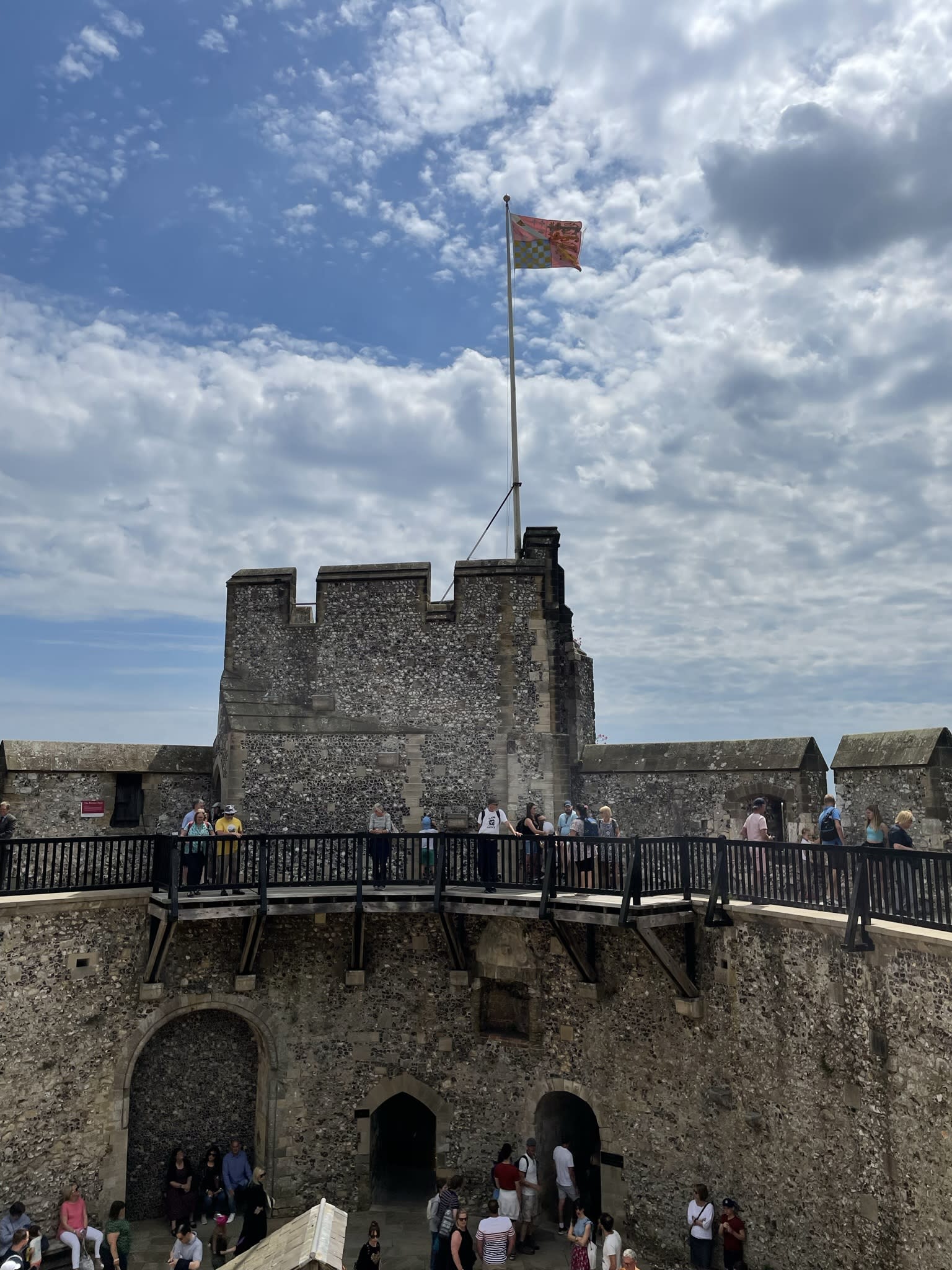
The Keep is the oldest part of the castle, dating back to the 11th century. Located in a hill, it gives a sense of the castle’s original defensive role, and from atop you get fantastic views over the town of Arundel and the River Arun.

[carousel]


 The courtyard
[/carousel]
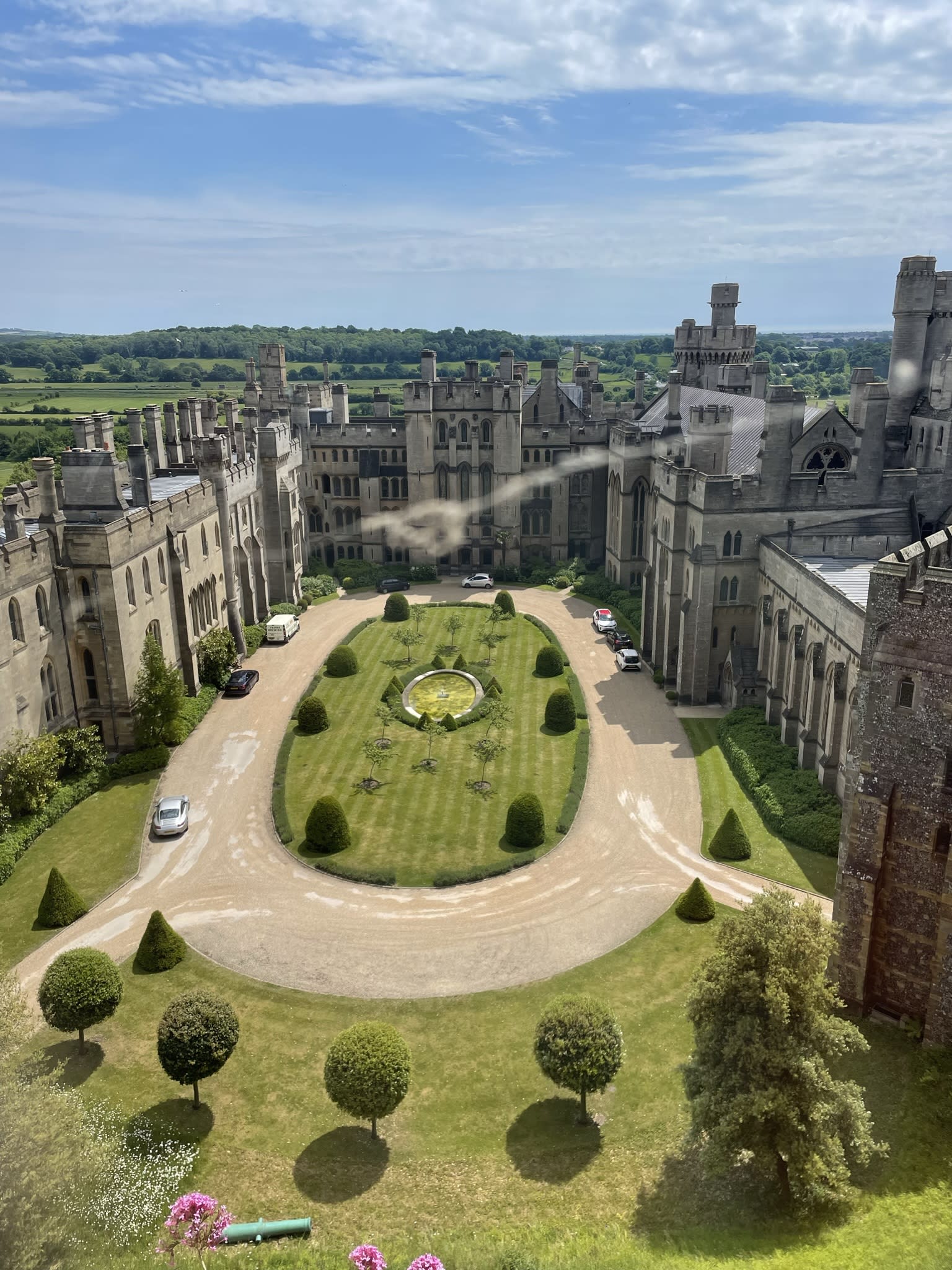 The courtyard from above
Guardroom and Battlements
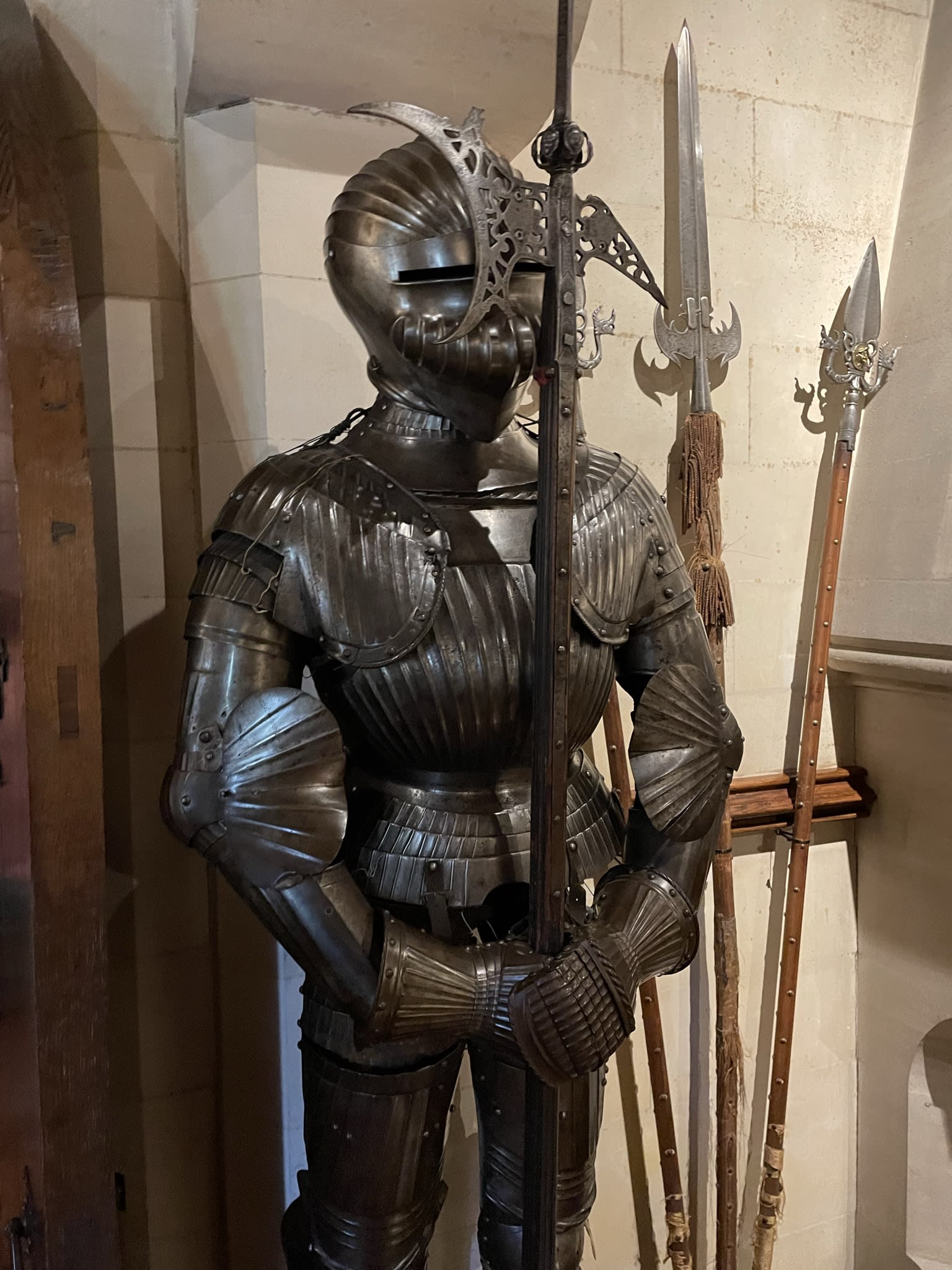
The Guardroom is part of the of the original defensive structure, and it’s where the guards would be stationed and weapons stored.
The exhibit shows armours, spears, swords, ballistas, and all sorts of medieval weaponry.


The Private Chapel
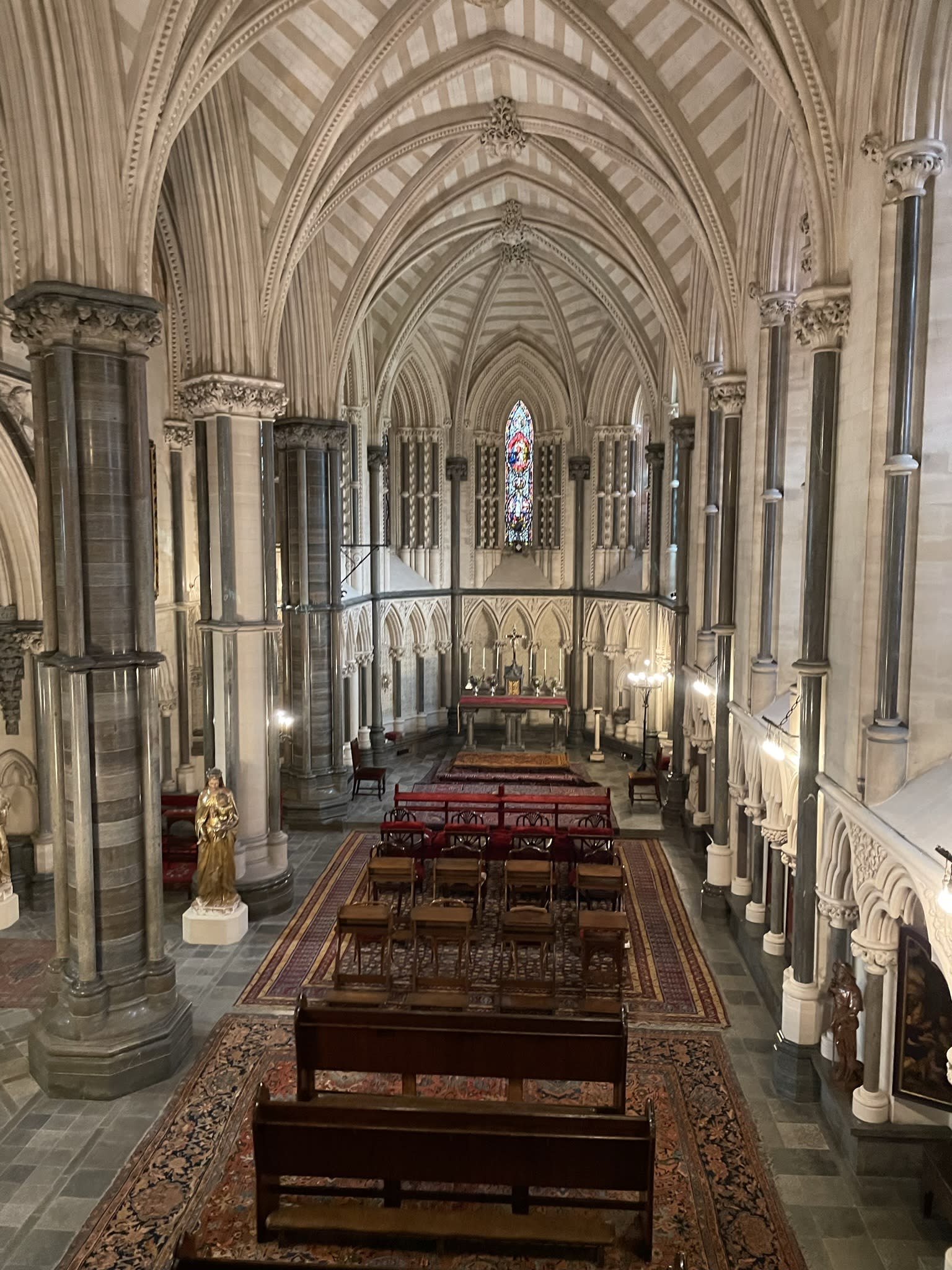
Commissioned by the 15th Duke of Norfolk, the Chapel was a clear display of the family’s strong Catholic faith. The foundation stone was laid in 1894 by the Archbishop of Southwark in a simple ceremony that carried great significance at that time.
Touring the state rooms
The Baron’s hall
The Baron’s Hall is a medieval-style grand hall, reflecting the castle’s history as a noble residence. This vast room, begun in 1893 and completed in 1898, occupies the site of the medieval hall of the FitzAlan Earls of Arundel as well as that built by the 11th Duke of Norfolk.

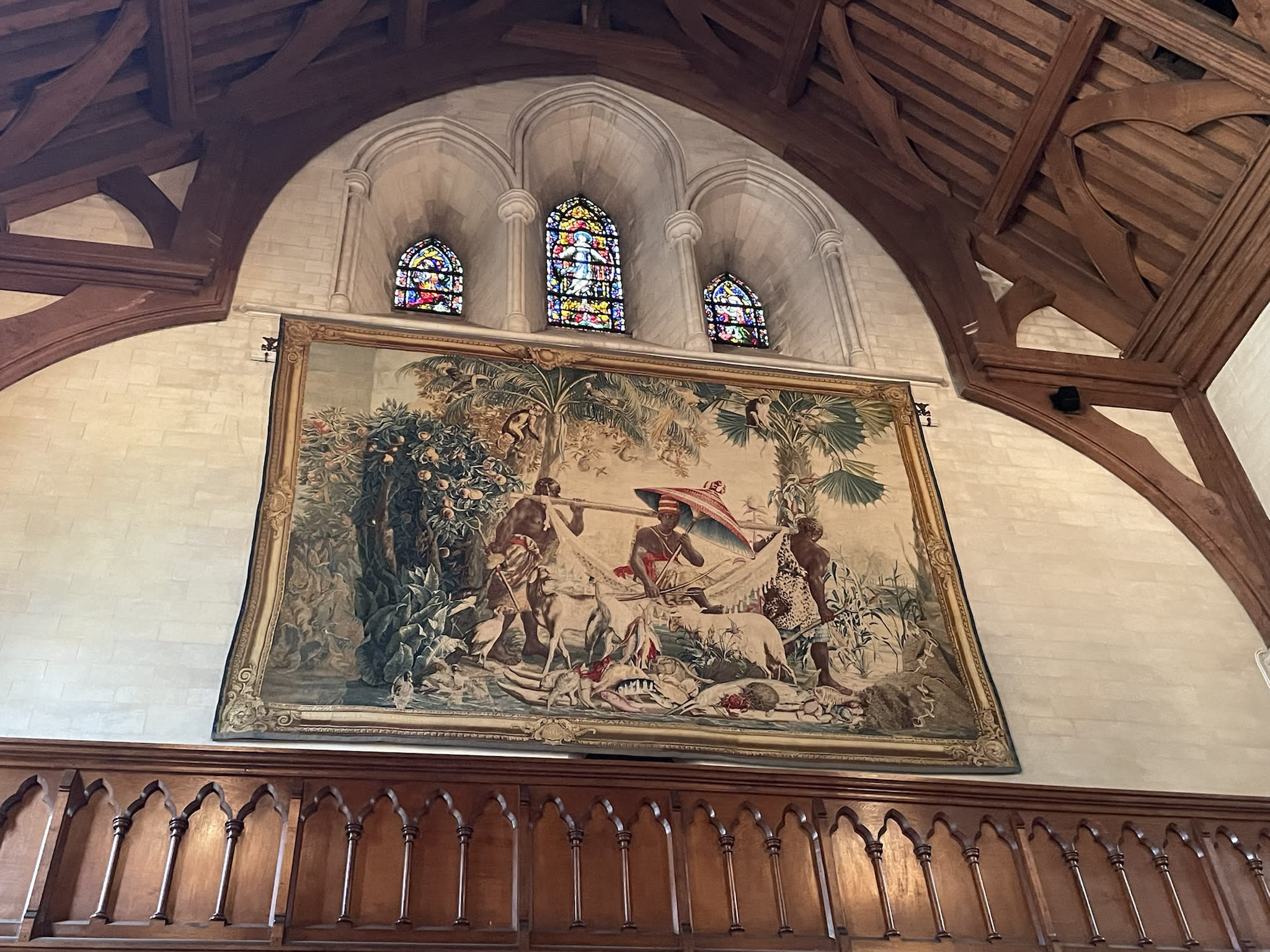 A Gobelin tapestry, 6.6 x 4.2 meters, from the “Nouvelles Indes” (“New Indies” ) series, woven at the Gobelins workshop in Paris around the 1750s. Acquired by the 9th Duke, the tapestries depict exotic scenes of nature and people from Brazil.
State Rooms
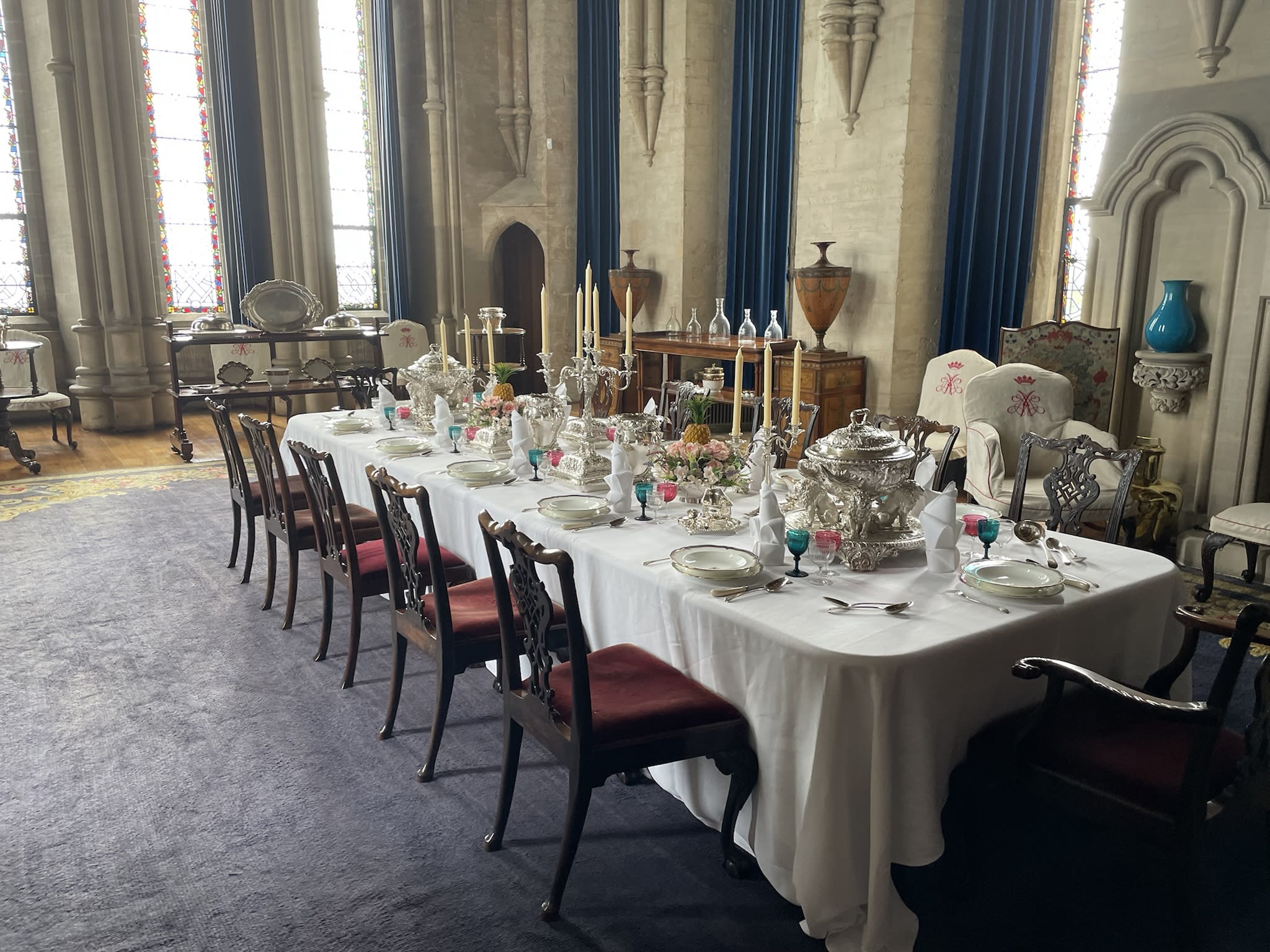
Each room is carefully preserved and gives insight into how the aristocracy lived across different eras. There’s the Drawing Room, decorated in opulent Victorian style; and the Dining Room, which showcases portraits and tapestries alongside long oak tables. Bedrooms and bathrooms are preserved as well.
 The Dining Room
 The “Small Drawing Room”, sitting within the ancient walls of Henry II’s 12th century building. By the window you can still spot a section of the original stonework, a little glimpse of the castle’s earliest history. The rest of the room was shaped by architect John Buckler, with a low oak panelled ceiling that gives it a warm and welcoming feel.
 Coats of Arms details in the Drawing Room

 Queen Victoria, standing holding an orb and the scepter. I image-searched for matches, and I found that there are several of these around the world. This one auctioned in 2022 for 13000 GBP. Apparently these models are based on a commission for the queen’s Golden Jubilee.
The Library
My favourite room in the whole castle was perhaps the library. Set across two levels, it’s framed by intricate Gothic detailing, decorative ironwork, and towering bookcases.
 This is a picture from the web, because I did not manage to get a shot of the entire place.
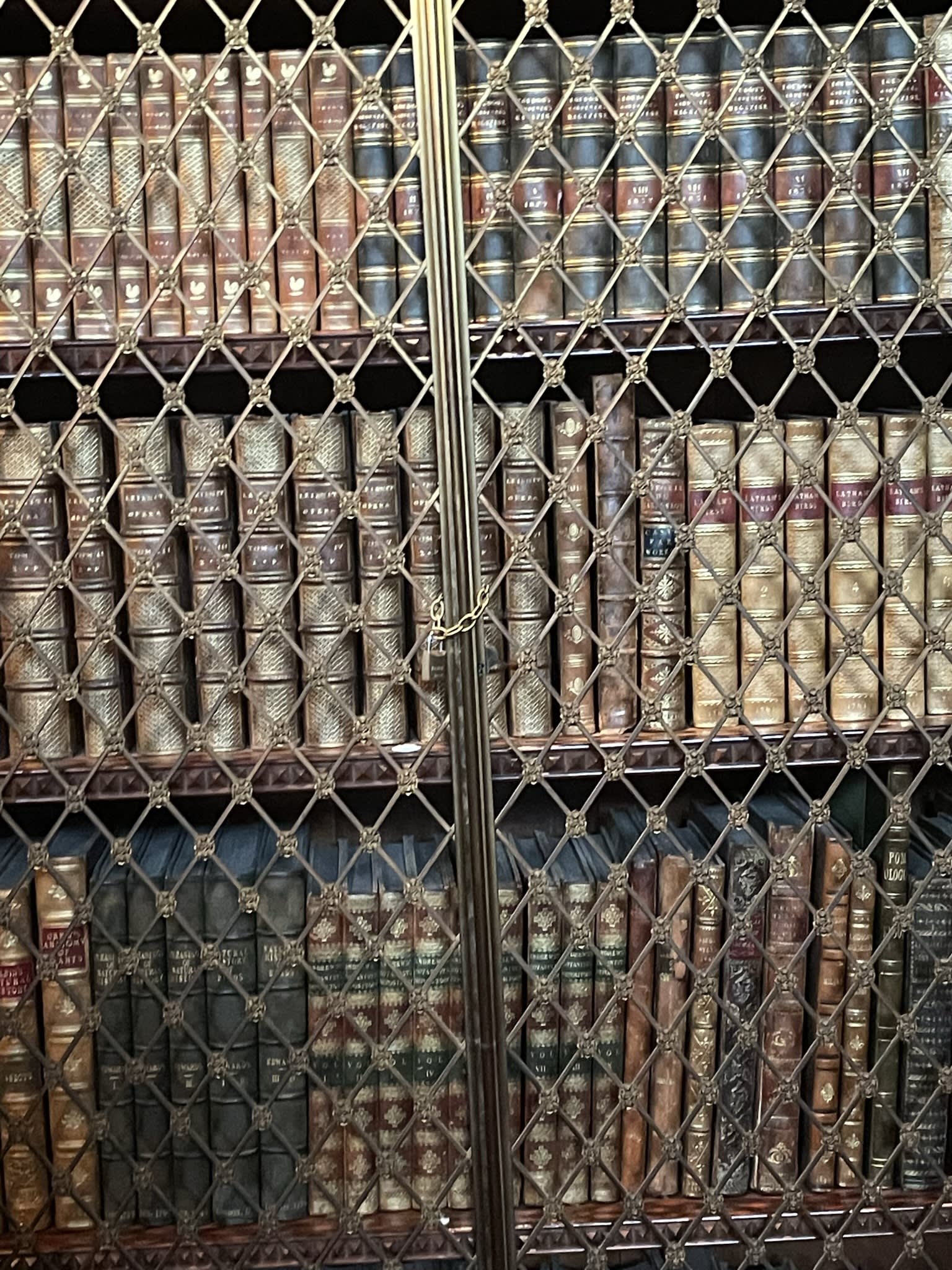 I can’t help thinking of the restricted section at Hogwarts Library
The grand staircase
Cathedral like arches, soaring windows and intricate stonework make the Grand Staircase a true Gothic Revival masterpiece. With towering tapestries and family portraits, you are tempted to stop and take pictures at every step. In fact, we did!
 Picture from the official website. Notice the New Indies tapestries.
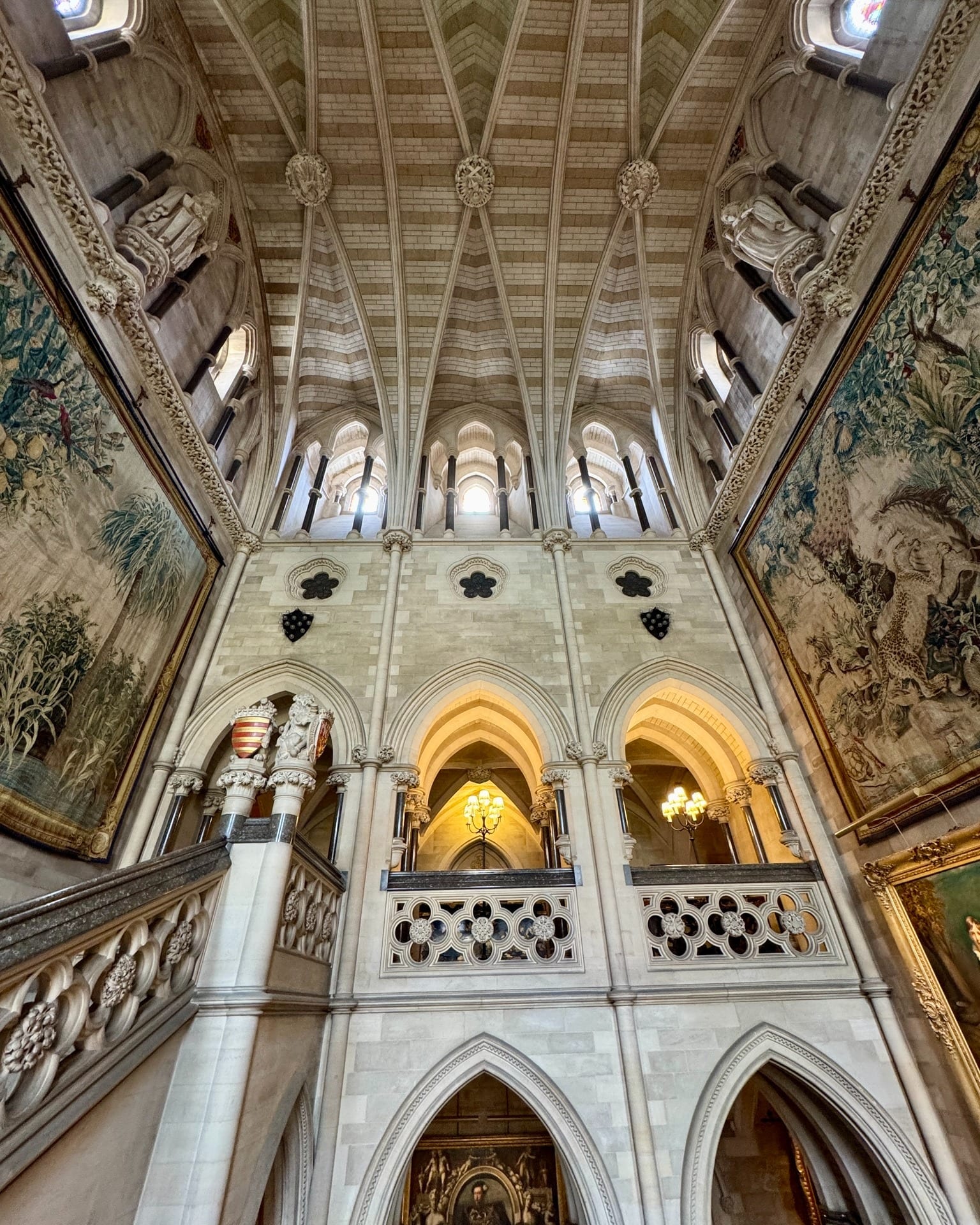 Picture from the official website!
The castle grounds are massive, and there are a bunch of attractions scheduled at different times. You can get to see medieval fighting, falconry, take archery lessons, etc etc.
Medieval Fight Time!
We were definitely not prepared for the tremendous show that the locals put up. Over 60 people fully dressed in very realistic medieval costumes, wielding swords shields and bows, performed all sorts of fight stunts. They looked very real, I bet they were really trying to win.
A guy dressed as a herald of sorts guided the proceedings. First, a group of Norman Soldiers fully armoured and wielding shields and swords had to resist wave after wave of projectiles thrown at them, while advancing towards the townsfolk shooting them. It was very realistic, they were firing at about 40 meters first, really far away.
[carousel]
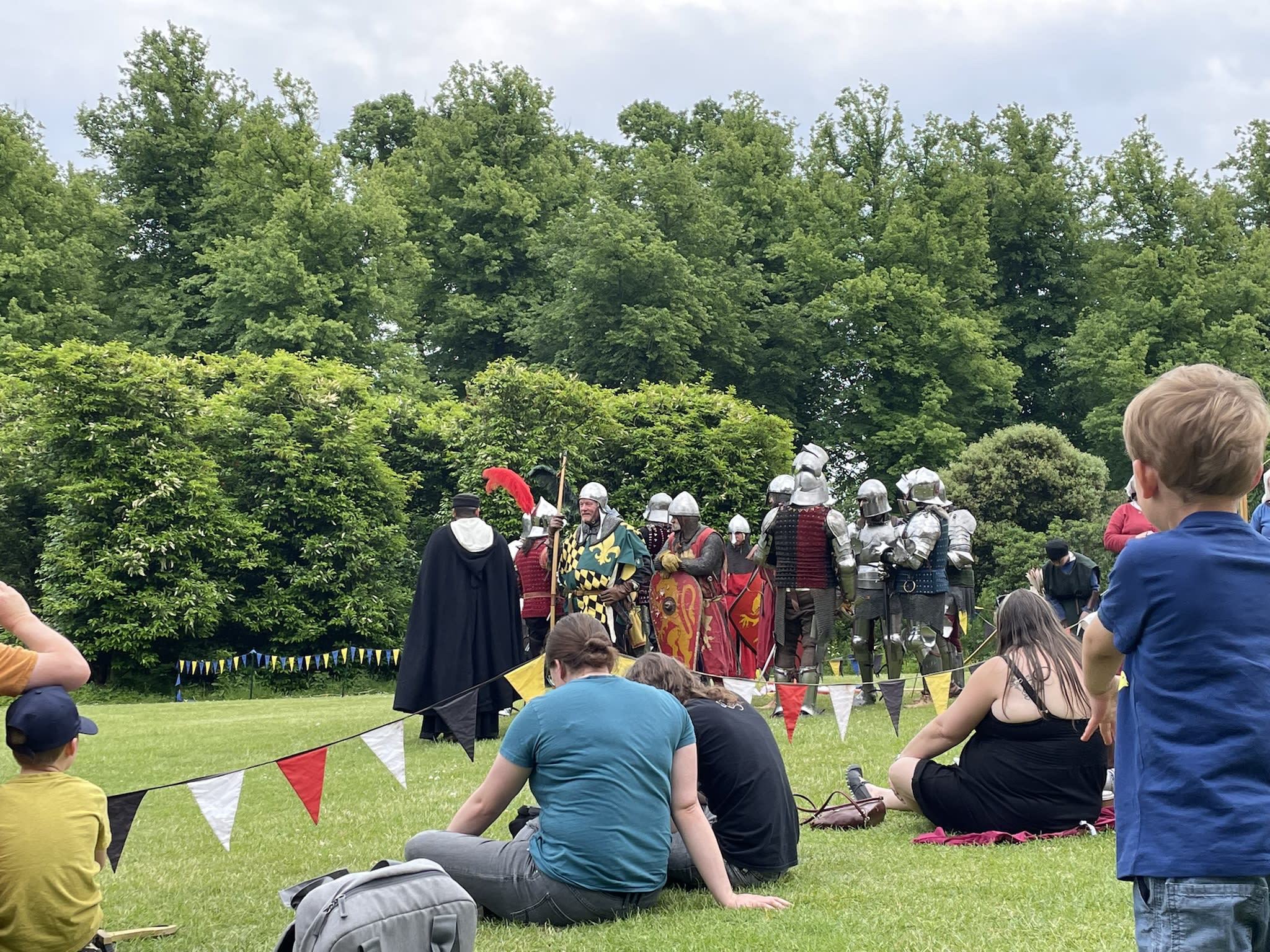 The soldier’s team
 The townsfolk
 Shotting at the soldiers
[/carousel]
The shooting was followed by an all-out fight with capture the flag premise. Super fun, and I can tell these guys were really trying to hit one another! It was hilarious, skirmishes all over the place. Apparently this is a regular attraction because it’s featured in the castle’s website:

Gardens
The gardens were huge, meticulously maintained and blooming! I’ve been to few castle grounds more beautiful than these. Infinite photo spots, flower fields, fountains, you name it.



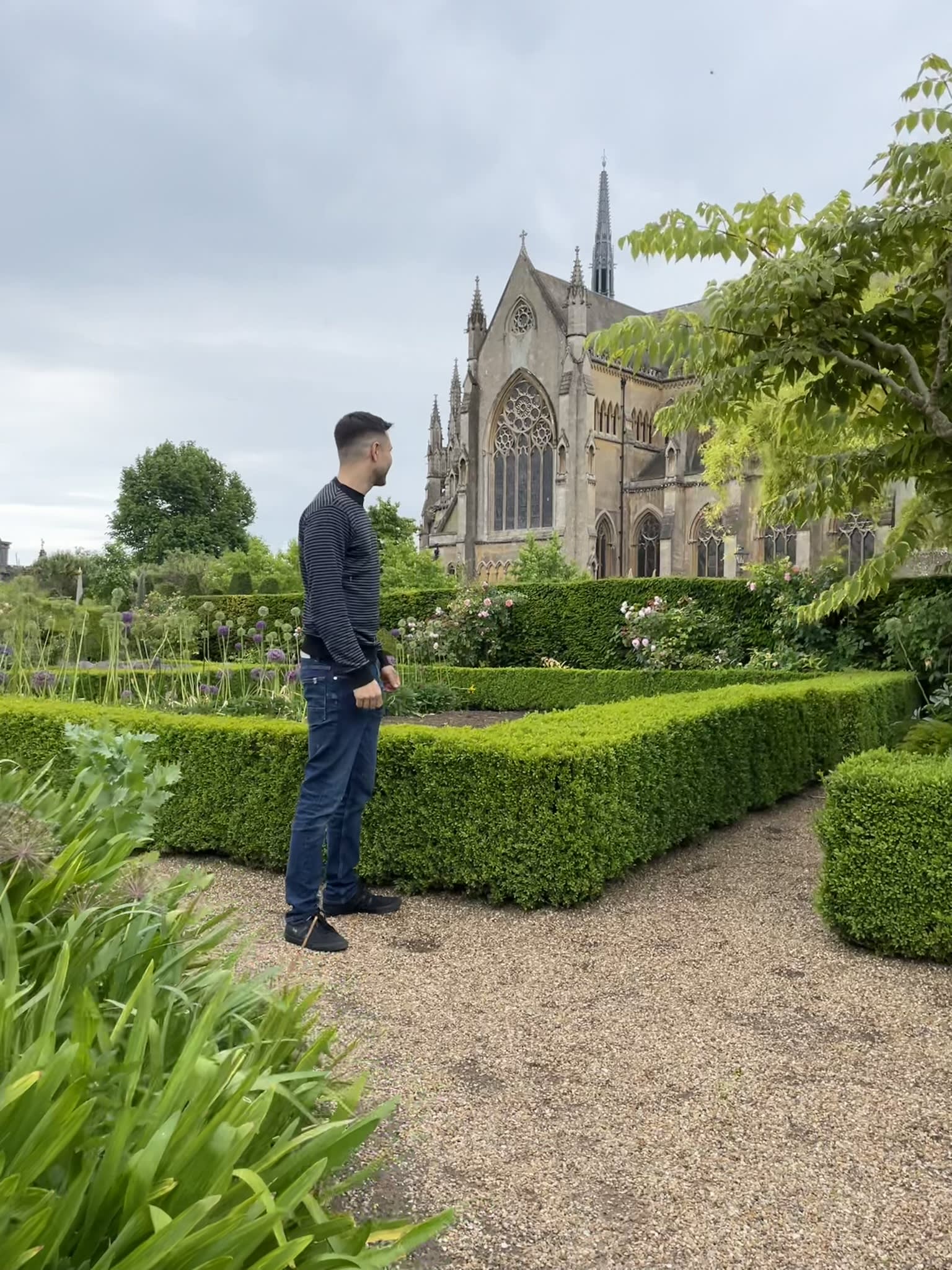
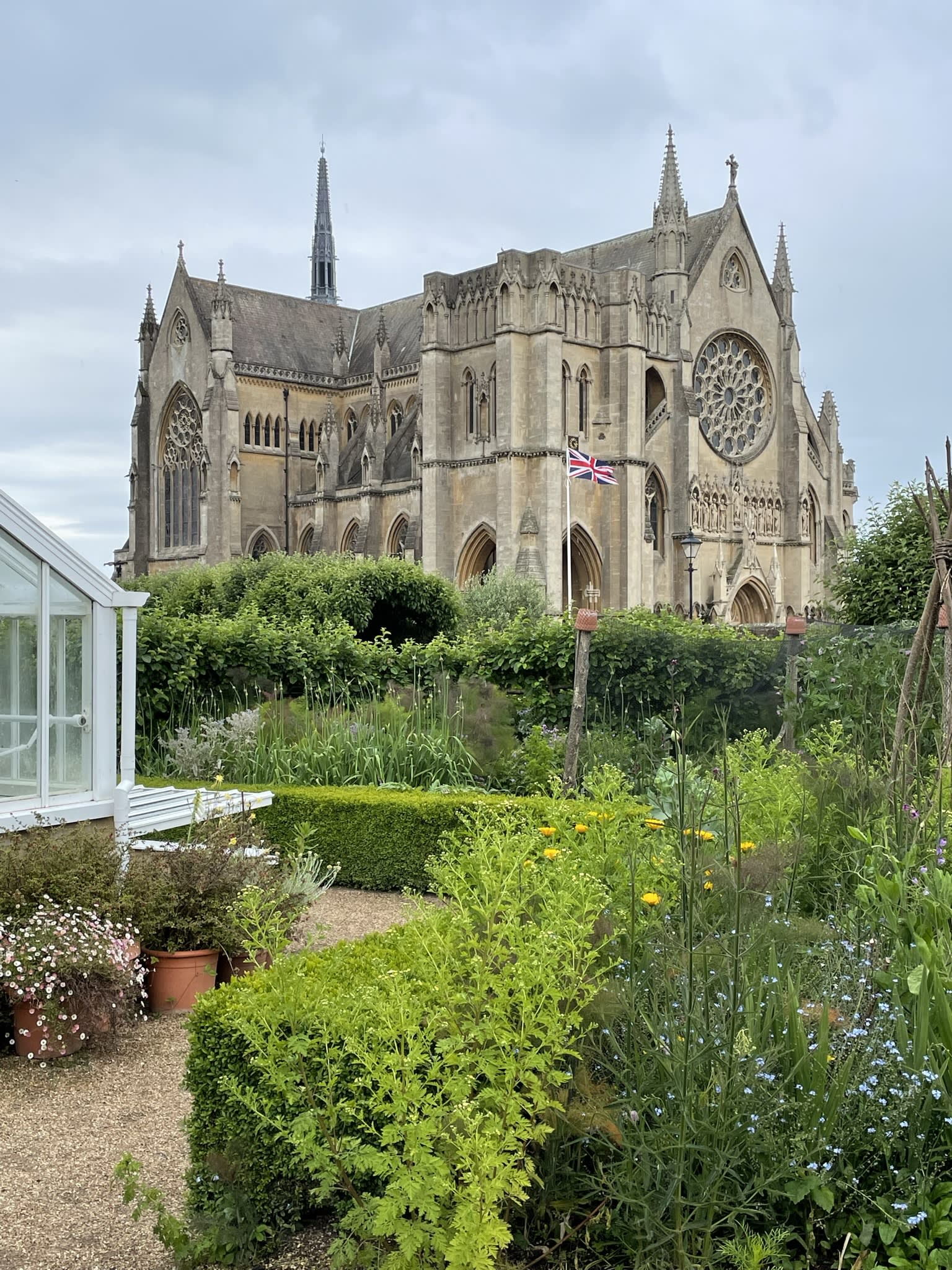

From the website:
“The gardens provide one of the most stunning Spring displays in the country including Arundel Castle’s famous Tulip Festival. The garden team have planted over 1.4 million bulbs over the past 12 years, includes narcissus, tulips, alliums and camassias.”
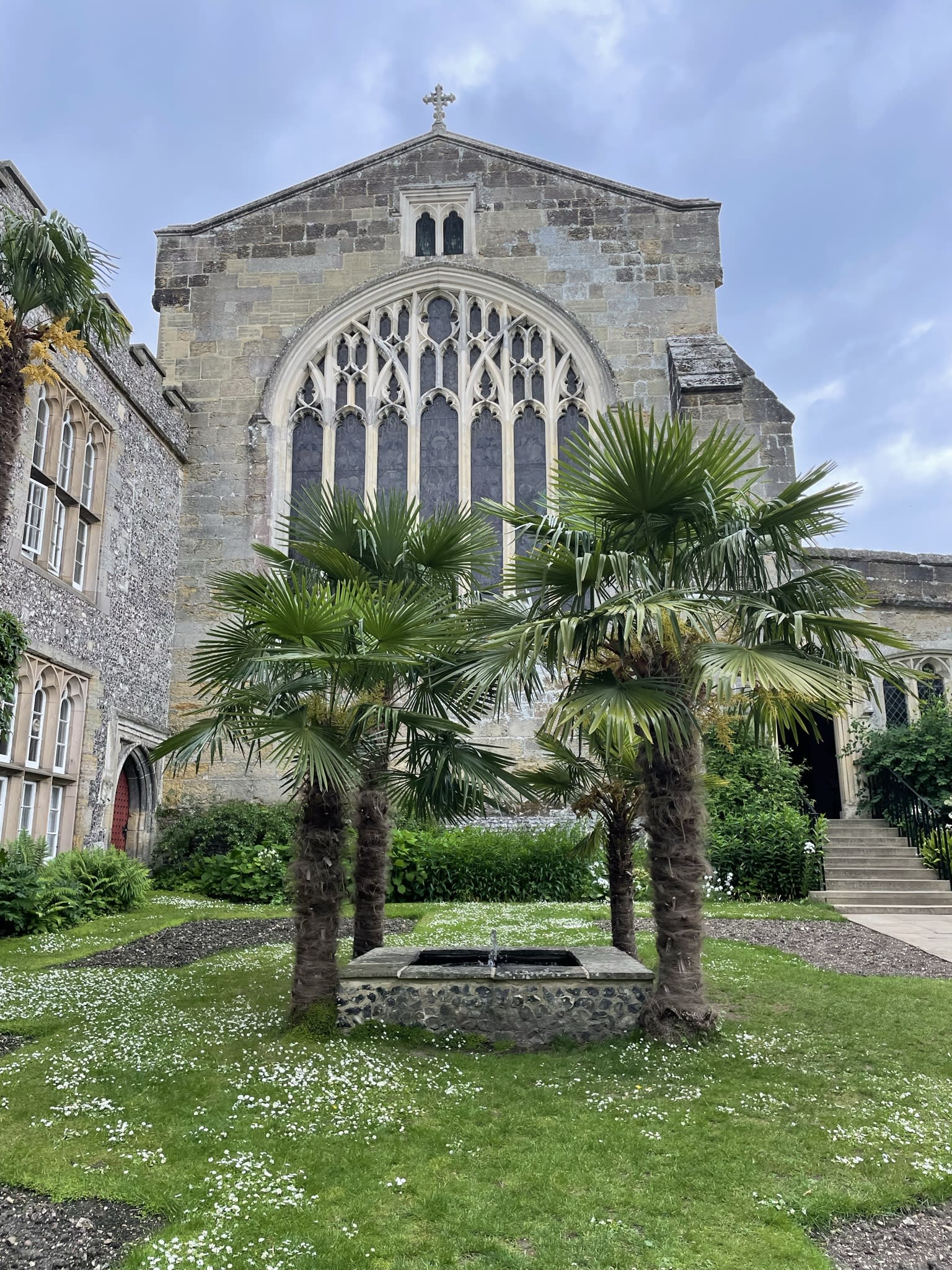
Cathedral
The cathedral, founded in 1873, is the second main attraction of the town. Although the castle took most of our day, we managed to quickly visit it in our way back to the train platform.
[carousel]


 View of the Cathedral from the castle
[/carousel]
Arundel Castle History
Skip this section if you are not a history buff!
Here is an overview of the main eras the castle has been through:
| Era | Dates | Ruling Family / Key Figures | Historical Highlights |
|---|---|---|---|
| Norman Foundation | 1067–1138 | Roger de Montgomery (granted by William the Conqueror) | Castle founded as a motte-and-bailey fortress to control the River Arun and defend Norman rule in southern England. |
| ** d’Aubigny & FitzAlan Era** | 1138–1580 | William d’Aubigny; later FitzAlan family | Castle rebuilt in stone and expanded; became a major noble residence. The FitzAlans serve as Earls of Arundel for centuries. |
| Howard Inheritance & Tudor Politics | 1580–1642 | Thomas Howard, 4th Duke of Norfolk, and descendants | Through marriage, the castle passes to the powerful Howard family. Involved in Tudor and early Stuart court politics. |
| Civil War & Restoration | 1642–1815 | Howard family (Dukes of Norfolk) | Besieged and damaged during the English Civil War. Later restored and redesigned in the Gothic Revival style by Charles Howard, 11th Duke. |
| Victorian to Modern Era | 1815–Today | Howard family (15th–18th Dukes of Norfolk) | Castle modernized with Victorian comforts; visited by Queen Victoria (1846). Still home of the Dukes of Norfolk and open to the public. |
TL;DR, Takeaways:
- The FitzAlans were the original noble family associated with Arundel and held it for ~400 years. They were powerful lords and major figures in medieval England, often close to (and sometimes rebelling against) the monarchy.
- The Howard Family (Dukes of Norfolk) inherited the castle after a marriage, and have held Arundel ever since. They are one of the oldest and most prominent Catholic aristocratic families in Britain.
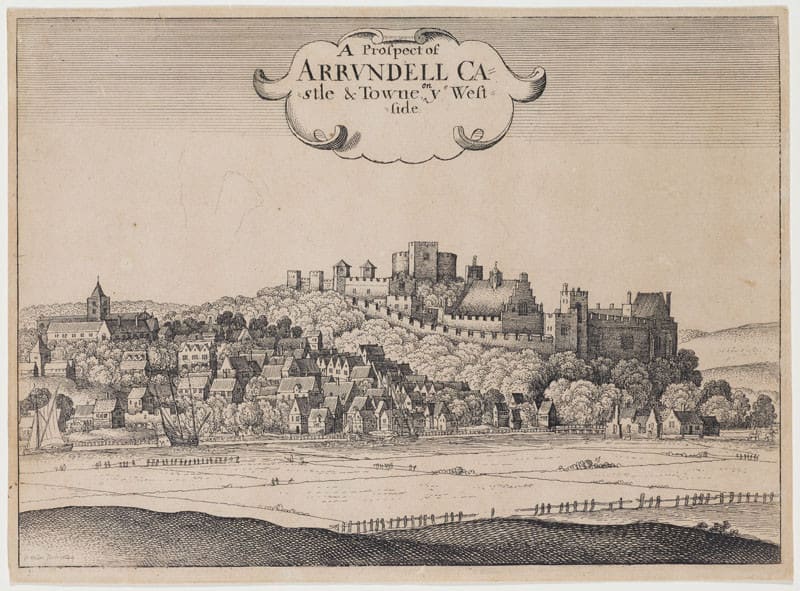 1644 Print
 1840 - Picturesque view of seats of the noblemen and gentlemen of Great Britain, Morris F..O.
Fun facts:
- The current Duke of Norfolk still uses it as his private residence for part of the year
- One of the oldest continuously inhabited castles in England (nearly 1000 years)
- It hosted royalty, lots of it. Queen Victoria and Prince Albert, Henry II, Henry VII, etc.
- In 1643 the castle was besieged by Parliamentarian forces during the Civil War, and it was held for 18 days by the Royalists before surrendering. Cannon fire damaged it.
- Thomas Howard, 4th Duke of Norfolk (1536-1572) got too ambitious: he plotted to marry Mary, Queen of Scots. Elizabeth I found out and executed him for treason.
- The Duke of Norfolk is the premier Duke in England: the highest-ranking non-royal noble. It also holds the historic title Earl of Arundel.
Facts about British nobility that I did not know about:
- Titles and main estates usually pass to a single heir, traditionally the eldest son, through a process called primogeniture. This keeps the estate intact instead of being divided generation after generation.
- Younger children often received money, smaller properties, or married into other aristocratic families — spreading the lineage but not the main estate.
- Earl and Duke are ranks in nobility. This is called the peerage system.
| Rank | Male Title | Female Title | Style of Address | Typical Example | Number |
|---|---|---|---|---|---|
| 1️⃣ | Duke | Duchess | Your Grace | Duke of Norfolk | ~24 |
| 2️⃣ | Marquess | Marchioness | Lord / Lady [Title] | Marquess of Bath | ~34 |
| 3️⃣ | Earl | Countess | Lord / Lady [Title] | Earl of Arundel | ~190 |
| 4️⃣ | Viscount | Viscountess | Lord / Lady [Title] | Viscount Astor | ~115 |
| 5️⃣ | Baron | Baroness | Lord / Lady [Title] | Baron Rothschild | ~400 |
- Only the monarch (the Crown) can create, promote, or extinguish noble titles. This is still in place, which surprised me since it sounds so medieval. It’s part of the constitutional monarchy.
- Today, nearly all new titles are life peerages, meaning they expire when the person dies, no inheritance, no dynastic expansion.
- It is astounding to see the contrast with France, where all these medieval concepts of nobility, titles, peerage, inheritance to the first son, etc; was wiped out. England’s nobility survived through gradual constitutional change, legal protections, and political integration, keeping their titles and estates, while France’s revolution abolished noble privileges and often seized or destroyed their property.
Final Thoughts
Arundel Castle is absolutely worth the trip: grand, atmospheric, and full of history. Between the medieval walls, lavish interiors, and blooming gardens, it’s one of the most impressive castles in England.
It makes for a great day trip from London, especially in Spring or Summer in order to enjoy the best gardens views. I’d go back in a heartbeat!