Cambridge: Cobblestones, Colleges & Quiet Courtyards - A Day Trip from London
Cambridge
Cambdrige : The Perfect Day Trip from London
I probably first heard about Cambridge when I was a teenager. Back then, the name Cambridge University appeared on the covers of our English textbooks, and the Cambridge English exams were the standard for foreign students learning the language.
Fast forward a decade, and I finally found myself there on a memorable day trip from London. The city felt like stepping into a different reality: immaculate college courtyards, spires rising above the river, and medieval buildings that seemed almost untouched by time.
Students moved through the city going about their daily routines, seemingly unaware that they were studying at one of the most prestigious, expensive, and beautiful universities in the world. Cambridge somehow manages to blend an ancient institution centuries old with the energy of new generations. It was a busy day, filled with history, grand architecture, and that unmistakable university magic that defines the city.
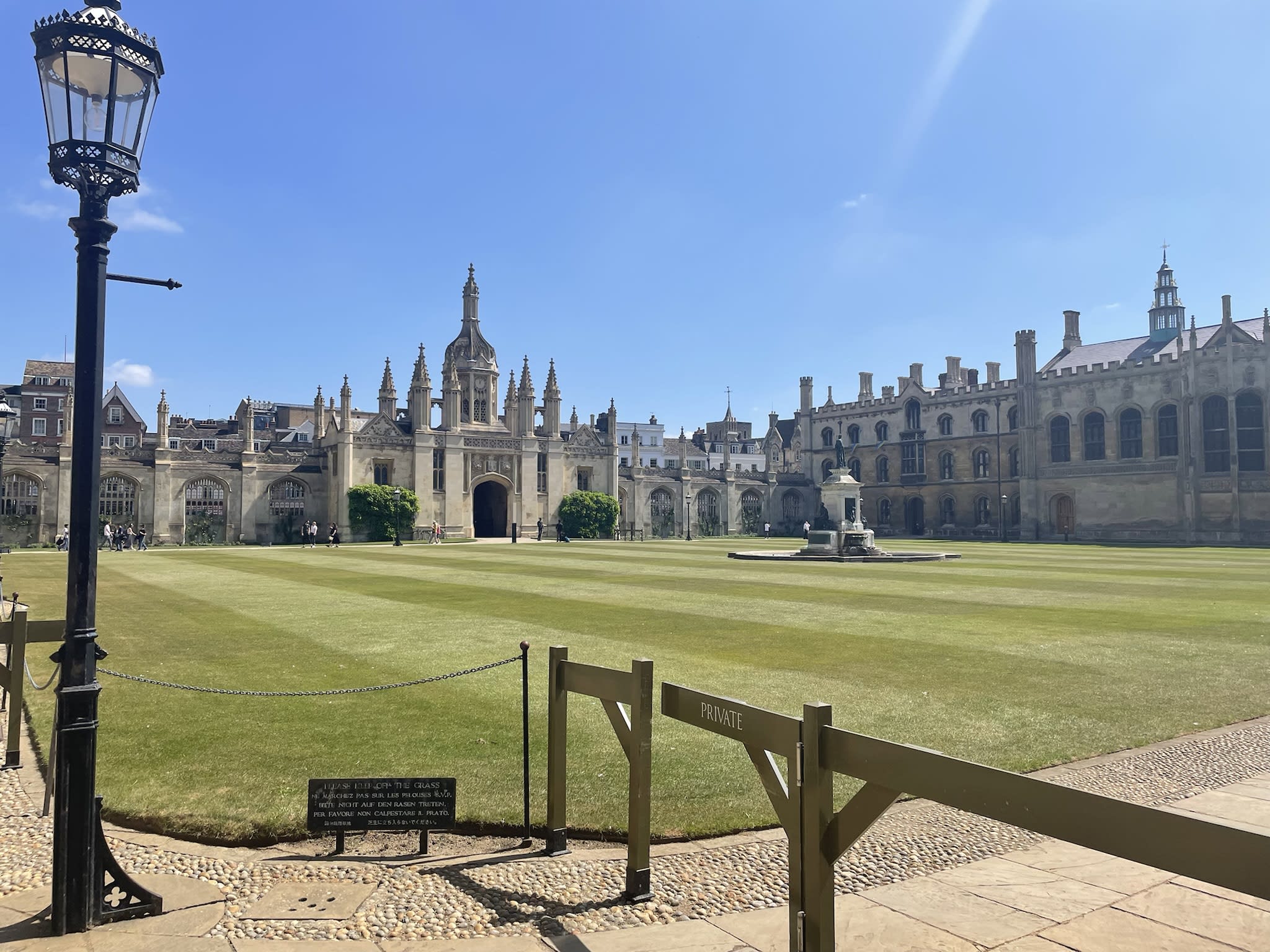 Front Court of King’s College, with view of Porter’s Gate
[content_table]
Getting to Cambridge
Joined by my friend Aldana, I purchased an open-return ticket from London’s King’s Cross to Cambridge Station at just 19.50 GBP. The fare (super off peak return) is extremely cheap for UK standards, and seems to be only available during weekends. In as little as 49 minutes we were at Cambridge Station, fuelled by a delicious cappuccino and ready to explore!

You can buy the tickets in advance using e.g. the LNER app.
Main Attractions
The city is quite walkable and compact. We strolled around hitting the main landmarks, which I collected in this map:
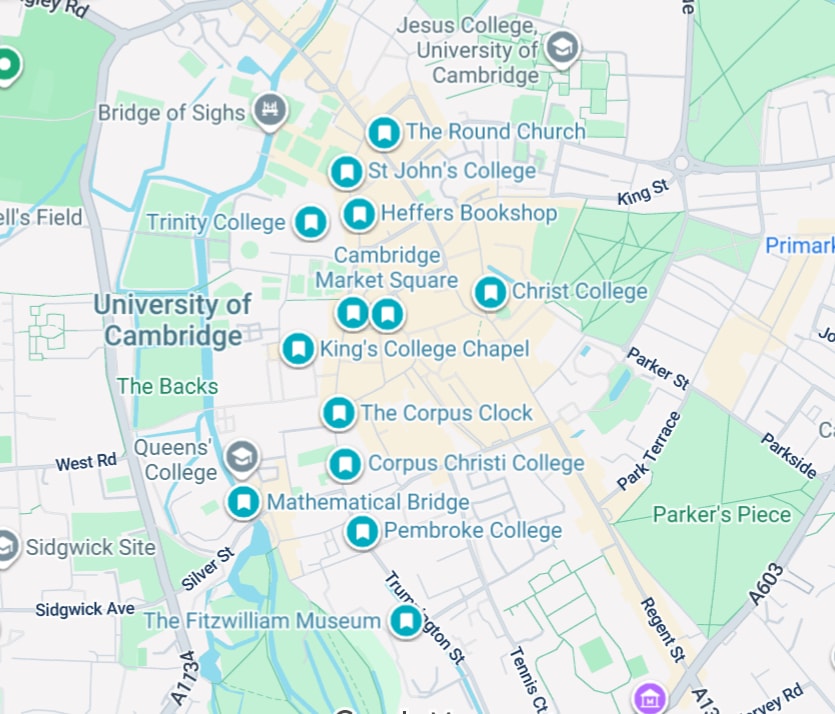 The river Cam, on the West side of this map, gives name to the city
In the following subsections I’ll describe one by one the highlights of our visit.
The FitzWilliam Museum
The Fitzwilliam Museum is the art and antiquities museum of the University of Cambridge, founded in 1816 when Richard FitzWilliam bequeathed his art collection, library and funds to the university.
The museum holds over 500,000 objects from ancient Egypt and Greece to modern and contemporary art. Entry to the museum is free. I’m a history buff, so I enjoyed quite a lot the ancient artifacts on display. You can easily spend hours here, here is my selection of the best exhibits:
Entry to the Fitzwilliam Museum is free. Even if you are not a fan of museums, it’s really worth a quick stop.
Medieval weapons
[carousel]
 Medieval weapons and armour exhibit
 Medieval weapons and armour exhibit
[/carousel]
Roman
 Antinous as the god Dionysos (~AD 130)
This 2000-year mosaic blew my mind, it’s incredible that such an artpiece is kept intact:
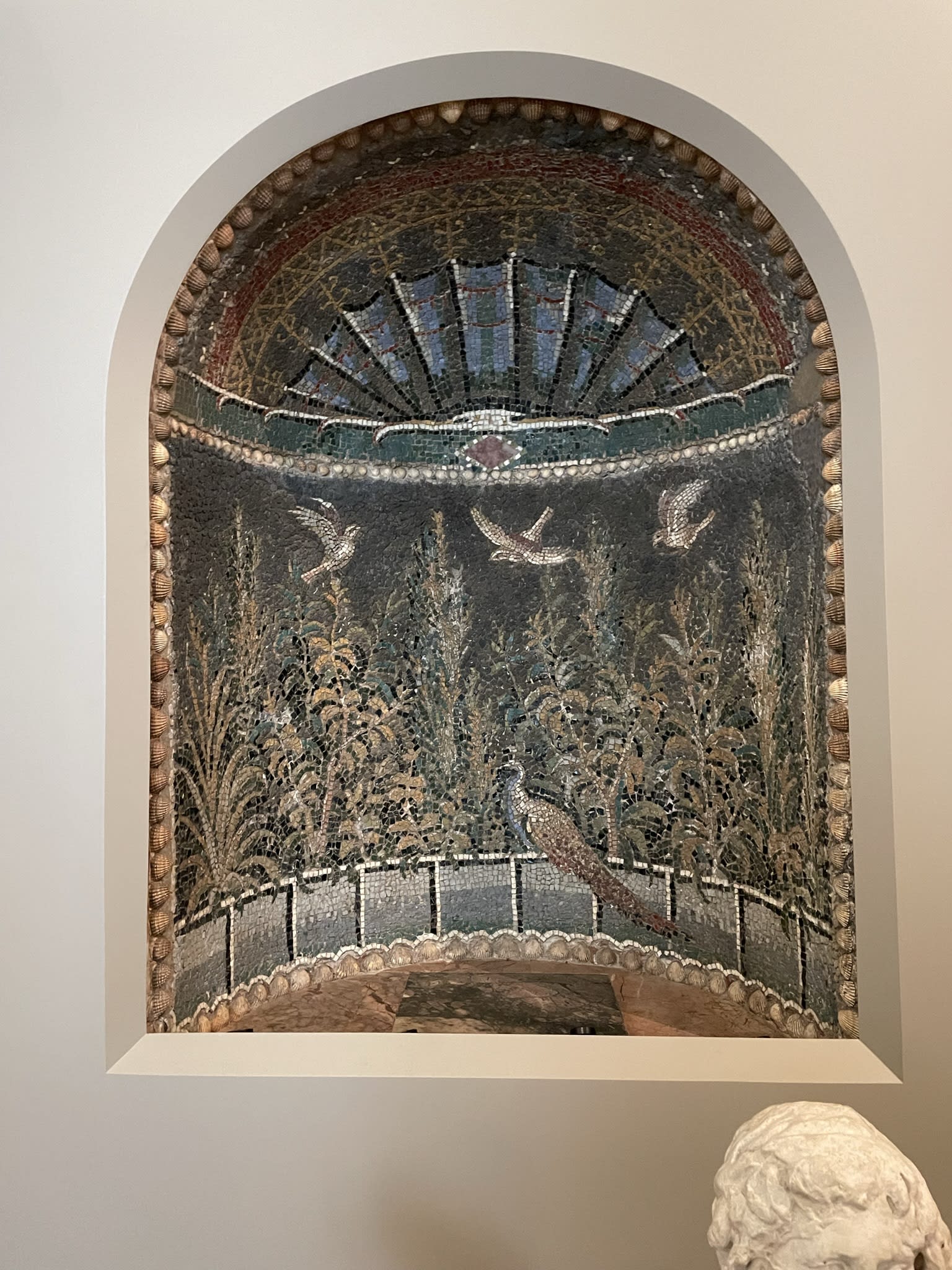 Roman mosaic depicting a garden scene, found in Baiae (southern Italy). 1st Century.
Medieval Manuscripts
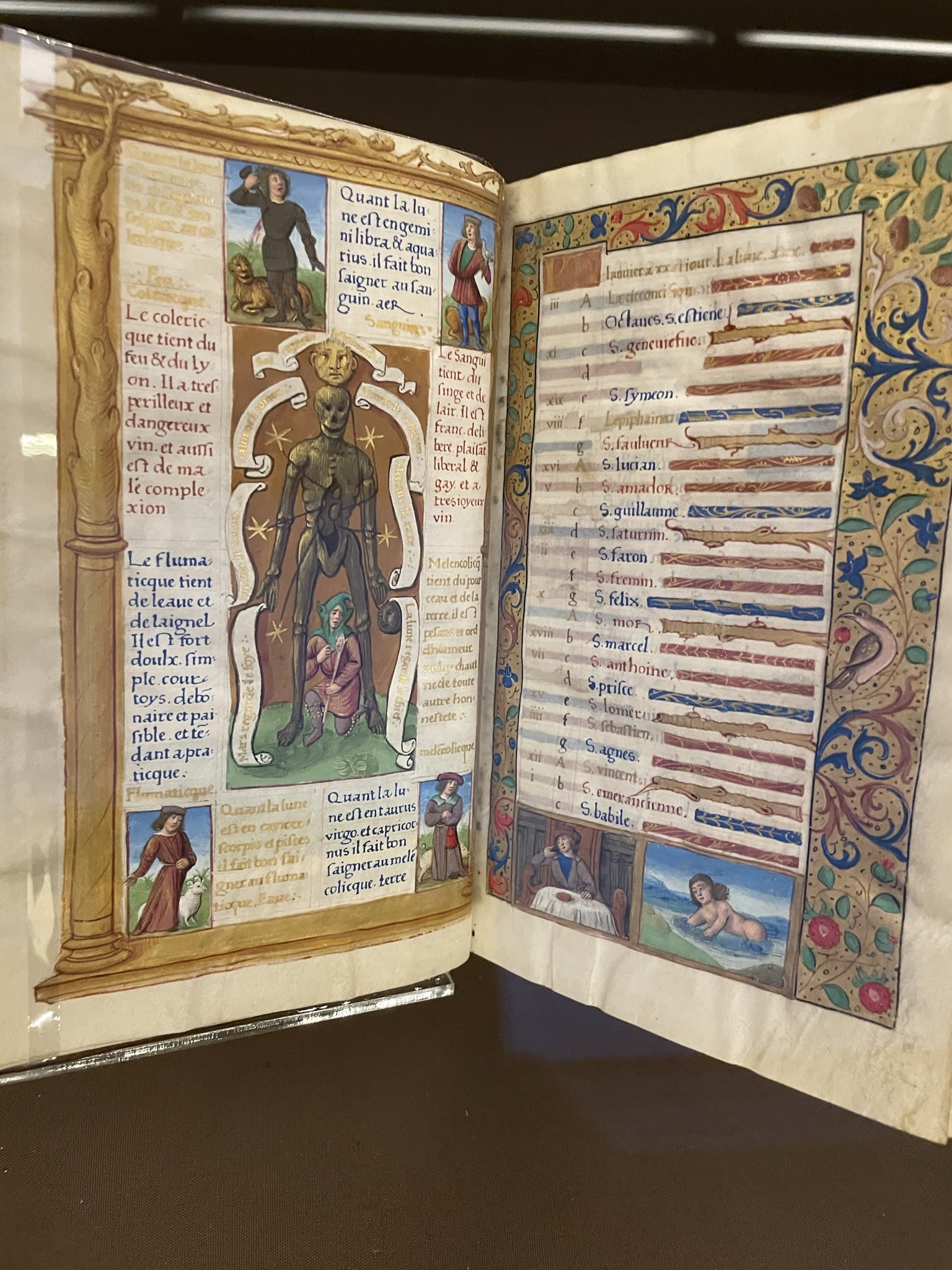
I always enjoy browsing exhibits about medieval texts and illuminated manuscripts.
[carousel]
 A medieval book illustrating the relationship between the human body and the astrological signs. Each zodiac sign was believed to influence a part of the body.
 Albrecht Dürer’s work “The World as a Sphere” is the first known printed map to depict the Earth as a sphere, created in 1515 in collaboration with astronomer Johann Stabius
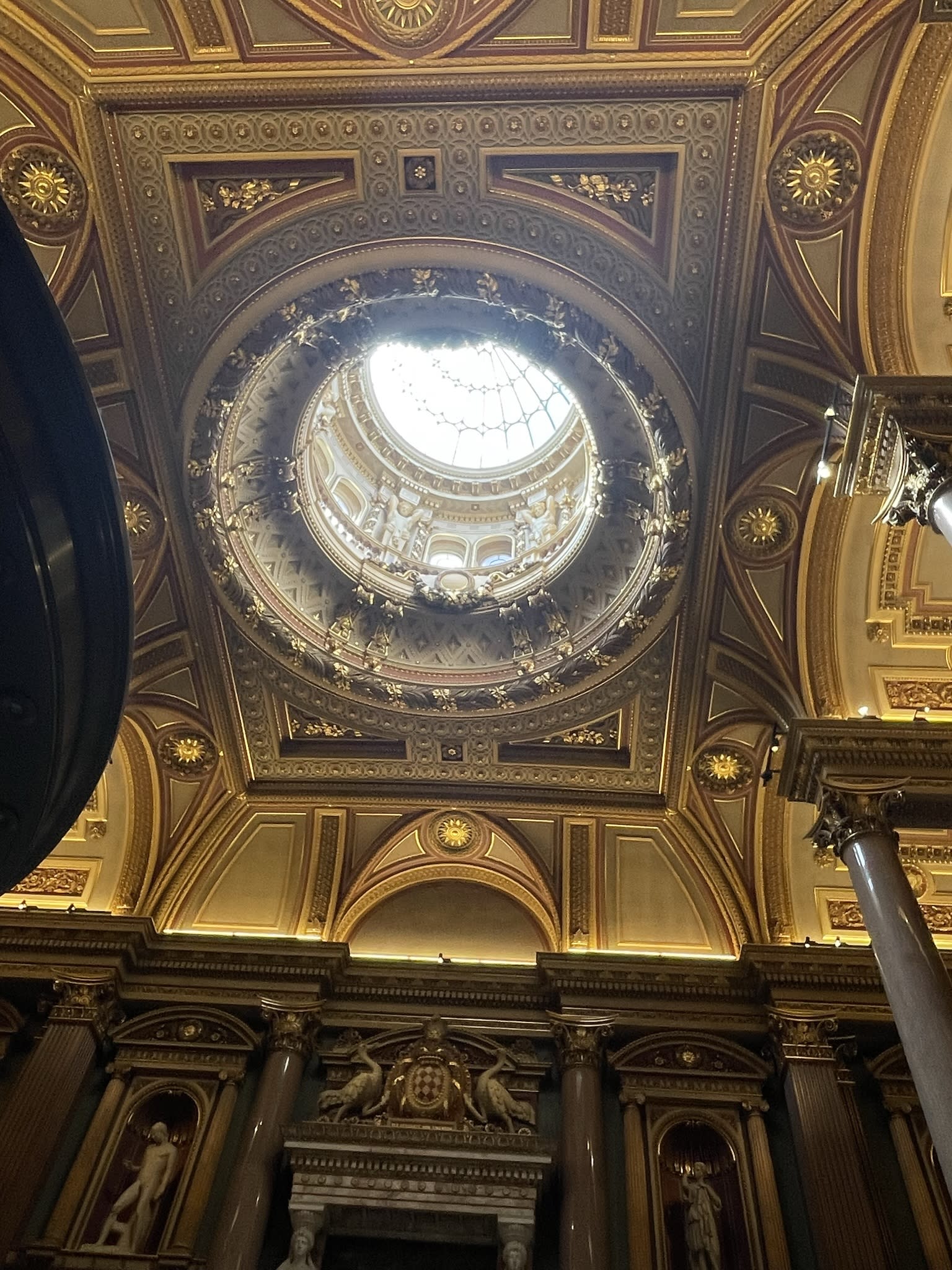 The Neoclassicial building is an attraction on its own
[/carousel]
A City of Colleges
The main allure of the city is to visit the many colleges that constitute Cambridge University. Cambridge University is a collegiate university, meaning it’s made up of a federation of individual colleges, each with its own history, architecture, and traditions.
The 31 member colleges are self-governing institutions within the university.
The university institution handles: exams, teaching core courses, exams, research, degrees. The colleges handle: living, accommodation, mentoring, supervisions and social life.
Most colleges charge a modest fee for entering the campus and walking around. Opening hours vary between colleges, and they are often closed a few days a week. If you want to visit a particular college, make sure you check opening times.
Visiting too many colleges is a little overwhelming and repetitive. Personally, I think it’s enough to visit the main ones in detail (King’s College, St John’s College), and only have a quick peek at the campuses of the minor ones as you encounter them on the way.
Pembroke College
A relatively modest college compared to others in the city, Pembroke College was founded in 1347 by Marie de St Pol. It has around 700 students. The college feels intimate rather than grandiose.
[carousel]


[/carousel]
Corpus Christi College
Founded in 1352, it is the only Cambridge college founded by local townspeople rather than royalty or clergy. It houses the Parker Library (which I did not visit), one of the most important collections of medieval manuscripts in the world.
It’s rather on the smaller, quieter side; with just about 500 students.
[carousel]

 Beautiful entry at Trumpington Street, a few steps south of King’s Parade
[/carousel]
King’s College
 Front Court
One of the most famous and visually stunning colleges of the University of Cambridge and an icon of the city:
- Founded in 1441 by King Henry VI
- Full name: “The King’s College of Our Lady and Saint Nicholas in Cambridge”
- Around 1000 students
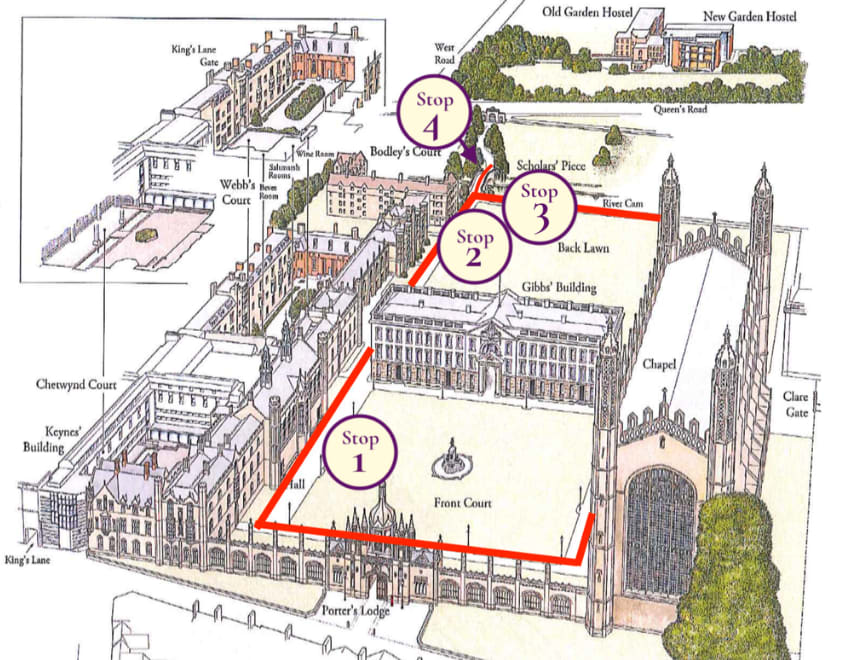 Map of the college
[carousel]
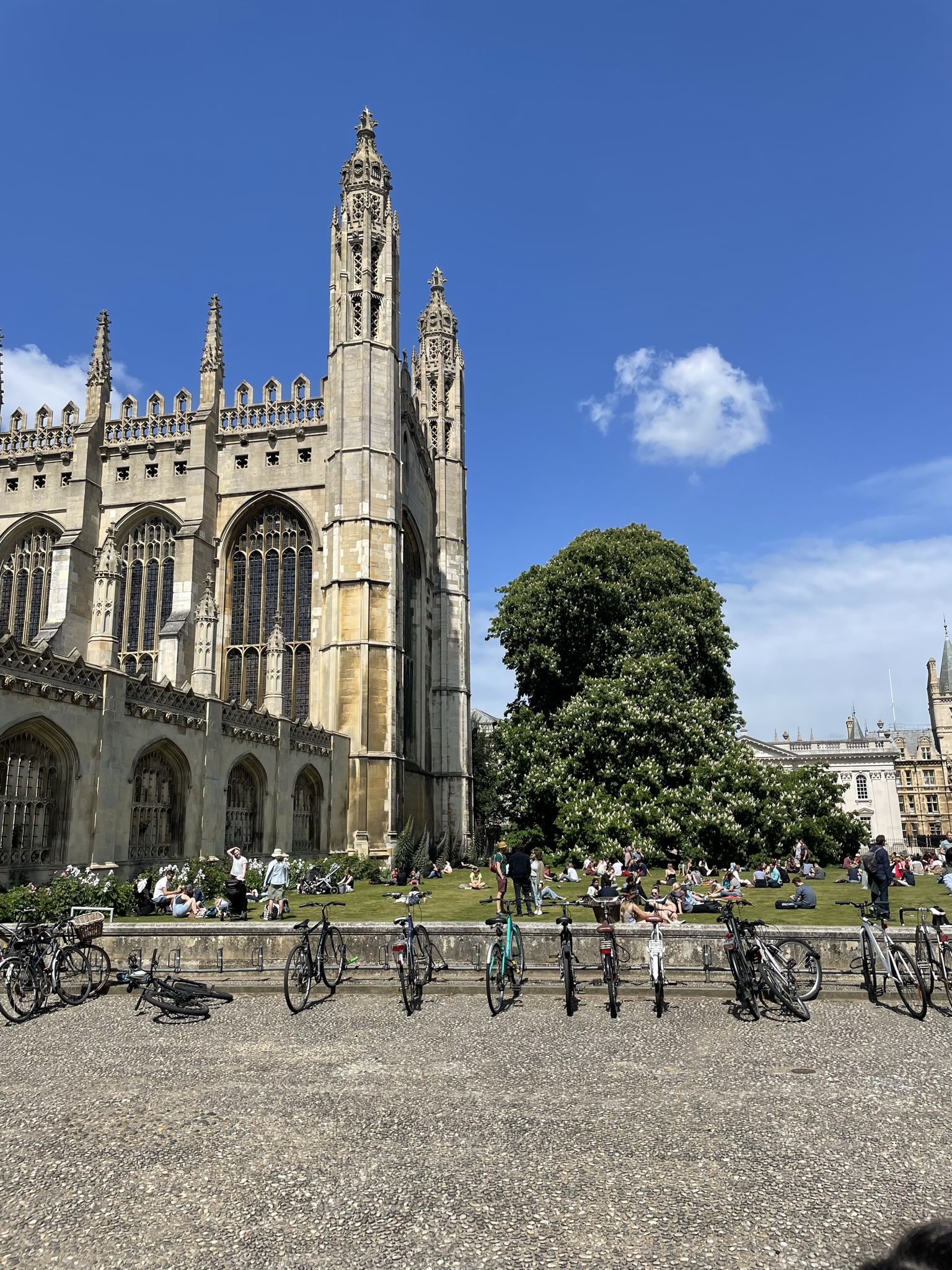 King’s College Chapel East facade, as seen from King’s Parade - Lively and full of students
 Beautiful details of the Chapel
[/carousel]
The Chapel is just stunning, perhaps one of the most memorable places from my visit. I remember lying down on a bench, mesmerized by the patterns in the ceiling.
It is an example of late Gothic Architecture, characterized by vertical lines, large stained glass windows, intricate fan vaulting and a sense of grand symmetry. The fan vaulting is indeed the largest of its kind in the world, an engineering and artistic masterpiece.
The Chapel was commissioned in 1446 by Henry VI ; and completed 70 years after in 1515.
[carousel]
 Chapel interior
 The wooden choir, between the entrance in the West end and the altar in the East end. The organ was playing for the duration of our visit

 I relaxed and admired the place for a good while
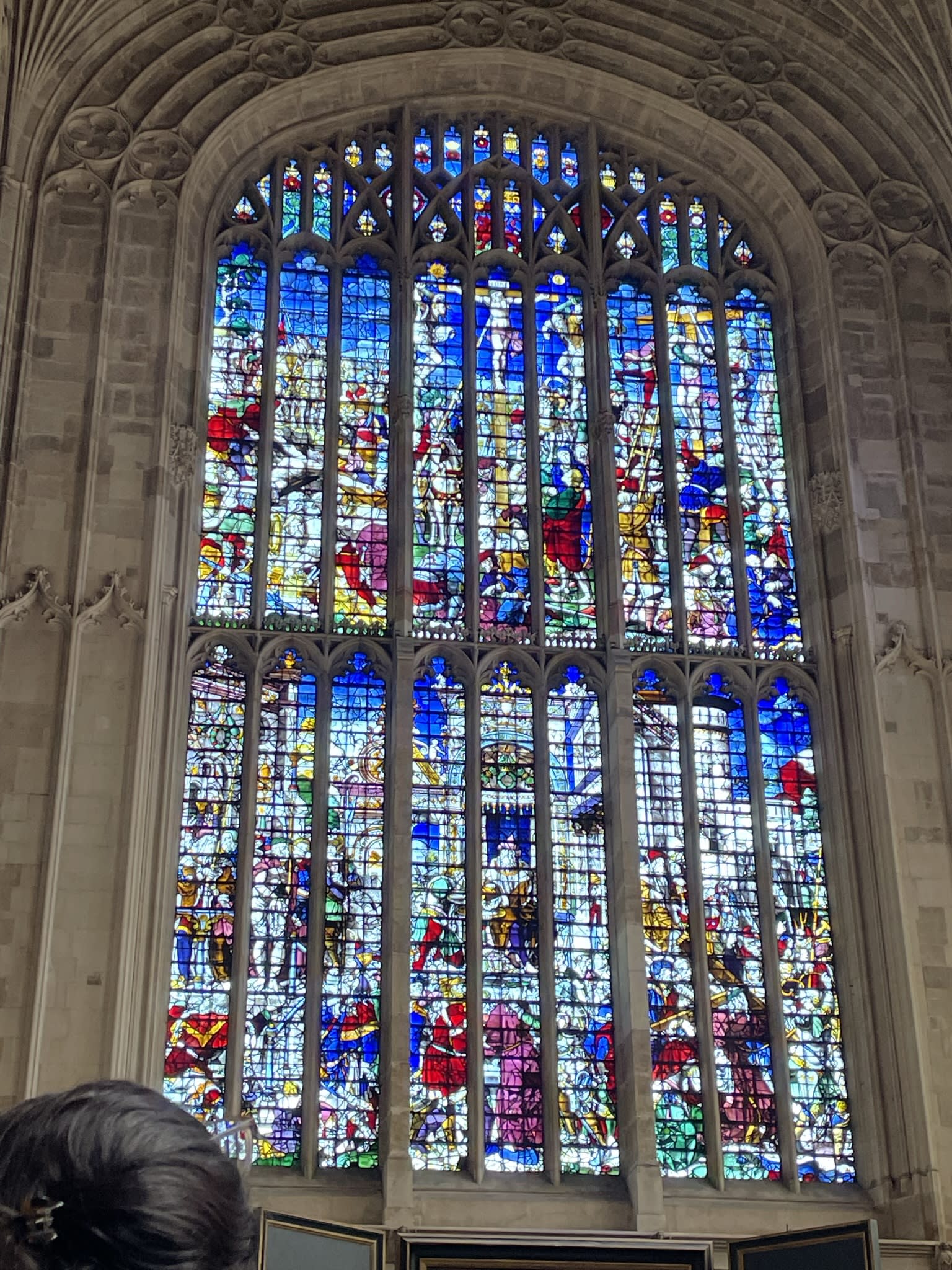 Beautiful stained windows behind the altar


[/carousel]
The back lawn of the campus extends to River Cam itself:
 View of the Chapel from the back lawn of the campus
 River Cam, alive with tourists and gondolas
Christ’s College
Founded in 1505 by Lady Margaret Beaufort, mother of King Henry VII, it is one of the prettiest and historically rich colleges in Cambridge. It has about 1000 students.
Fun fact: Charles Darwin studied here.

We didn’t stay long here, I presume that only the main yard was open to visit.
St John’s College
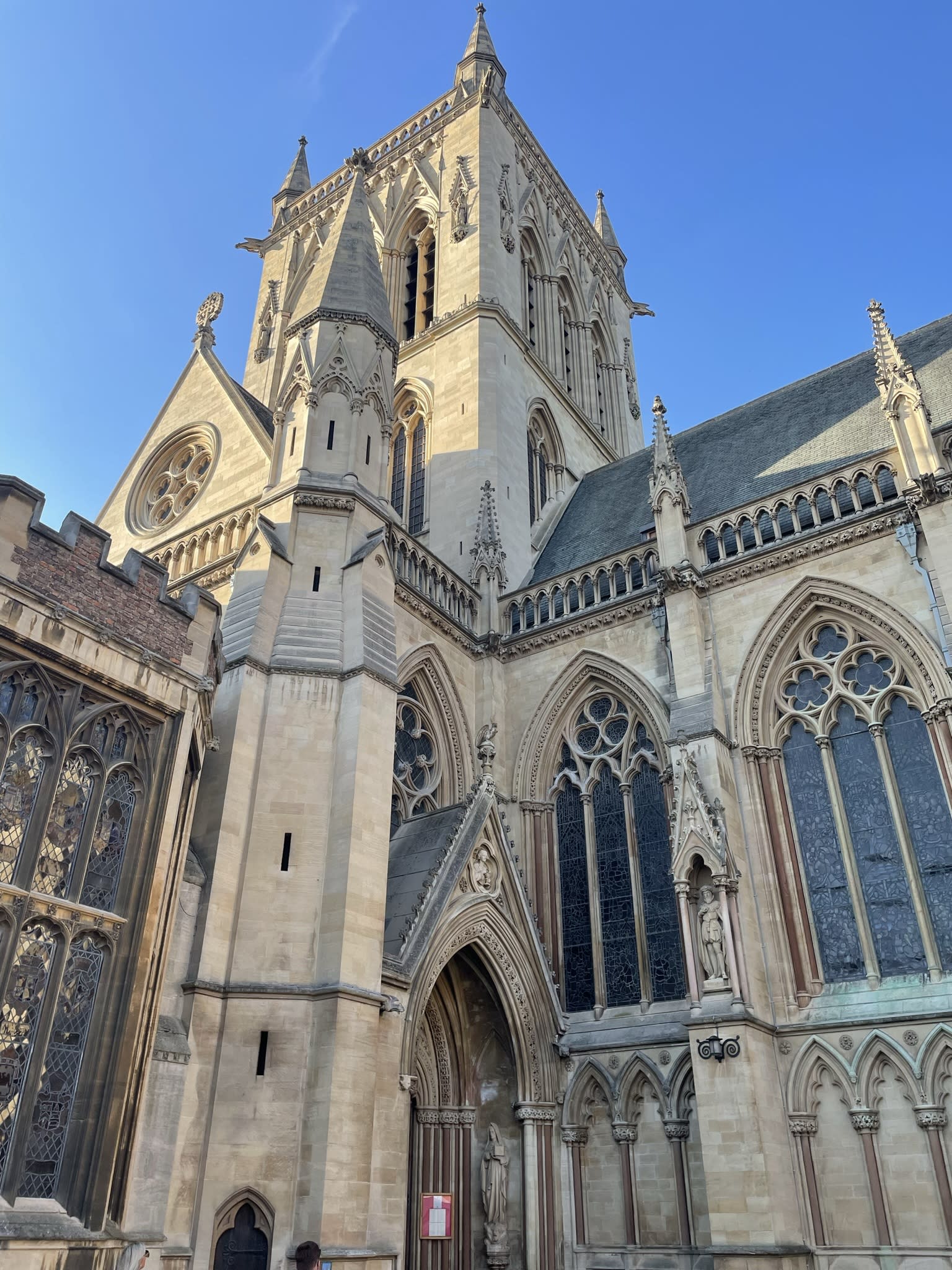
The last college in our tour of colleges, one of the oldest, largest and most prestigious colleges in Cambridge. Founded in 1511 by Lady Margaret Beaufort, mother of King Henry VII.
The college has over 1100 students and academics, and each year about 170 undergraduates are admitted. In our visit we were only able to quickly glimpse the inner courtyard, and the interior of the chapel (which was not particularly remarkable after all we had seen before).
[carousel]


[/carousel]
Other Landmarks
Lunch break at Cambridge Market Square
Conveniently located halfway our walking tour of campuses was the market, offering all sorts of international fast food. I had a delicious Greek gyro here. Nearby Market Street is fully pedestrian and has many interesting shops.
[carousel]


[/carousel]
The Round Church
Officially known as the Church of the Holy Sepulchre, it’s one of the most iconic landmarks of the city. Sadly it was not open for visitors when we arrived, so we could only see the exterior.
Built around 1130, it’s one of the few round medieval churches that survived in England. The round design is modelled after the Church of the Holy Sepulchre in Jerusalem, reflecting the influence of the Crusades and the desire of returning knights to replicate sacred architecture.

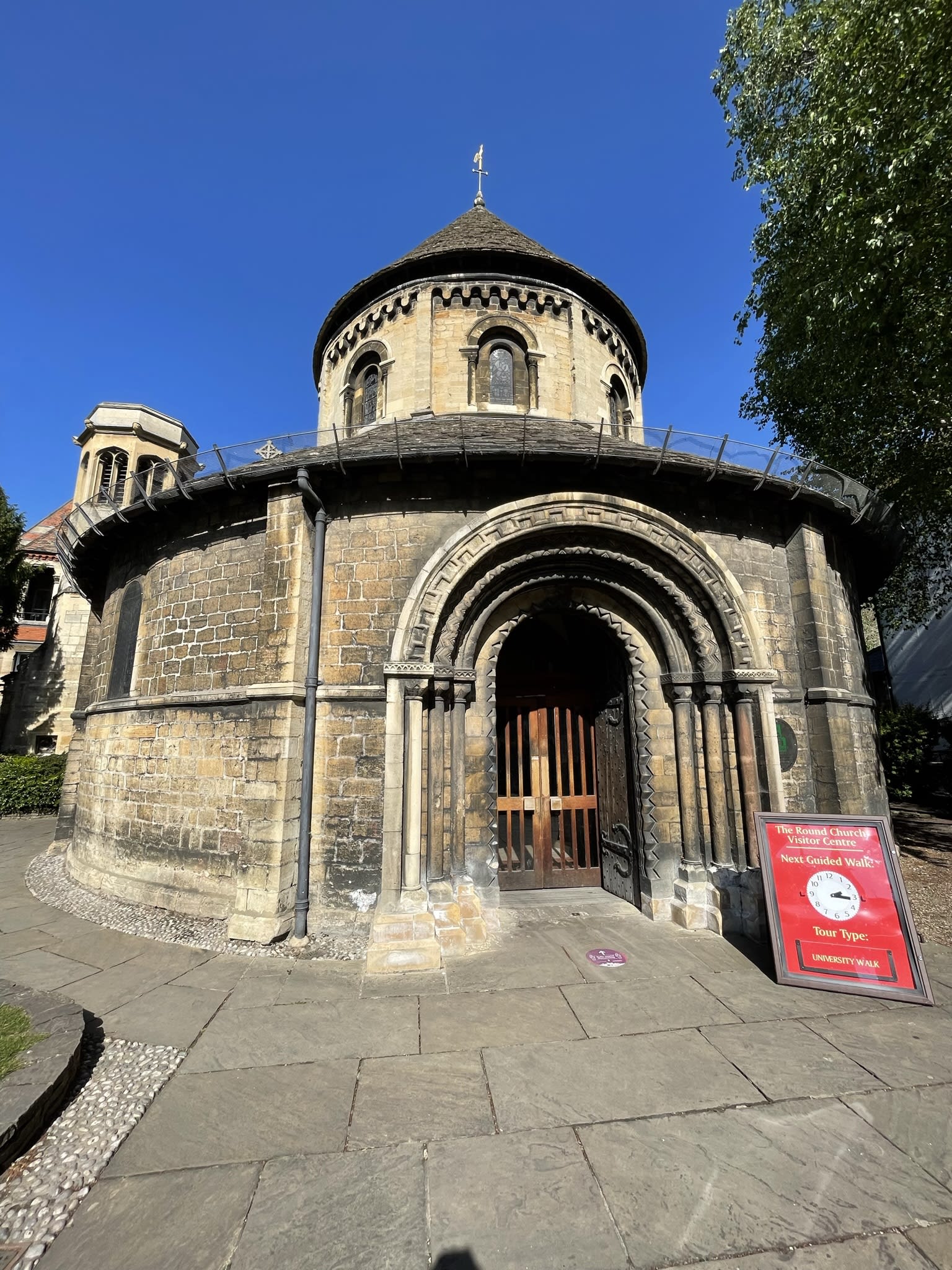
This is what a looked like in 1809:

Cambridge University Press Bookshop

I was a thrilled to enter the official bookshop and find in the shelves all the English textbooks I had studied for the FCE, CAE and CPE tests.
Mathematical Bridge
Designed by architect William Etheridge and constructed in 1749 by builder James Essex the Younger, the bridge is renowned for its innovative use of straight timbers to form a curved structure
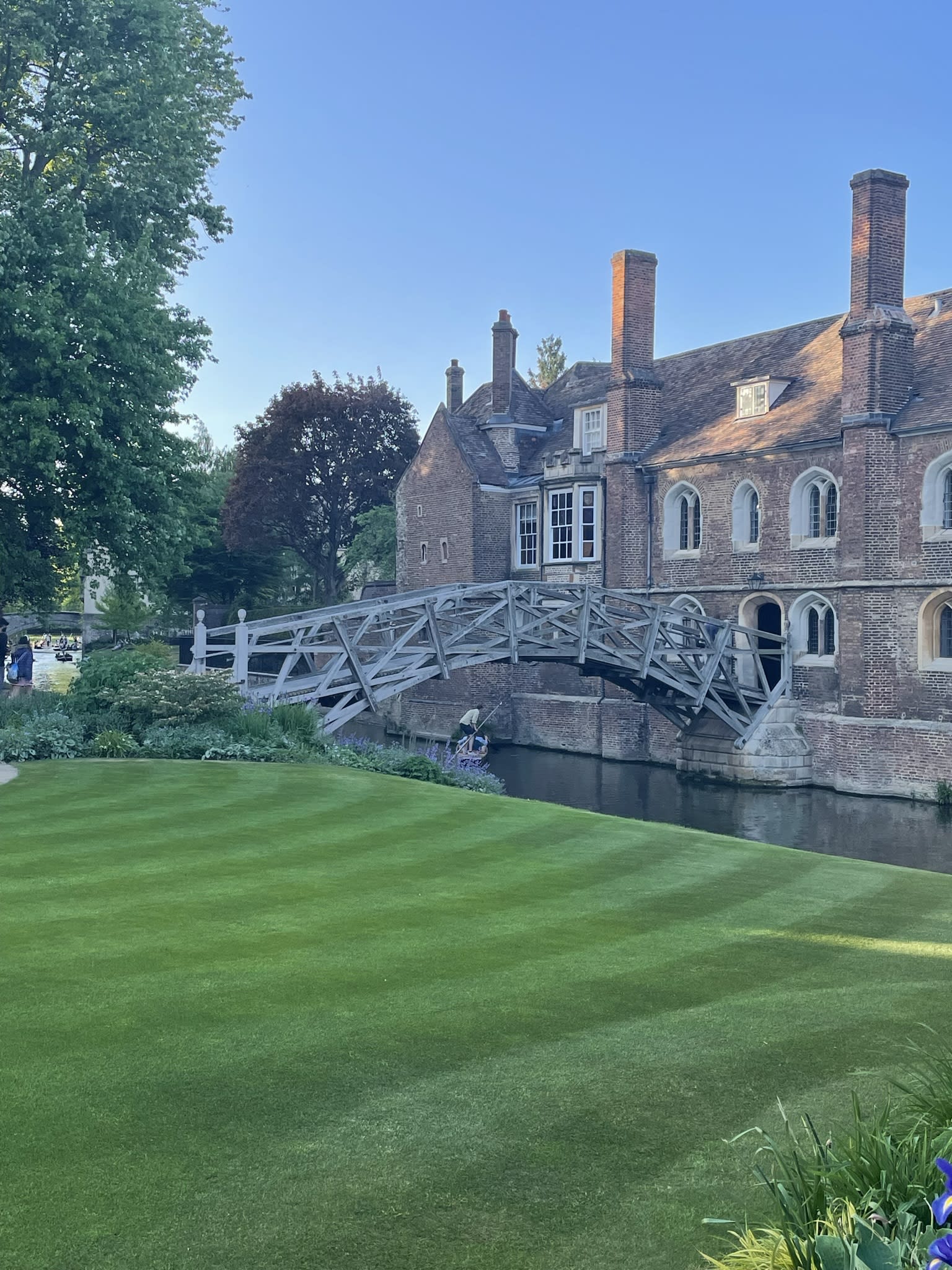 The wooden footbridge spans the River Cam in Cambridge, England. It’s located at Queens’ College, connecting the older part of the college, known as the “dark side,” with the newer western section, referred to as “The Island” or the “light side”.

Corpus Clock
Also known as Chronophage (“time eater”), this golden clock is located outside Corpus Christi College. It was unveiled in 2008 by Stephen Hawking, and you’ll quickly notice a rather ugly creature (a cricket perhaps), which symbolises time devouring itself as it passes.
I didn’t like it, and I didn’t feel inspired in any way, which is supposed to be the point of the whole contraption.
Final Thoughts
Cambridge is one of the easiest and most rewarding day trips from London. With fast and affordable train connections, a compact walkable centre, and world-class sights (from the Fitzwilliam Museum to the grand King’s College Chapel) it’s a perfect blend of history, architecture, and student life. Whether you’re an architecture lover, a history enthusiast, or just curious to see one of the world’s great universities, Cambridge is a must on any UK itinerary.
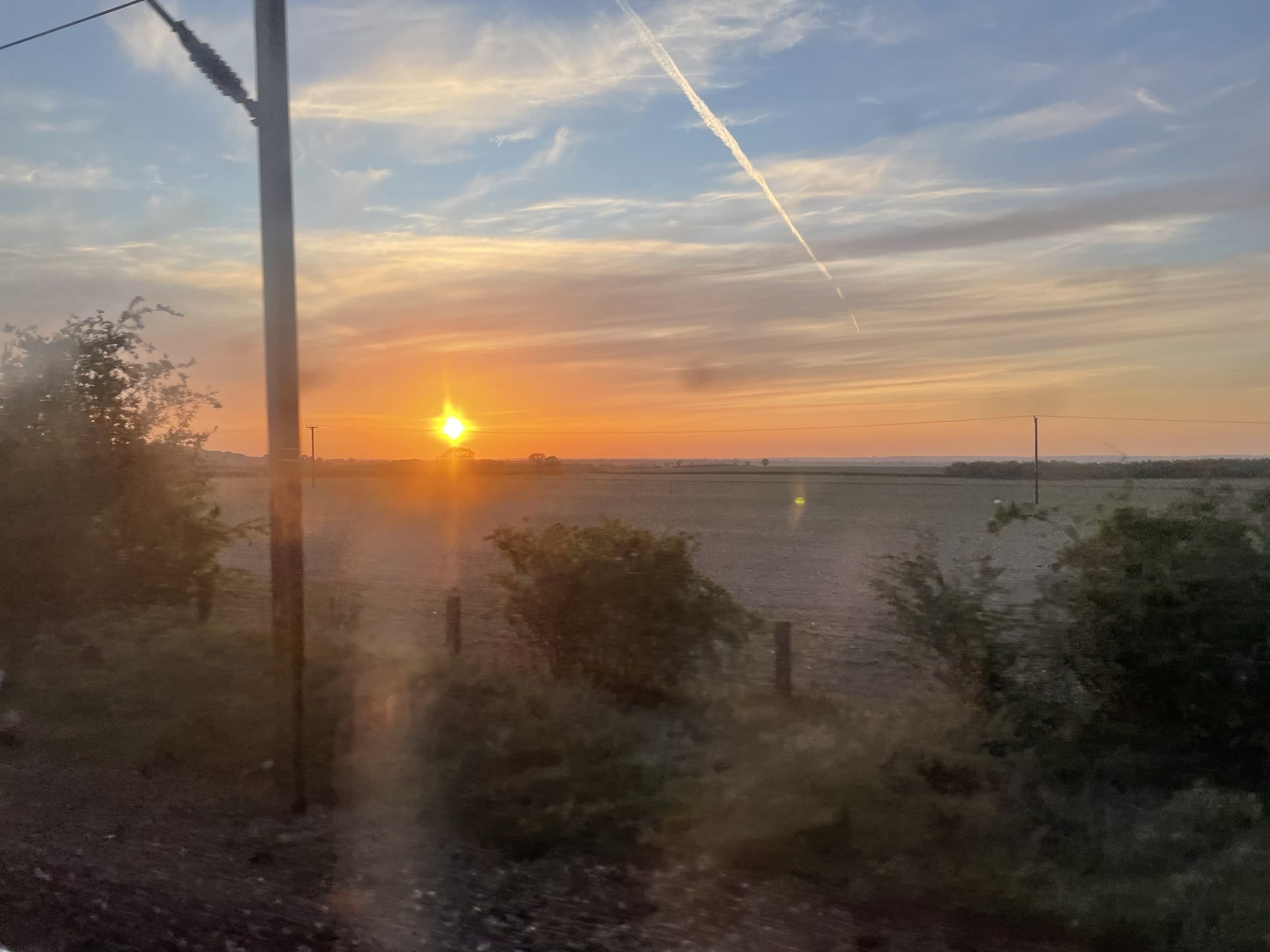 We caught a beautiful sunset view from the window of our train ride back to London.
Context: A brief history of Cambridge
Located on the River Cam in easter England, 80 kilometres North of London, Cambridge has a story that stretches back nearly two thousand years.
| Period / Era | Date Range | Key Events and Developments |
|---|---|---|
| Roman & Early Settlement | 1st–5th centuries CE | Roman trading post established near the River Cam. Early settlement continues after Roman withdrawal. |
| Saxon Period | 5th–11th centuries | Saxons found Grantebrycge (“bridge over the River Granta”). Town grows as a small market center. |
| Norman & Medieval Town | 11th–13th centuries | Normans build Cambridge Castle after 1066. Town prospers via trade along the River Cam. |
| Foundation of the University | Early 13th century (c. 1209) | Scholars fleeing Oxford unrest settle in Cambridge, founding the University of Cambridge. |
| Renaissance & Collegiate Expansion | 14th–16th centuries | Major colleges founded (King’s, Trinity, St John’s). Cambridge becomes a major intellectual and architectural center. |
| Industrial & Victorian Period | 19th century | Railway (1845) links Cambridge to London. Town expands beyond the university; scientific research grows. |
| Modern & Scientific Cambridge | 20th century–present | Breakthroughs such as discovery of DNA structure and advances in computing. Emergence of “Silicon Fen” tech cluster. |
| In a way, Cambridge university originated as a byproduct of Oxford. Around 1209, scholars fled Oxford after violent disputes with townspeople and resettled in Cambridge, forming what became the University of Cambridge. So, while Cambridge existed as a town before, its global fame and much of its development stem from that migration. |
Basic facts
| Category | Fact |
|---|---|
| Location | Eastern England, about 80 km (50 miles) north of London |
| County | Cambridgeshire |
| Population | Around 150,000 (including ~25,000 university students) |
| River | River Cam (the city’s name literally means “bridge over the Cam”) |
| Founded | Early settlement since Roman times; town charter by the 12th century |
| Famous For | University of Cambridge (founded 1209), world-leading education and research |
| Key Contributions | Discoveries in DNA structure, modern computing, mathematics, and physics |
| Architecture | Gothic college chapels, medieval lanes, Georgian buildings |
| Economy | Education, research, and the “Silicon Fen” — a cluster of high-tech and biotech companies linked to the university |
| Landmarks | King’s College Chapel, The Backs, Trinity College, Mathematical Bridge, Fitzwilliam Museum |
| Transport | 45–60 minutes from London by train; compact and walkable city center |
About Cambdrige University
- Roughly 40–50% are international students, the rest are from the UK.
- Age range:
- Undergraduates: usually 18–21/22 (straight from school, gap years are common).
- Postgraduates: often 22–30+, depending on the program; PhD students can be older.
- Costs:
- Tuition fees (undergrad, estimates):
- UK students: 10-12k GBP/year
- Intl students: 25k-40k GBP/year
- Living costs: 12-15k GBP/year
- Scholarships and fee waivers area available
- Tuition fees (undergrad, estimates):
- A student from any school in the UK can apply, provided they meet the high academic standards (predicted grades, exams, entrance assessments, interviews)
- Competition is extremely strong