Colombia: Coffee, Color & Caribbean Dreams
San Andres → Cartagena → Bogota
An Unexpected Visit to Colombia
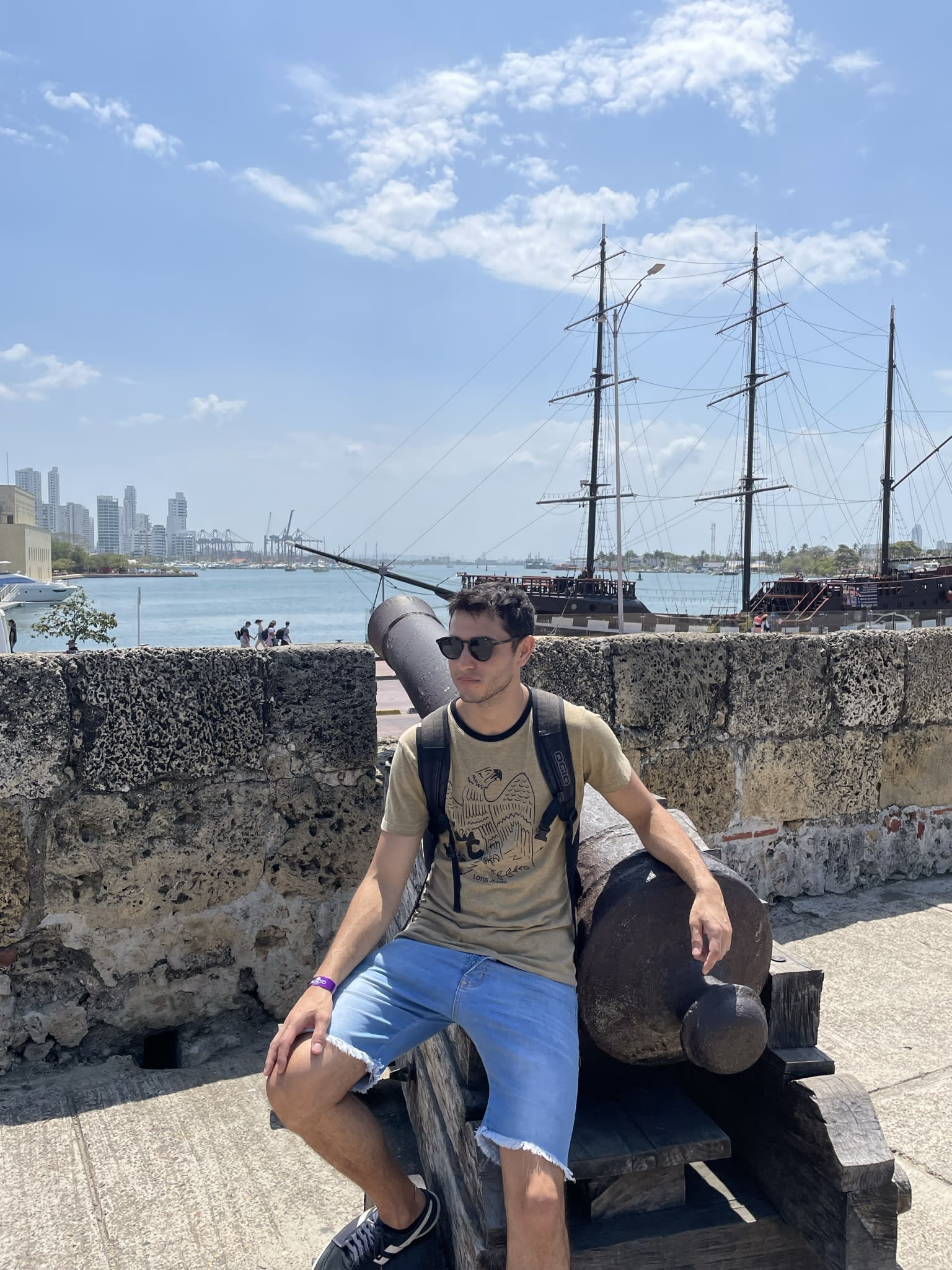 Baluarte San Ignacio at Cartagena de Indias
In 2022, in an attempt to strengthen a relationship that was steadily growing important to me, I joined my partner in his pre-planned trip to Colombia. I must have been really eager to travel with him, Colombia had always ranked low in my list of countries to visit and it was not easily reachable from the UK, where I was based at the time.
It was a trip of first-times: my first ever couple trip, my first stay at a hostel, my first time in the Caribbean Sea and the first Latin American country I visited, excluding my home country Argentina and Chile.
With the notable exception of the charming colonial city of Cartagena de Indias, I must admit that I did not find the country very appealing, and I would not be super eager to go back. In this post I will highlight my favourite spots and activities in San Andres, Cartagena and Bogota; share tips and also explain why I did not really like the country.
[content_table]
Itinerary Overview
- San Andres Island (12/2 -> 19/2)
- San Andres town, Spratt Bight beach
- Go around the island in a golf cart! ⭐
- Scuba diving
- Rocky Cay and Nicodemus Wreck ⭐
- Several days in bed due to food poisoning T.T -> beware of street food
- Cartagena de Indias (19/2 -> 22/2 )
- Walking tour of the colonial town ⭐
- Baluarte San Ignacio
- Sunset at Baluarte Santo Domingo
- Stay at a Skyscrapper in modern Bocagrande ⭐
- Failed day trip to Isla Baru
- Bogota (22/2 -> 25/2)
- Gold Museum ⭐
- Plaza de Bolivar
Prelude: Getting to Colombia from Europe + Never fly Air Canada
When you search for international flights from/to South America, often the first result that pops up is an Air Canada itinerary with a stopover in e.g. Toronto. I purchased one of these because it was literally half the price than any other option, and I usually don’t mind stopovers.
I soon came to regret my decision. Canada has insane rules for transfer passengers. Even if you are only there for a 2-hour stopover, you are required to apply for a ludicrously complicated transit visa. This involves:
- Filling in an endless questionnaire online (at least 1 hour of filling every tiny detail of your life, including stuff like whether you have ever had any ETS!)
- Showing up at the Canadian Consulate in London to have fingerprints scanned and leaving them your passport.
- Waiting for an undetermined span of time, usually one week, for them to mail your passport back to you with a transit visa that is valid only for a single use!
It was a very stressful, time consuming and expensive process. My passport arrived just in time, a few days before departure.
General piece of advice that I learned the hard way: check transit visa requirements of each stopover before booking a flight
 Beautiful view of Canada during a stopover on the way to Bogota
San Andres Island
Landing in San Andres; Spratt Bight Beach
After Air Canada dropped me in Bogota, I boarded a domestic flight with Latam Airlines to San Andres. The airport is next to the small main town, and I spent my first day resting and walking around.
[carousel]

[/carousel]
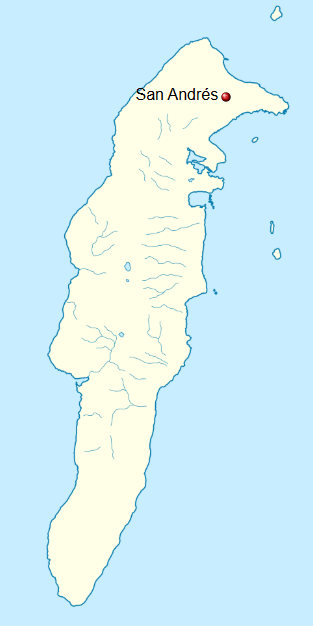
San Andres is not a large island. It belongs to Colombia but it’s actually a little deep into the Caribbean Sea, right in front of Nicaragua. The main town is at the northern tip (see map) and had the feeling of a tourist destination that had seen its peak decades ago, perhaps in the 90s or the 2000s. I could somehow see many of the aged buildings, especially hotels, looking grand in their heyday.
My boyfriend had insisted on booking a hostel because “it provides a great chance to socialize and it’s also cheap”. We checked in to derelict “Viajero Hostel” shortly after he arrived, which was in notable need of repairs. Then we spent some time chilling at the main beach in the town, Sprat Bight.
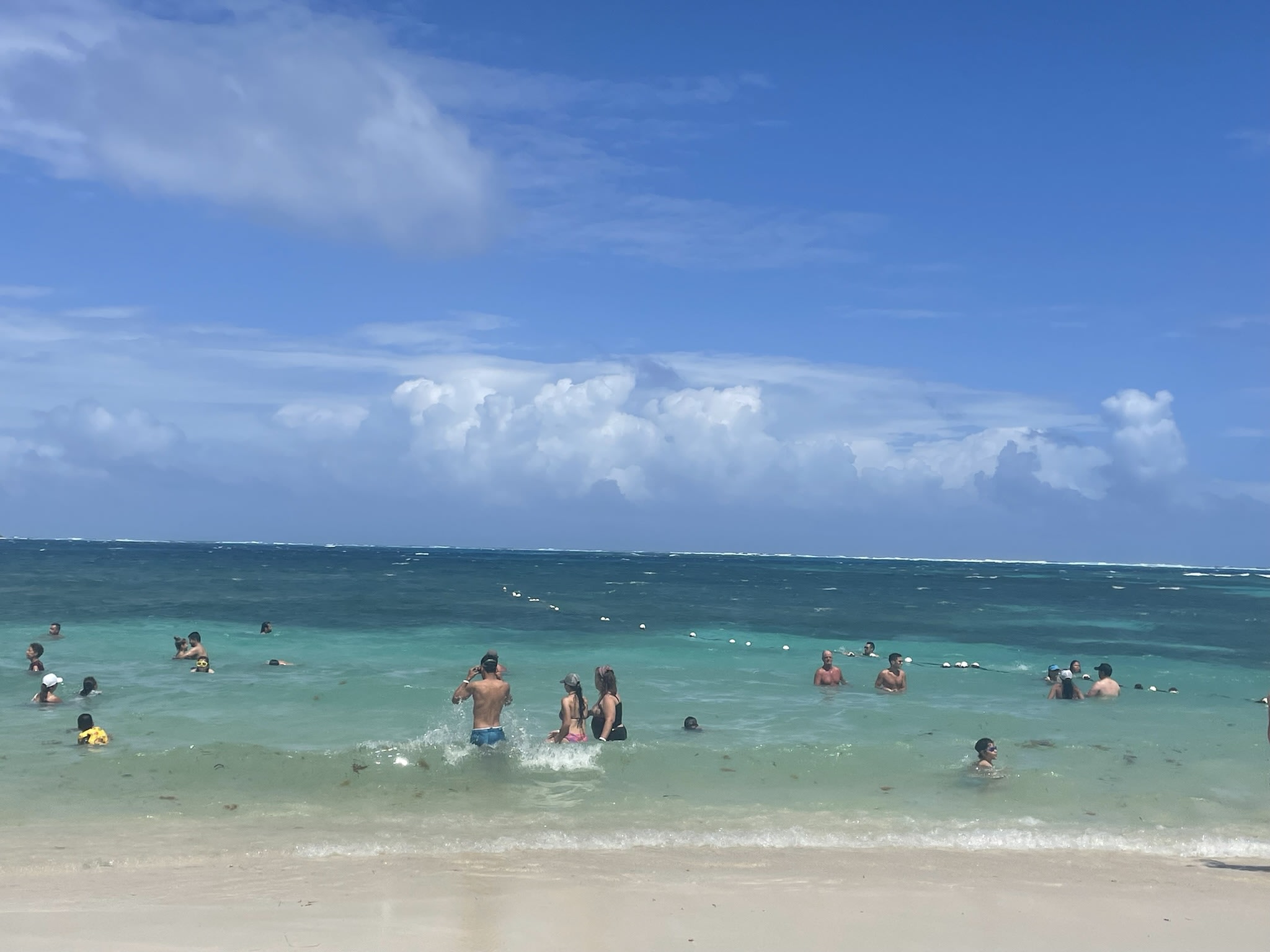 Spratt Bight beach, a convenient spot in town to refresh and have a few drinks
The hostel offered scrambled eggs for breakfast. Thank God a second serving was not allowed, because one was enough to cause me a serious episode of food poisoning that had me in bed for two days.
Be extra careful about where you eat, double check hygiene conditions. Food poisoning a very real danger here!
Driving Around the Island in a Golf Cart
Perhaps my favourite memory from San Andres is that we rented a golf cart to go around the island, which takes only a few hours. Naturally, the golf cart broke shortly after we left the town, as soon as we entered an area with poor phone coverage. But we did get a replacement in time to continue the adventure.
Golf carts are very popular and there are agencies renting them all over the place
 I was the designated driver, and we went clockwise around the island west -> south -> east ; the highlights:
- Eco Parque West View (paid entrance), where you can do great snorkel and a jump to the sea on a large slide. The place is very scenic, but a little crowded.
- Rocky and sandy beaches around the island: you can stop at a number of secluded, natural beaches. We sat in a log, drank a few beers, and enjoyed the white sand and crystal clear waters.
- A furious storm suddenly erupted, we were soaked while driving with nowhere to cover. It was funny at first but then it was really uncomfortable.
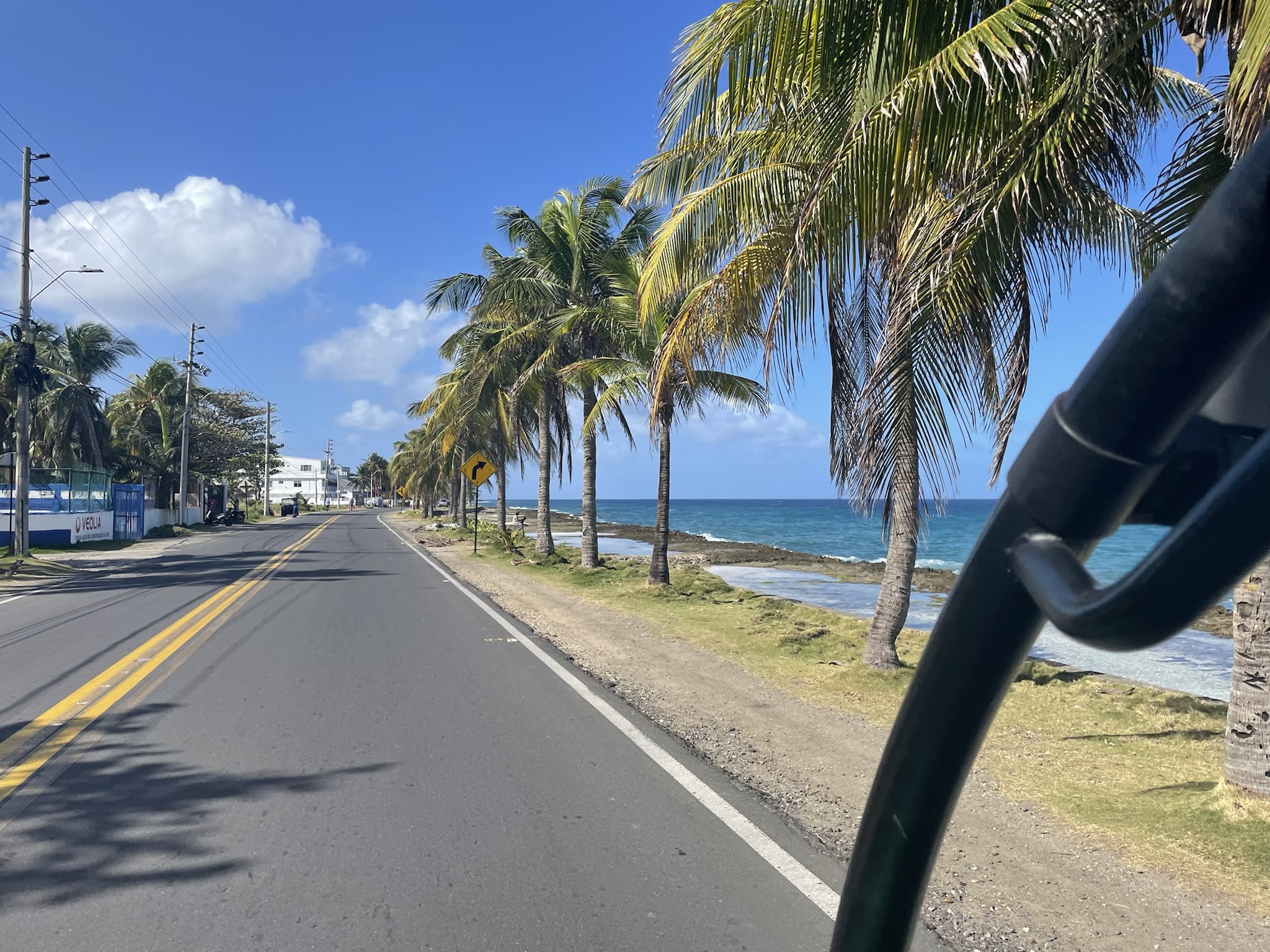

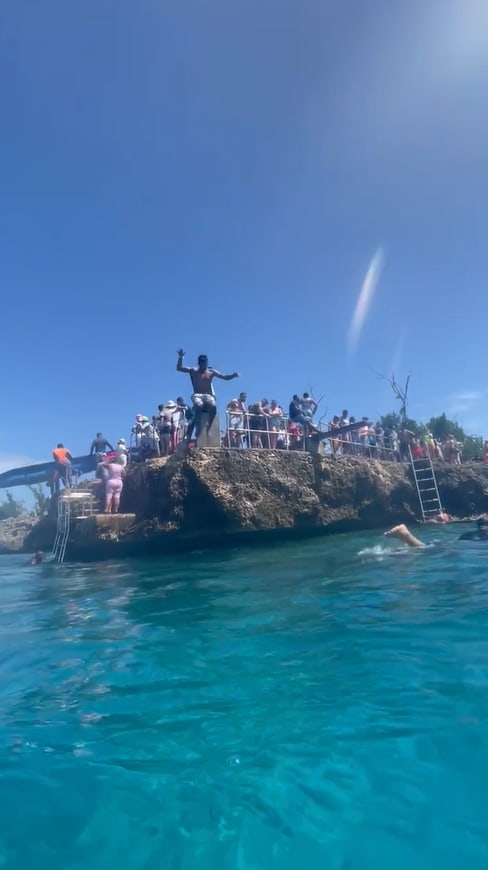 Eco Park - Crystal clear waters ideal for snorkelling, but awfully crowded. Very rude people.
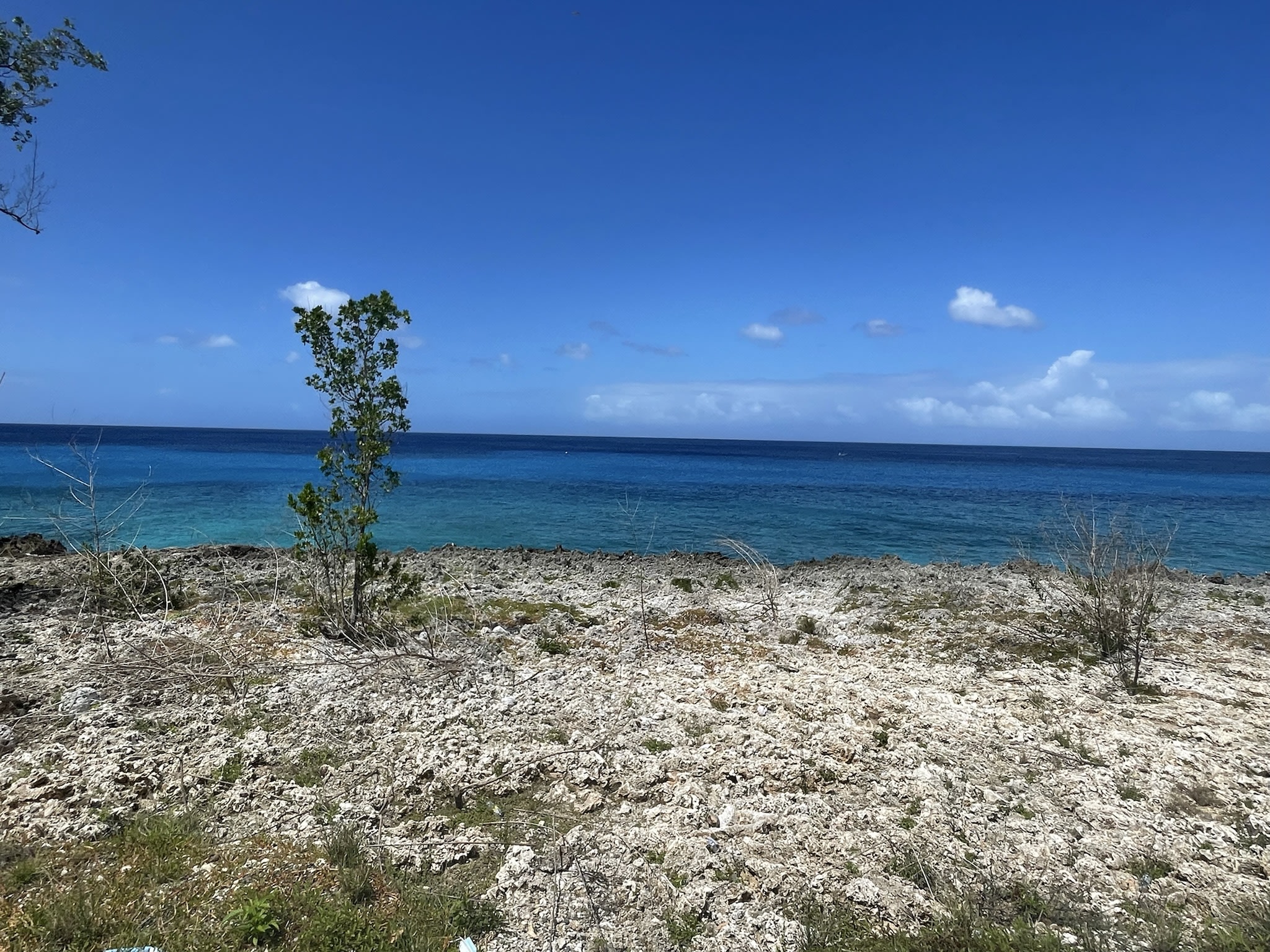 Rocky landscapes
 Chilling 10 minutes before a furious storm broke up
San Luis region (East), Nicodemus Wreck and the best beach
We stayed three more days at Hotel Cocoplum Beach, located in the east coast (San Luis area), away from the main town. The rooms were very comfortable, and the best part was the endless hotel beach, from which you can swim/walk to the Rocky Cay (about 100 meters inside the calm sea). The wreck of the cargo ship Nicodemus is right next to the Rocky Cay, offering nice views and great snorkelling.
 The view from Rocky Cay - At the distance, San Andres Island
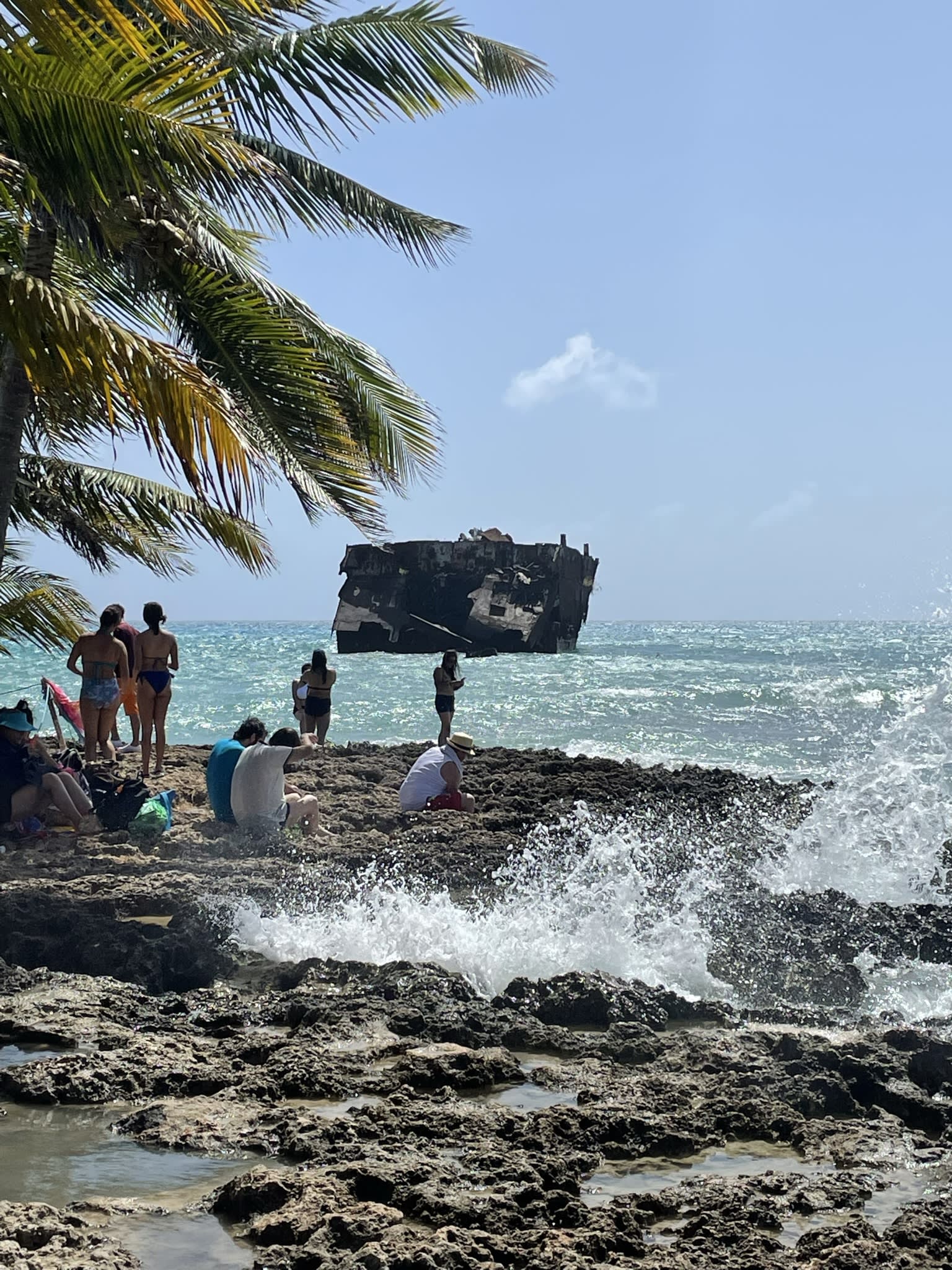 Nicodemus wreck
We also booked a diving trip on a morning, and they took us to see an underwater Poseidon surrounded by colourful fish. I was already an experienced diver, but Leo did his baptism here, which I highly recommend because the waters are calm and the fish plentiful.
 Underwater Poseidon, a beginners diving site that is ideal for those looking to have a first experience diving
Cartagena de Indias
Bocagrande Neighborhood
From San Andres, we flew to Cartagena de Indias, located in the Caribbean coast of mainland Colombia. The city center features an impressive array of fortifications including walls and a few strongholds; and the city has a magnetic colonial feeling.
We stayed south of the city center, in the modern district of Bocagrande, at one of the tallest skyscrapers: Palermo Sunset. I had never ever stayed in such a high floor, it is perhaps one of the most beautiful stays I ever experienced: sea view, artificial lake view, impressive heights, modern and comfortable.

We booked all our accommodation from Booking.com. Bocagrande is modern, has excellent views and relatively close to the old town, I’d definitely stay here again if I’m ever back.
The Walled City: Colonial Gems, Fortifications
We did a walking guided tour of the heart of Cartagena, and complemented it with a few extra landmarks of our own choosing. It was sunny and a little hot, but we walked ourselves ragged and explored every corner of the Walled City. I enjoyed myself quite a lot, as there is so much colonial architecture, plazas, museums, churches, and good coffee shops.
Cartagena is very rich in history. Founded in 1533, it quickly became a vital Spanish port on the Caribbean coast. It features a well protected natural bay, ideal for ships to anchor. Thus, it developed into a hub for trade of gold, silver and enslaved Africans.
 Monumento Torre de Reloj, dating to the 1800s, gateway in the city walls with a clock tower
 Plaza de los Coches
 Plaza de la Aduana
It served as a treasure route stop for ships that sailed from South America to Havana and then Spain. In the late 16th Century, Cartagena became one of the largest entry ports for enslaved Africans.
Because of this wealth and role, pirates, privateers (pirates with licence) and rival European powers constantly attacked (England, France). To defend the treasure and people, the Spanish Crown invested heavily:
- Walls were built between 16th and 18th Century
- Castillo San Felipe de Barajas: A colossal fortress on a hill
- Multiples forts and bastions, guarding the bay entrance and inner harbor
[carousel]
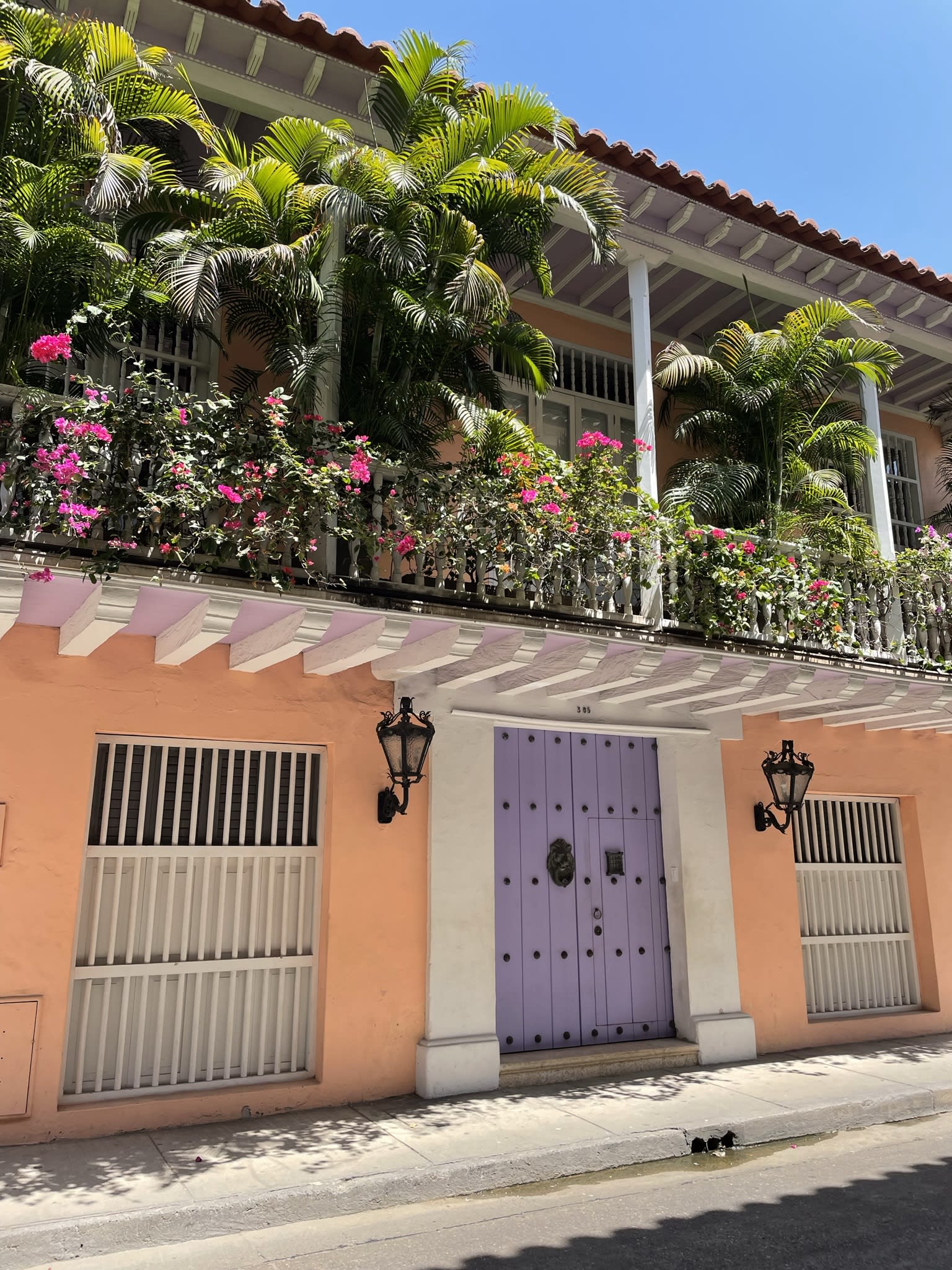
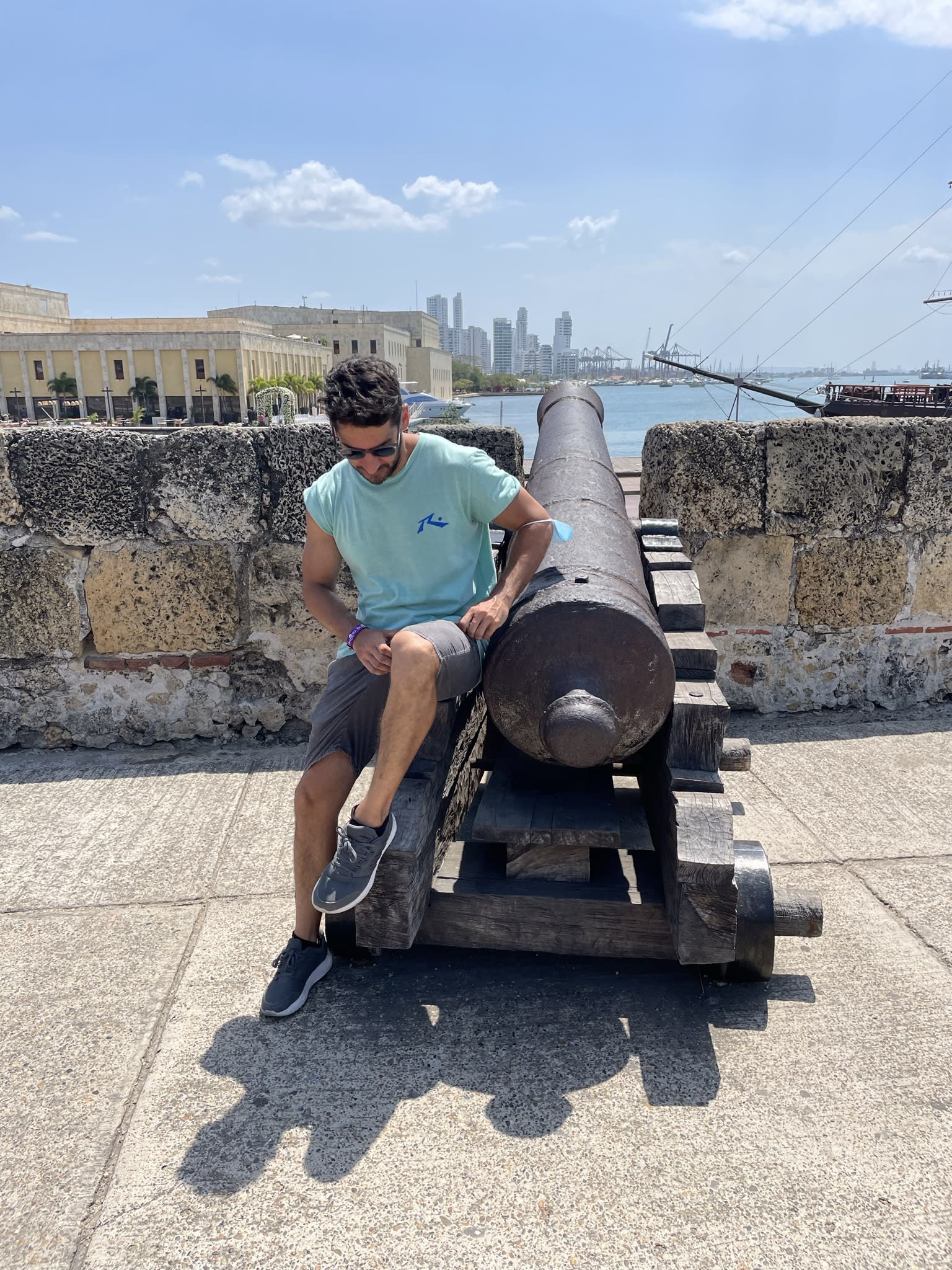 Baluarte San Ignacio at Cartagena de Indias
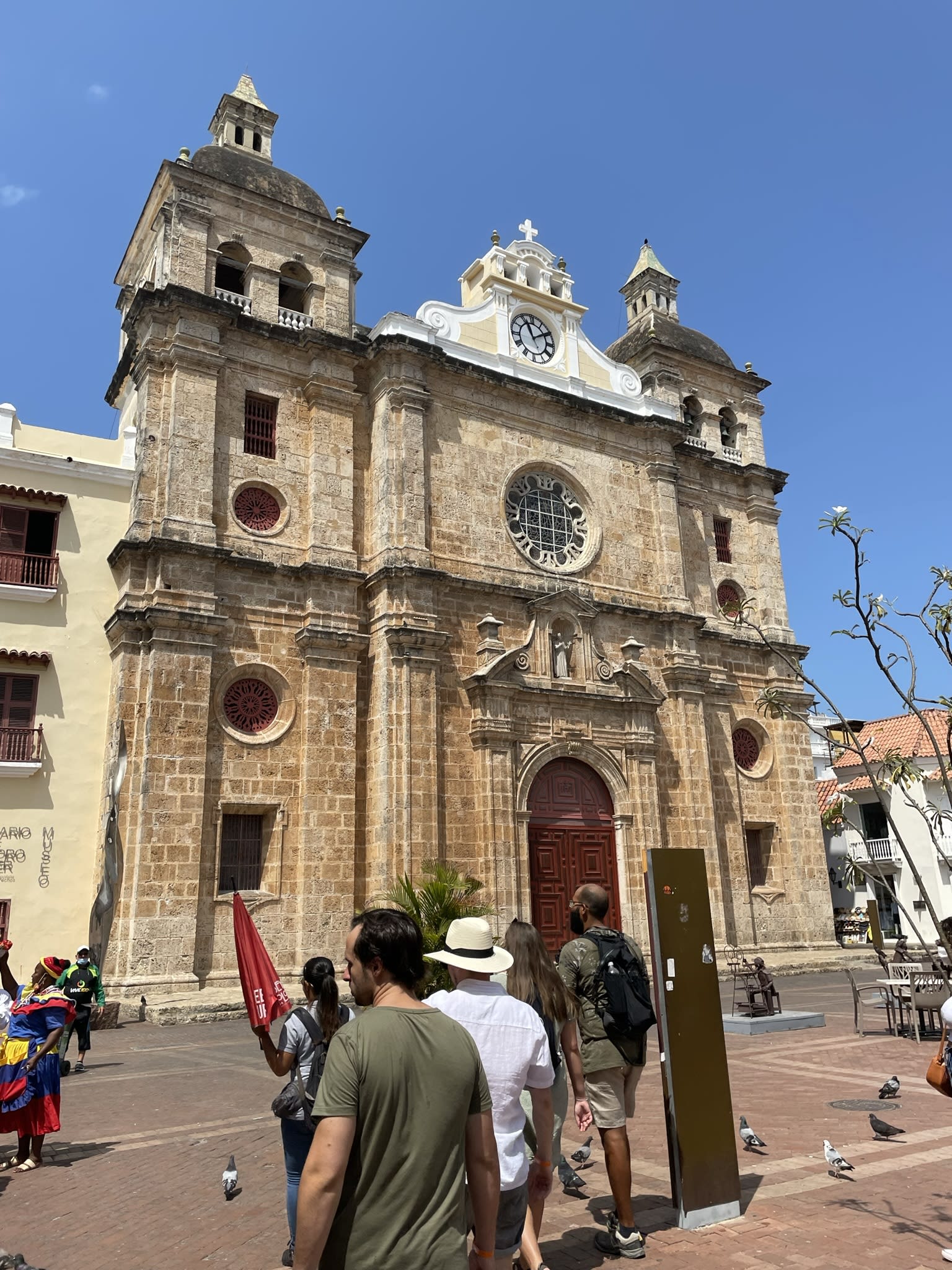 Santuario de San Pedro Claver, a 16th Century Church dedicated to a Spanish priest who spent his life trying to alleviate the black slaves at Cartagena
[/carousel]
The many strongholds scattered around the city make you really understand how well guarded and strategically important this port was in the past. It is a little surreal to walk in those colonial remnants and see the modern skyscrappers of Bocagrande in the background.
[carousel]
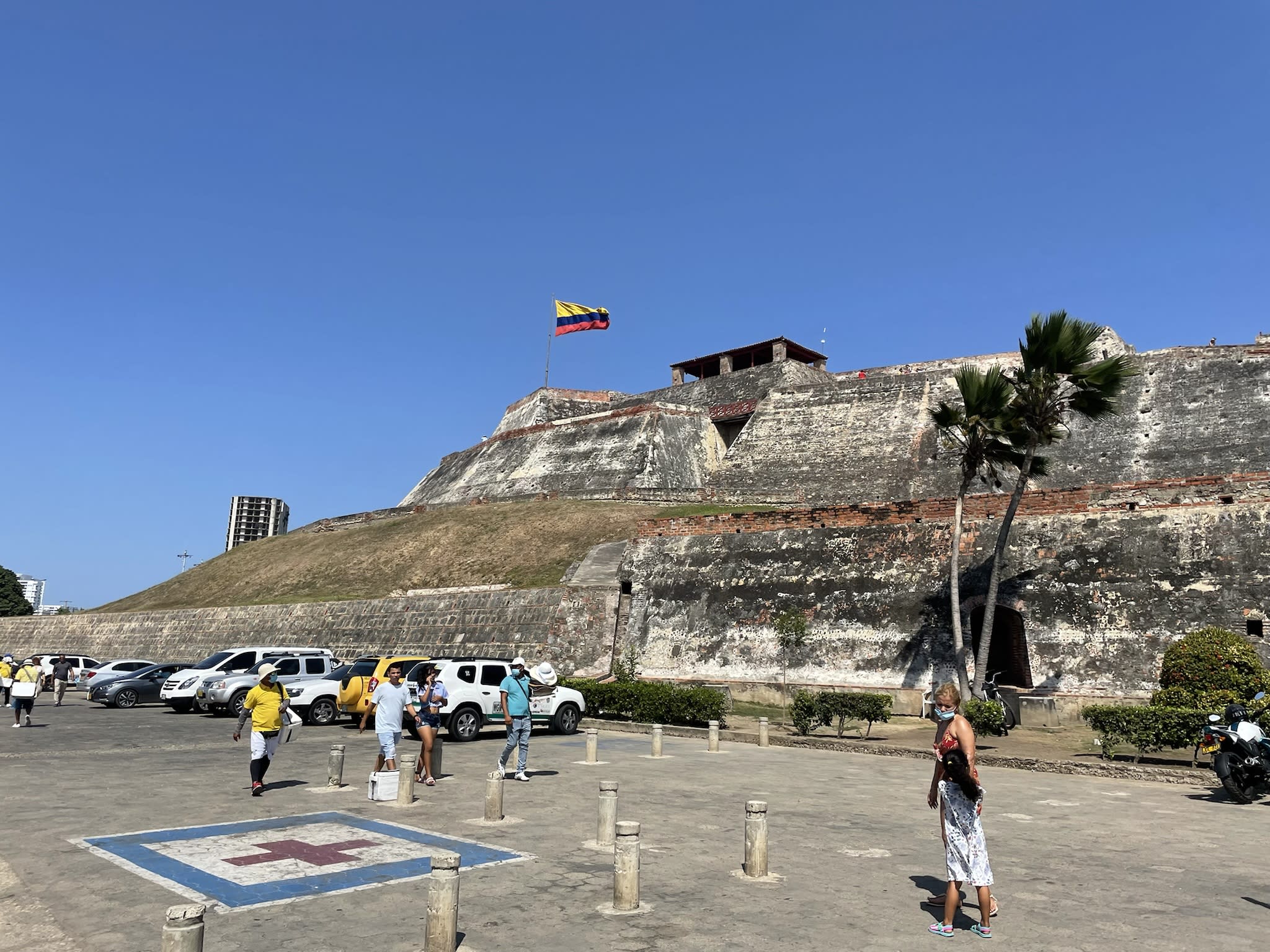 San Felipe de Barajas Castle (more like a stronghold or fort)
Colombia declared independence in 1811. Today, the walls and forts are UNESCO World Heritage Sites.
[/carousel]
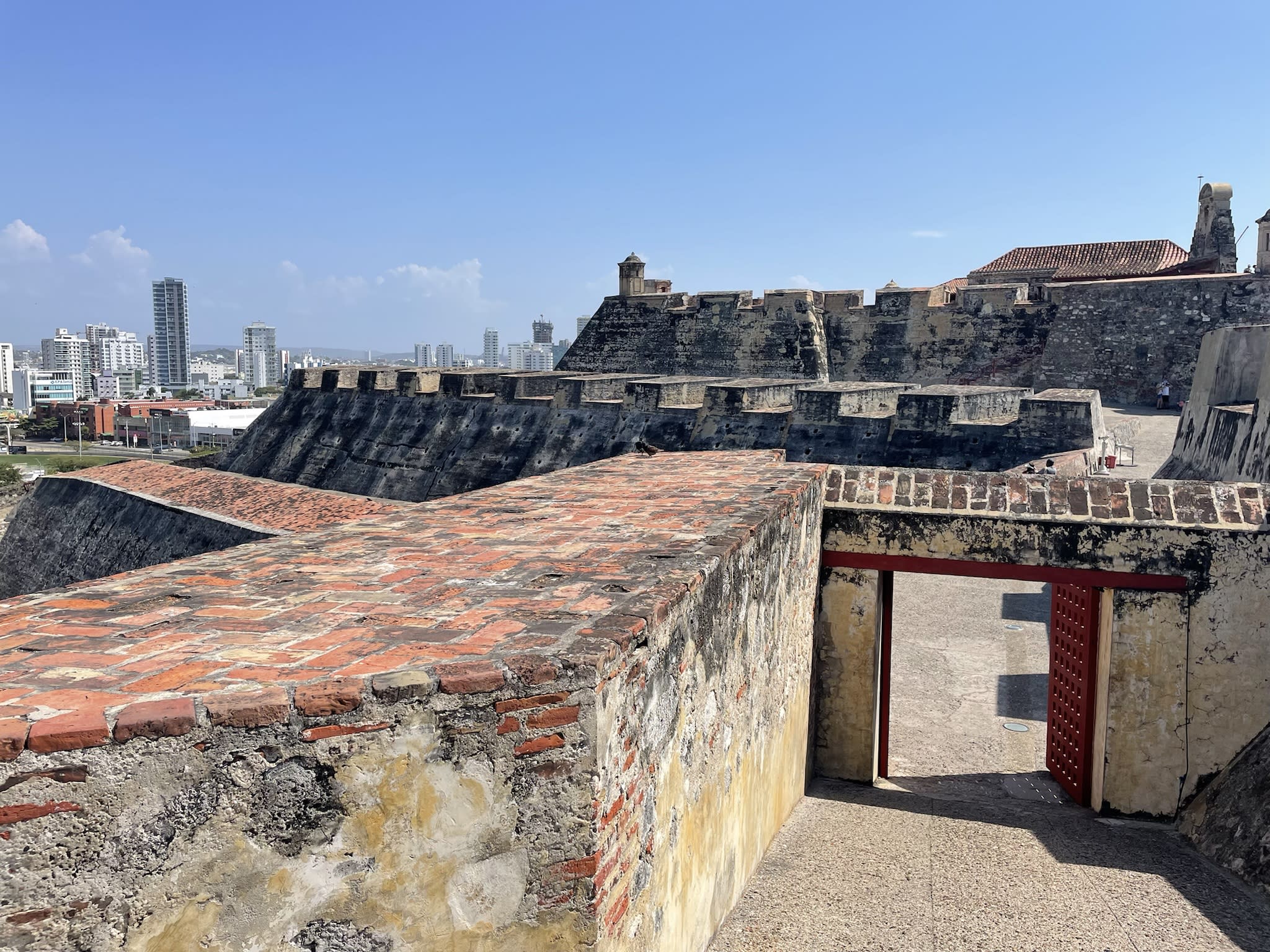
 Bocagrande at the distance, from the castle
Coffee shops were critical to fuel this trip. I highly recommend visiting the award winning Cafe San Alberto, within the walled city. The place is cute, but in high demand.
[carousel]
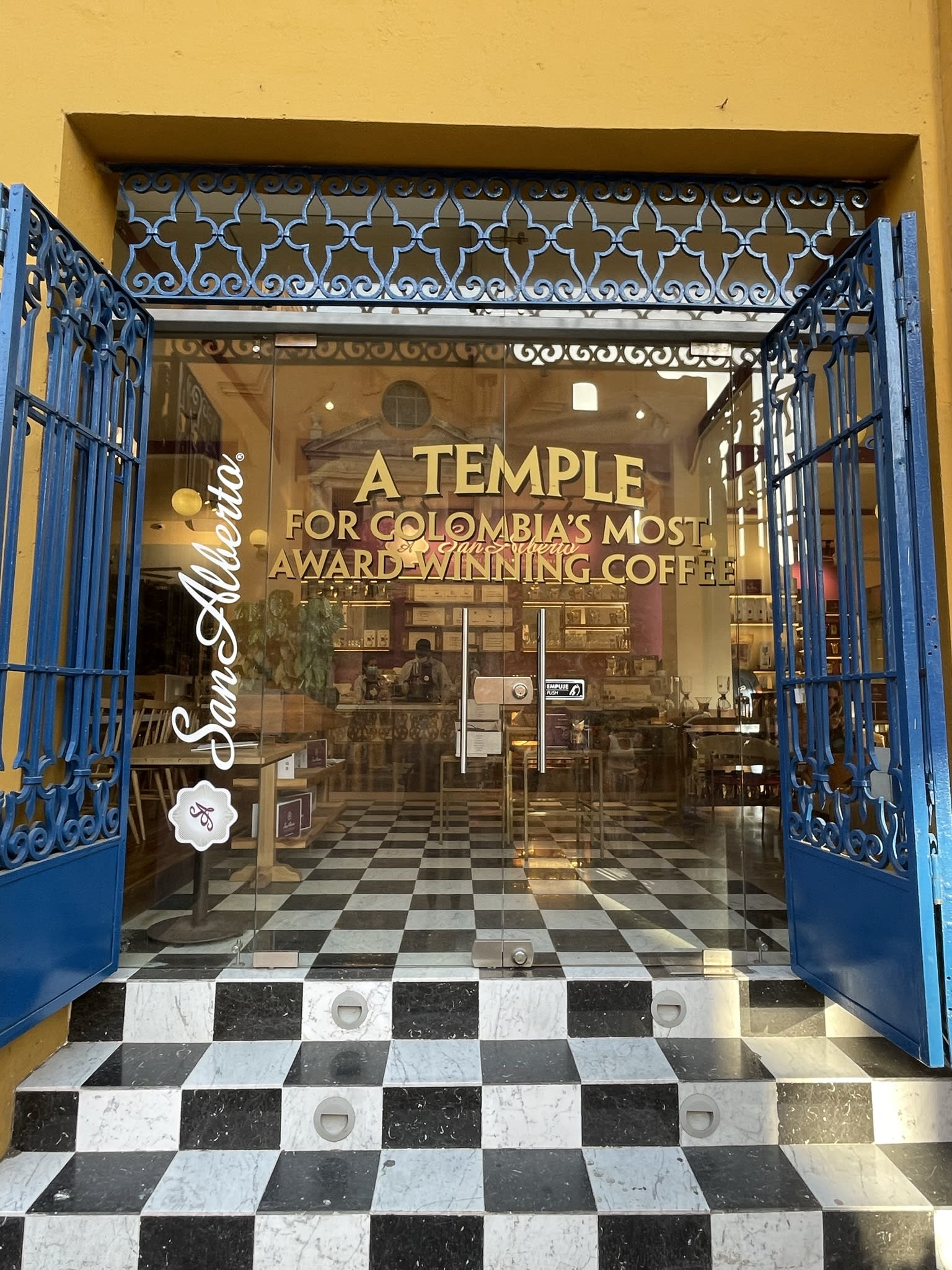
 Regular coffee stops were instrumental in fuelling the trip. This one was at the famous coffee shop “San Alberto”
[/carousel]
Getsemani
After we ticked all the highlights of the colonial old town, we visited Getsemani, just outside the walls. Colorful, artistic, lively nightlife, street art, more local and bohemian. Leo is a big fan of street art.
Marina and Port Area
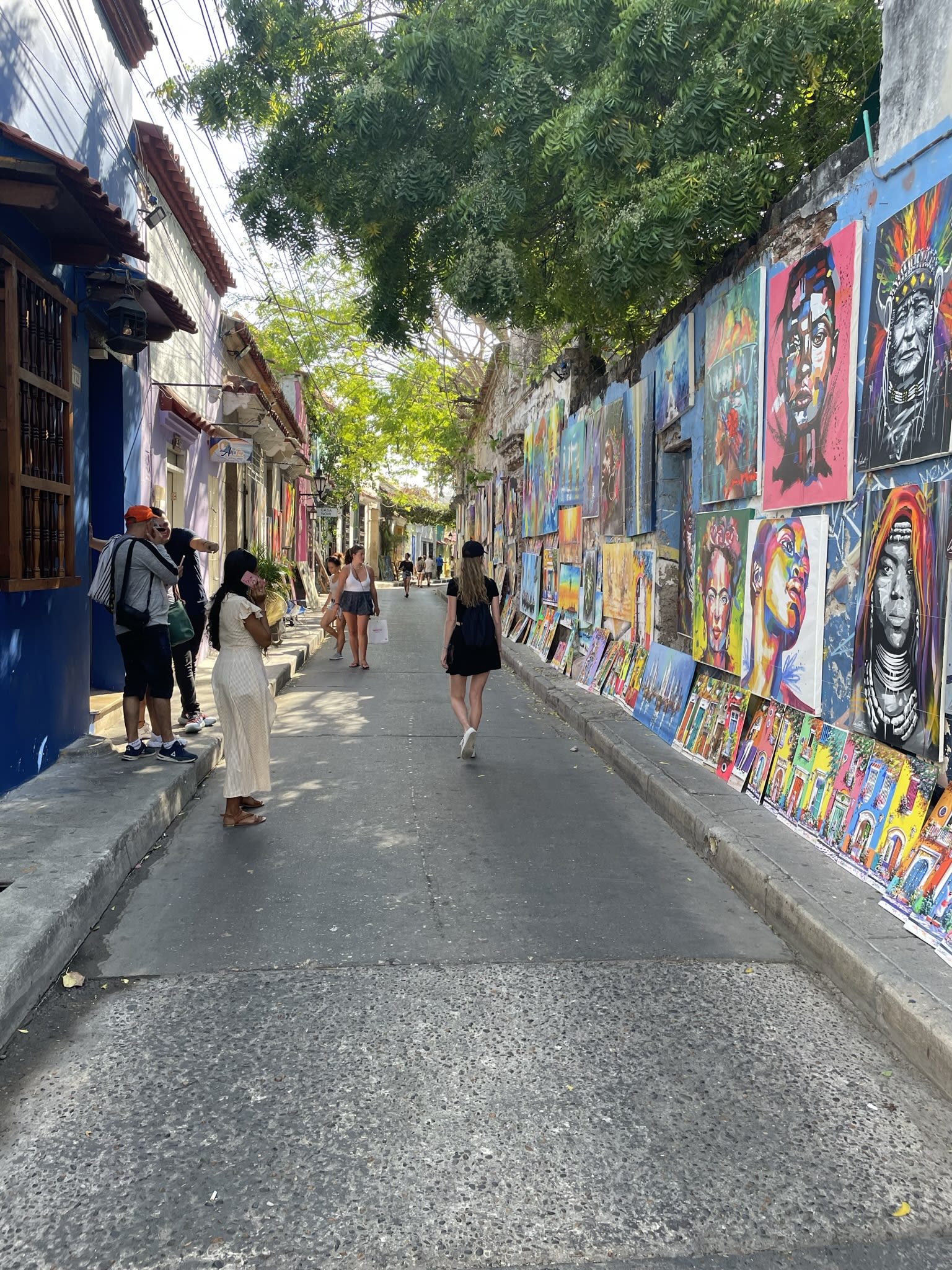
Finally, we walked around the port trying to find a suitable place to purchase a day trip for the next day to Isla Baru. I remember we were exhausted at that point, having walked all day under the scorching sun. Literally all vendors seem like scams, so we were undecided where to book.

I am not sure if there are any reputable or trustworthy tour operators. But our strategy of “going to the marina, seeing the different vendors and picking one” did not work at all, since our tour to Isla Baru was disastrous. Next time I’d book via tripadvisor, getyourguide or any provider where you can read other traveler’s feedback beforehand.
Sunset from Baluarte Santo Domingo
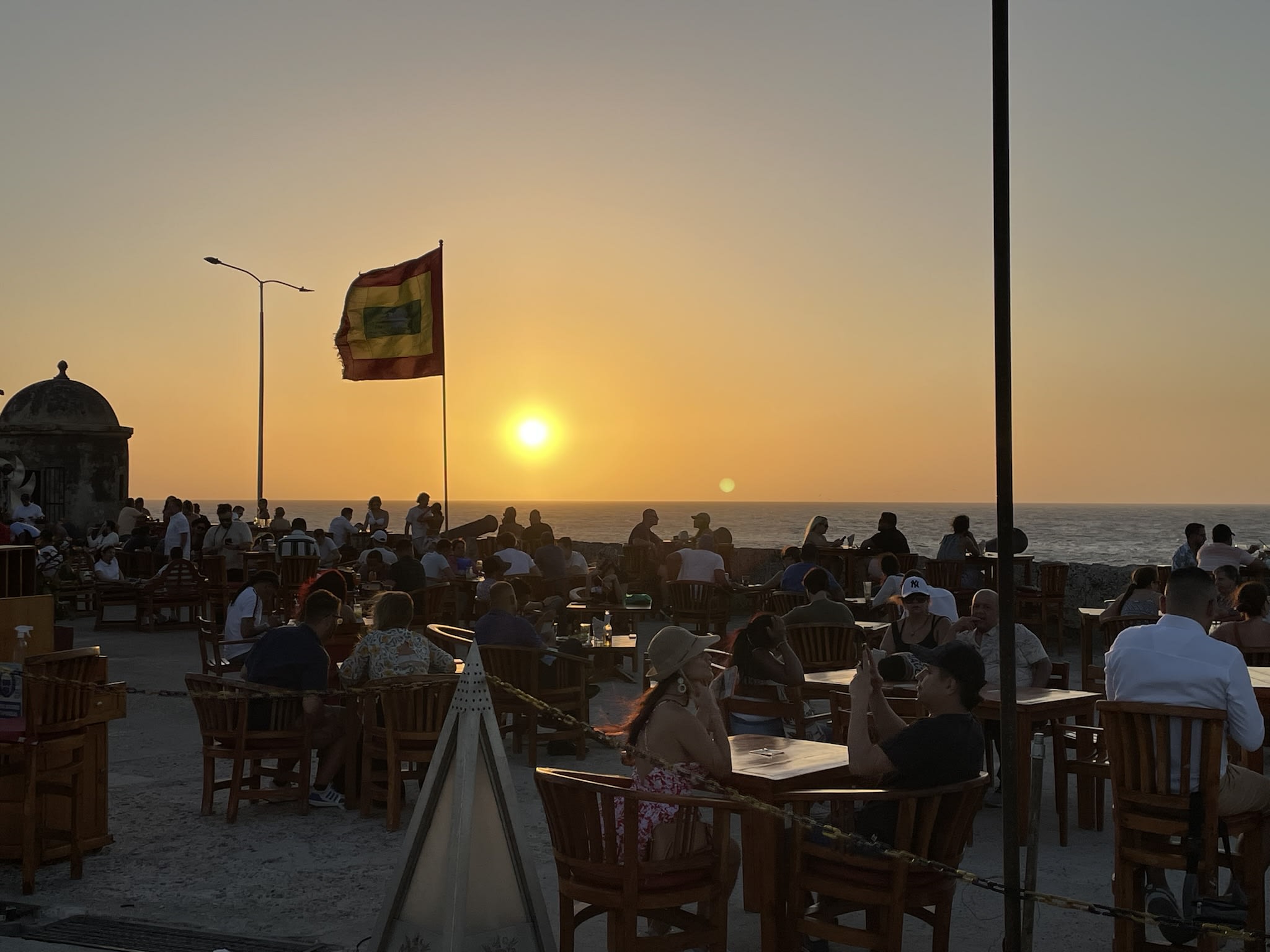
As planned, we enjoyed the sunset view from Baluarte Santo Domingo. It was a pretty popular and crowded spot, so we contented ourselves with drinking a beer in a random corner.
[carousel]

[/carousel]
 Taking advantage of the golden hour at Baluarte Santo Domingo
A disastrous day trip to Isla Baru
Early in the next morning we joined a group tour to Isla Baru. The tour was a chaotic and unprofessionally run. The guys who ran it were clearly desperate to get the money, not knowledgeable at all about the sites we visited, underpaid and totally unconcerned about their natural environment.
 The boats were small and packed with people. All boats nearby seemed to operate similary, apparently on family-run basis.
There was a great snorkelling stop in front of Playa Blanca Baru, not quite in the beach but inside the sea, where we stopped for a while:

I was aghast at an illegal stop we did at a protected area, full of manglares (mangroves) and cute raccoons. Problem was that the tour “guides” were desperately feeding the raccoons so that they’d get closer to tourists and get pictures with them (likely just hoping for a tip). Everybody was utterly damaging and disrespectful to the mangroves, climbing out of the boat, damaging the trees and harassing the raccoons.
The guys driving the boat literally told us it was illegal to enter the mangrove forest, and they were constantly checking to see if there was any police patrol. They had tourists step into protected mangroves just for an extra tip, and kept feeding food to the raccoons so people could take pictures. The whole episode dragged for ~1.5 hours!
 The raccoons being offered bread by tour guides and tourists in our boat
We had some free time in a beach next to the Decameron hotel. Funnily, there was a clash between the hotel staff and a lady leading a group of activists. The hotel was claiming exclusive rights to the beach, and the lady was arguing ferociously, recording, etc.

The main stop of the tour was Playa Blanca, the best beach around with white sand and crystal clear water. Unfortunately you had to walk through a series of extremely poor, derelict tents and shops to reach the beach, and it left me shocked at the level of poverty and deprivation of Colombia.
Even after you reach the beach, you are meters away from utmost poverty, and you are harassed by an endless succession of locals trying to sell you crap. Moreover, the place was extremely crowded. Despite the considerable length of the beach, there was no way to get some privacy or calm to appreciate the beauty. I would not take a tour like this again, ever.
As an Argentinian, I should not be that surprised to see poverty. But Isla Baru literally looks like a Brazilian Favela or an Argentinian Villa right in the middle of a tourist hotspot, which makes the experience extremely uncomfortable, uninspiring and potentially unsafe.
 The beautiful, pristine beach of Isla Baru
Bogota
Parque 93 and The Gold Musem
Most travel guides don’t recommend spending much time in Bogota, if any at all. We decided to give it a try in our last two days, since we had to fly out from there anyways. We stayed in a fancy neighborhood called Parque 93, at a modern Novotel.
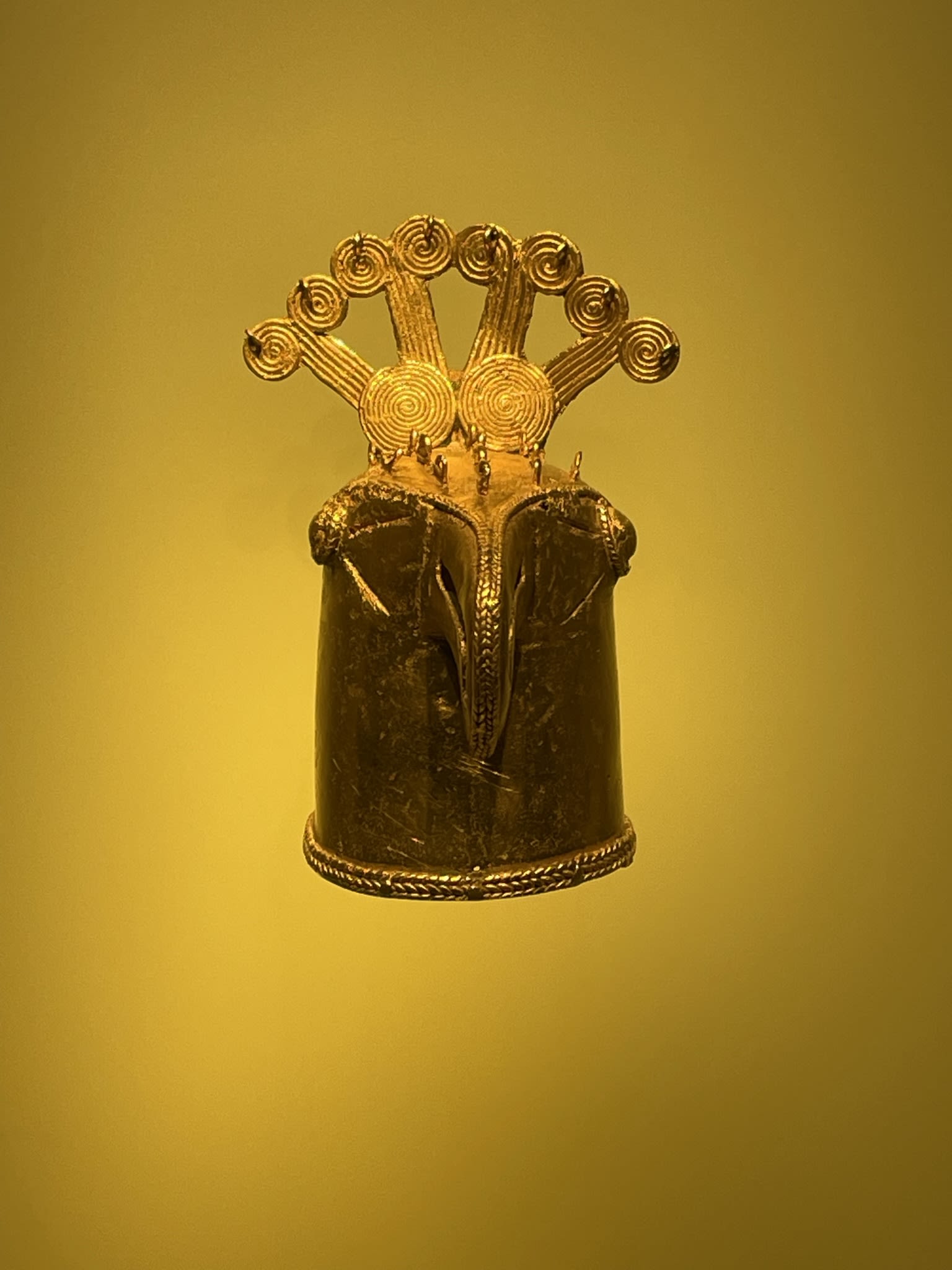
The highlight of the city was the Gold Museum, since Colombia has one of the richest pre-Columbian gold heritages in the world. It shows more than 34000 golden pieces, plus many other archaological objects from all over the country. I was pleasantly surprised to find such a world-class museum, with carefully curated exhibits.

[carousel]
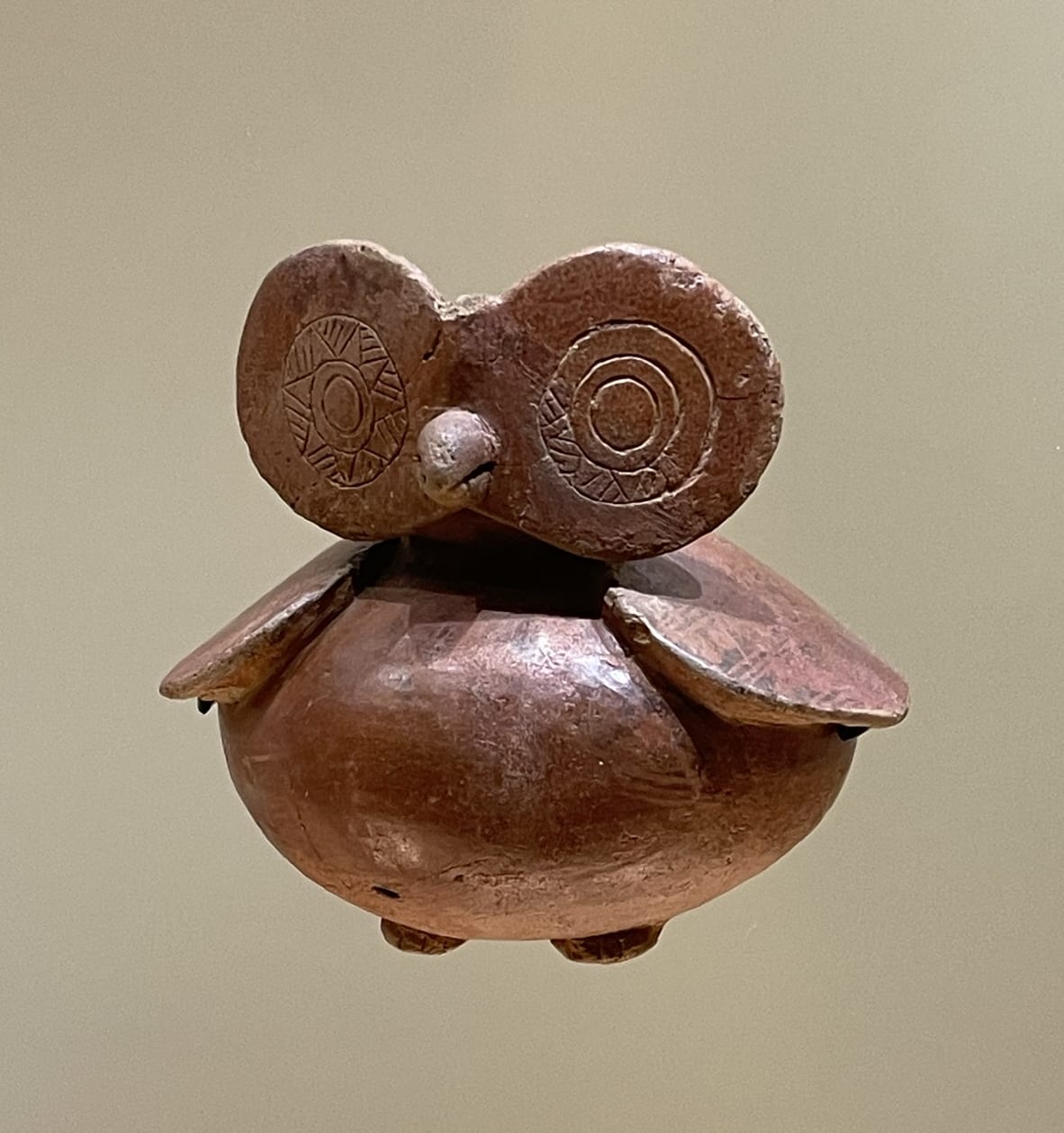
 Museum diagram showing the possible colours obtained by combining gold, silver and copper.
[/carousel]

La Candelaria and Chapinero
Plaza de Bolivar is the main square of the country, located in La Candelaria. It features a statue of Simon Bolivar, and it’s surrounded by the main Cathedral, the Lievano Palace and the congress.
[carousel]
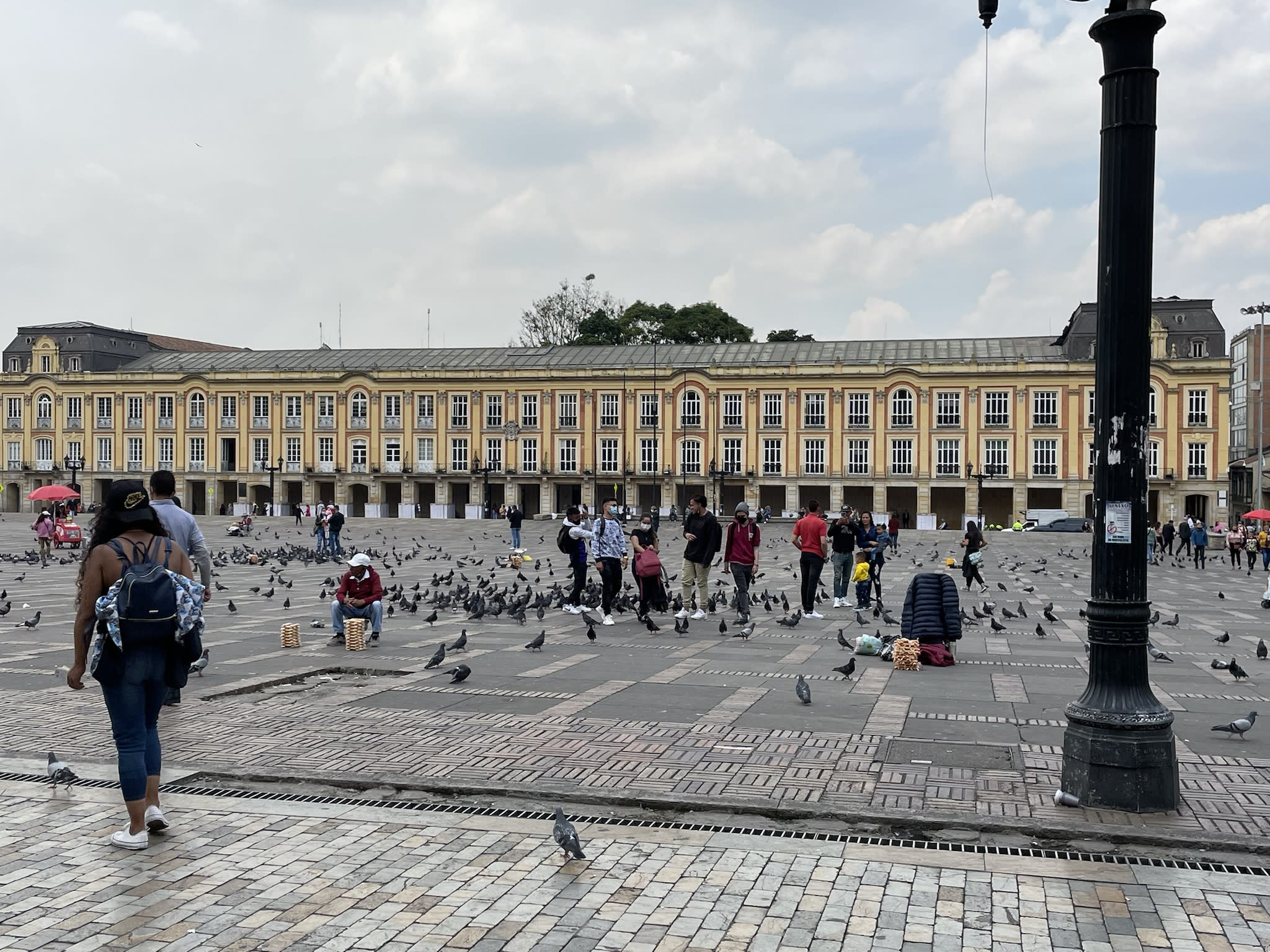 Palacio Lievano, with colonial origins, is the mayor’s HQ
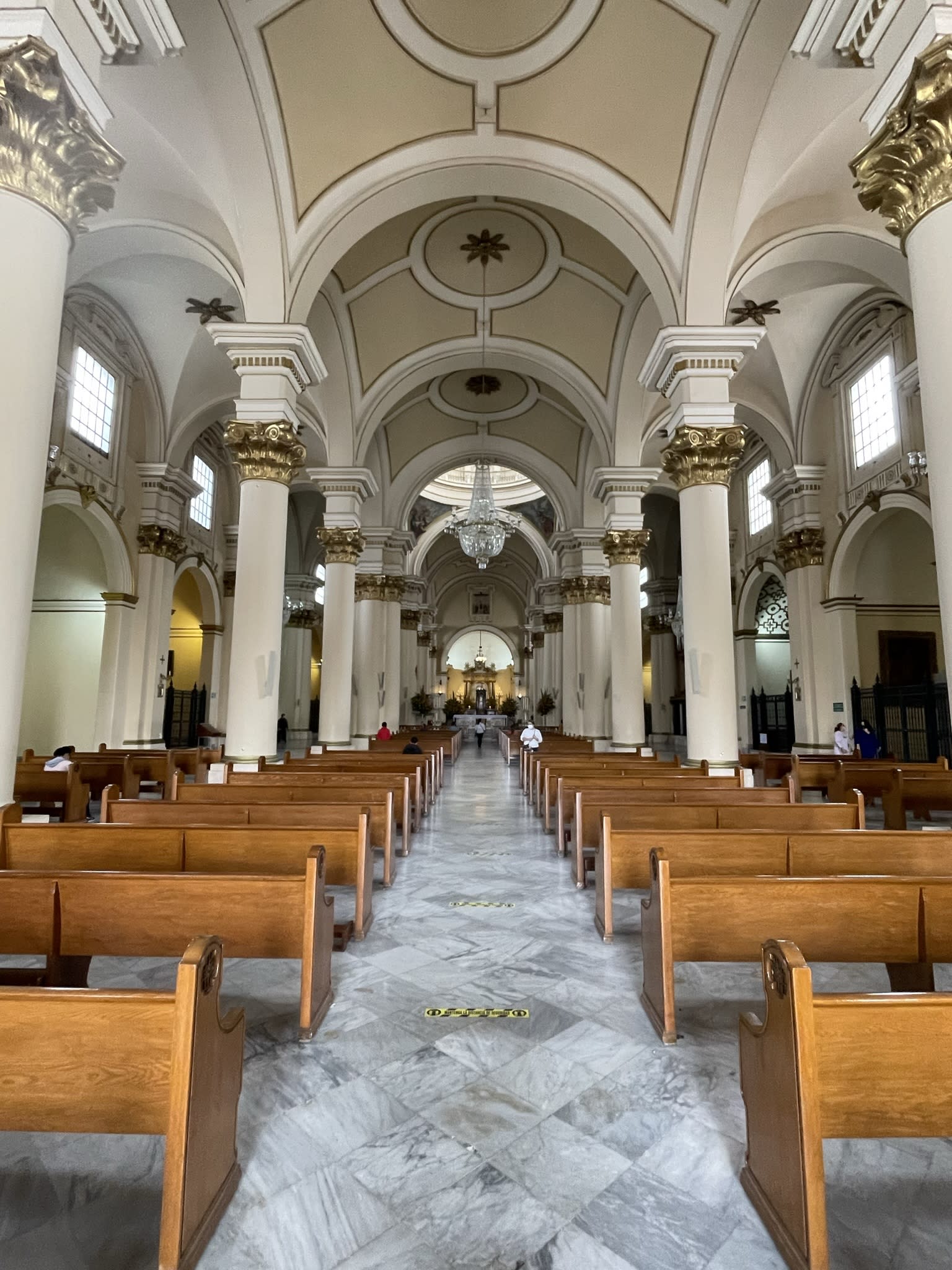 Cathedral, interior
 Cathedral, exterior
[/carousel]
 Narrow streets at La Candelaria neighborhood
 Last meal before departure, at Chapinero neighbourhood
We had such low expectations for Bogota that we ended up having a good time. We stayed mostly within the nicer neighbourhoods and took it very easy.
Remarks and feelings
Colombia offers a mix of beaches, Caribbean flair, colonial charm, and Latin American energy. With affordable domestic flights, it’s easy to see different regions in one trip. Although it didn’t fully win me over and I probably wouldn’t return, I understand why many travelers do.
For me, Colombia will always be special as the first place I visited with my partner, and the starting point of many more journeys together.