Edinburgh: 48 Hours in Scotland's Dark Heart, from London
Edinburgh
Revisiting Edinburgh
 Edinburgh Castle from Princes Street
In 2022 I managed to persuade my boyfriend to squeeze in a visit to Edinburgh in his already packed itinerary around Europe. Scotland is my favourite country in the world, and I even though I know that two days is not enough to even scratch the surface, I really wanted Leo to visit.
Luckily we managed to capitalize on the long summer days and visit the most iconic landmarks of Edinburgh, the city where Harry Potter was born!
[content_table]
Itinerary
Day 1:
- 5.45 AM train from London’s King’s Cross to Edinburgh Waverley
- Sightseeing at Edinburgh New Town: The Balmoral, Scott Monument, North Bridge
- Sightseeing at the Old Town: The Mercat Cross, St Giles Cathedral, The Royal Mile
- Edinburgh Castle!
- Greyfriars Kirkyard, Nicolson’s Cafe
- Overnight at Haymarket
Day 2:
- St Giles Cathedral
- Calton Hill
- Castle Street, Prince Street
- Dean Village
- Beautiful Starbucks with Castle View
- Ride back to London
Trip Journal
London to Edinburgh Train
Our trip started in the best possible way, since our train’s departing platform at King’s Cross Station (London) was literally next to the platforms where the famous Platform 9 3/4 scenes of the Potter movies were filmed.
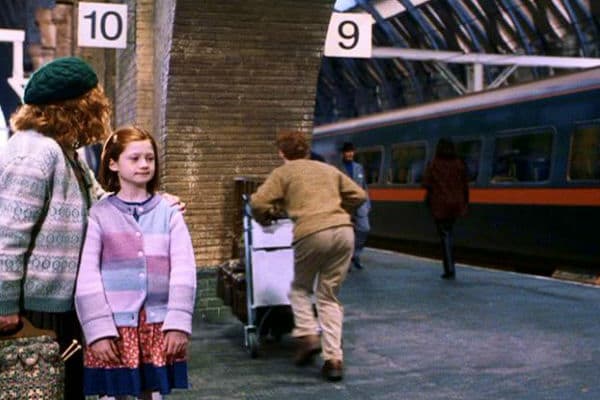 A scene from first Potter movie
 The platforms where the scenes were filmed are usually restricted unless you have a train ticket that actually departs from there
We rode the LUMO train, which takes about 5 hours and costed £60 round trip. You can usually find cheaper fares for flights, but the train is by far a superior choice if you factor in travel times to and from the airports, given that both stations are very central.
Sightseeing: New Town, Old Town and The Royal Mile
As soon as you climb out of Waverley Station, you find yourself in Edinburgh New Town, and you are immediately rewarded with the sight of many distinctive landmarks: Scott Monument and the Balmoral. We walked around the New and Old town, and then made for the castle as we had timed-slot entry tickets.
 Scott Monument, dedicated to Sir Walter Scott
 The Balmoral
 The Mercat Cross - Checkout this -panoramic view
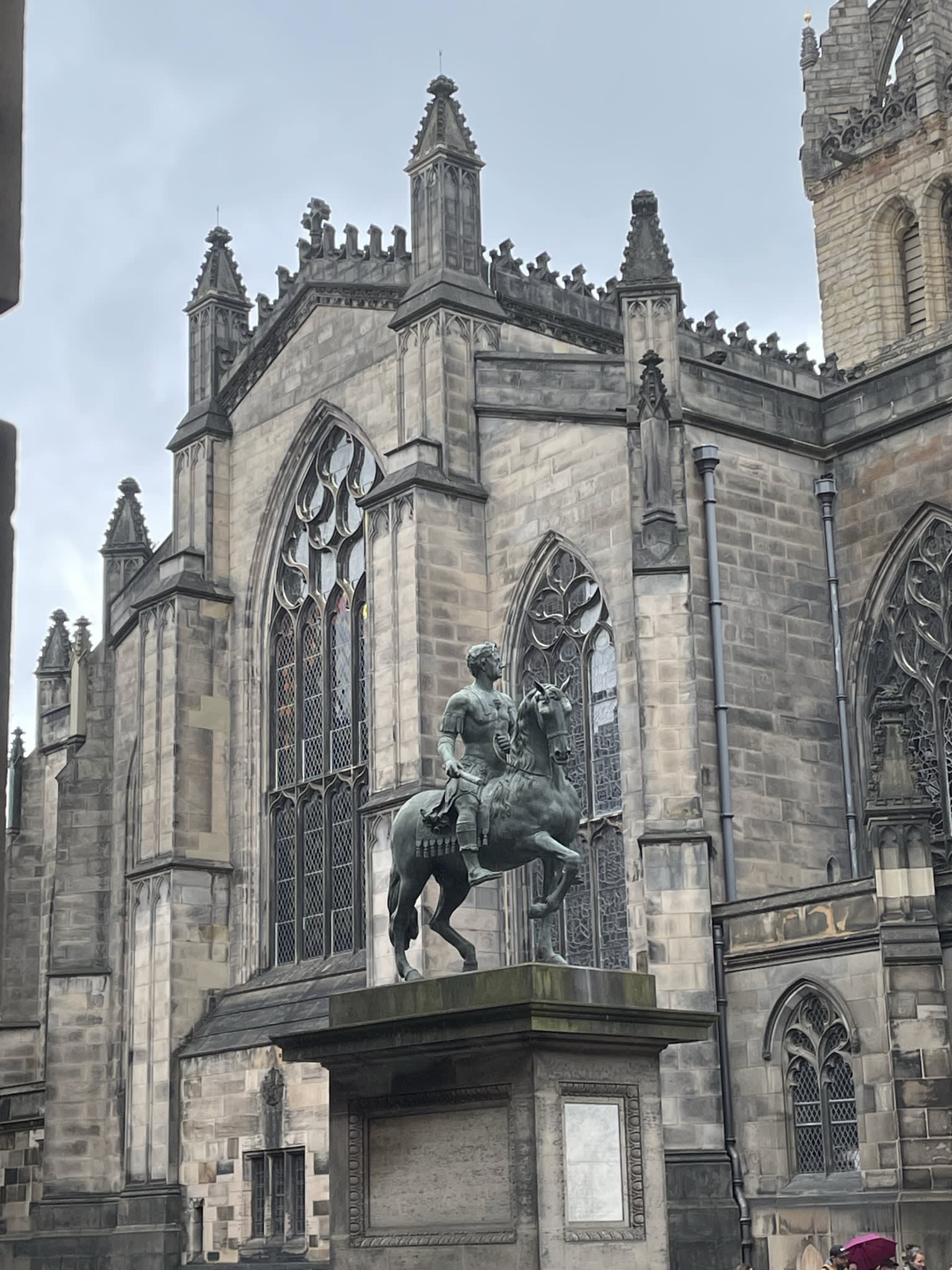 Charles II Statue and St Giles Cathedral as seen from Parliament Square
 The buildings in the city all have this gloomy, dark aspect that makes it so atmospheric

 Edinburg’s Grassmarket
 Another pic of the Grassmarket
Edinburgh Castle
The castle is the most distinctive and popular feature of the city, impressively perched atop a large rock and looking very much like Hogwarts School. You need to book tickets in advance, and pick a specific time slot for your visit. At the time of our visit in 2022, tickets costed £18.
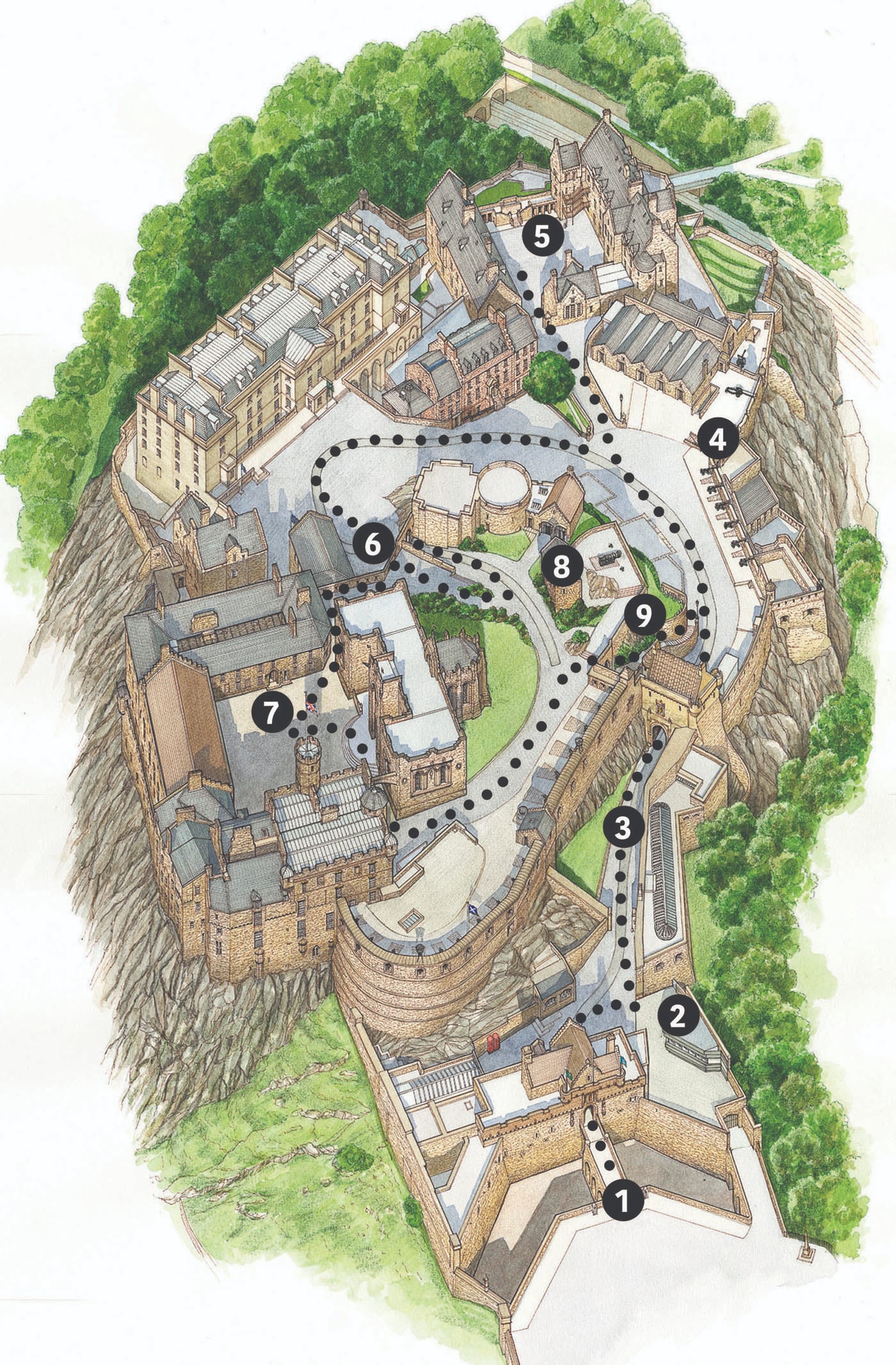
We walked up the Castle hill, which is full or interesting shops and historical buildings, scanned our tickets, joined the crowds visiting the castle highlights. To be fair, the interior of the castle complex is a little underwhelming, I was expecting more given how striking it looks from under the hill.
I’ve visited castles with much more striking fortifications, and the average palace or castle in England will have much opulent interiors. That said, what makes this castle so important is the rich history and the symbolism it has for Scotland. The castle is the embodiment of Scottish national pride, and nowhere can that be felt more strongly than in the Crown Room where the Honours of Scotland are on display.
Castle Gate
Inscribed atop the 1888 gates of Edinburgh Castle, a centuries-old warning can be read. The motto of the Kingdom of Scotland: Nemo me inpune lacessit, which translates from Latin as ‘No one provokes me with impunity


The motto is often associated with the thistle flower, which indeed cannot be harassed with impunity because it prickles.

The Great Hall
King James IV built the Great Hall as an awe-inspiring stage for state banquets and ceremonies. Completed in 1512, it was a place for high politics, international democracy and feasting. The king had little time to enjoy his new addition though, since he was killed in 1513 fighting to forces of King Henry VIII of England, his brother-in-law.
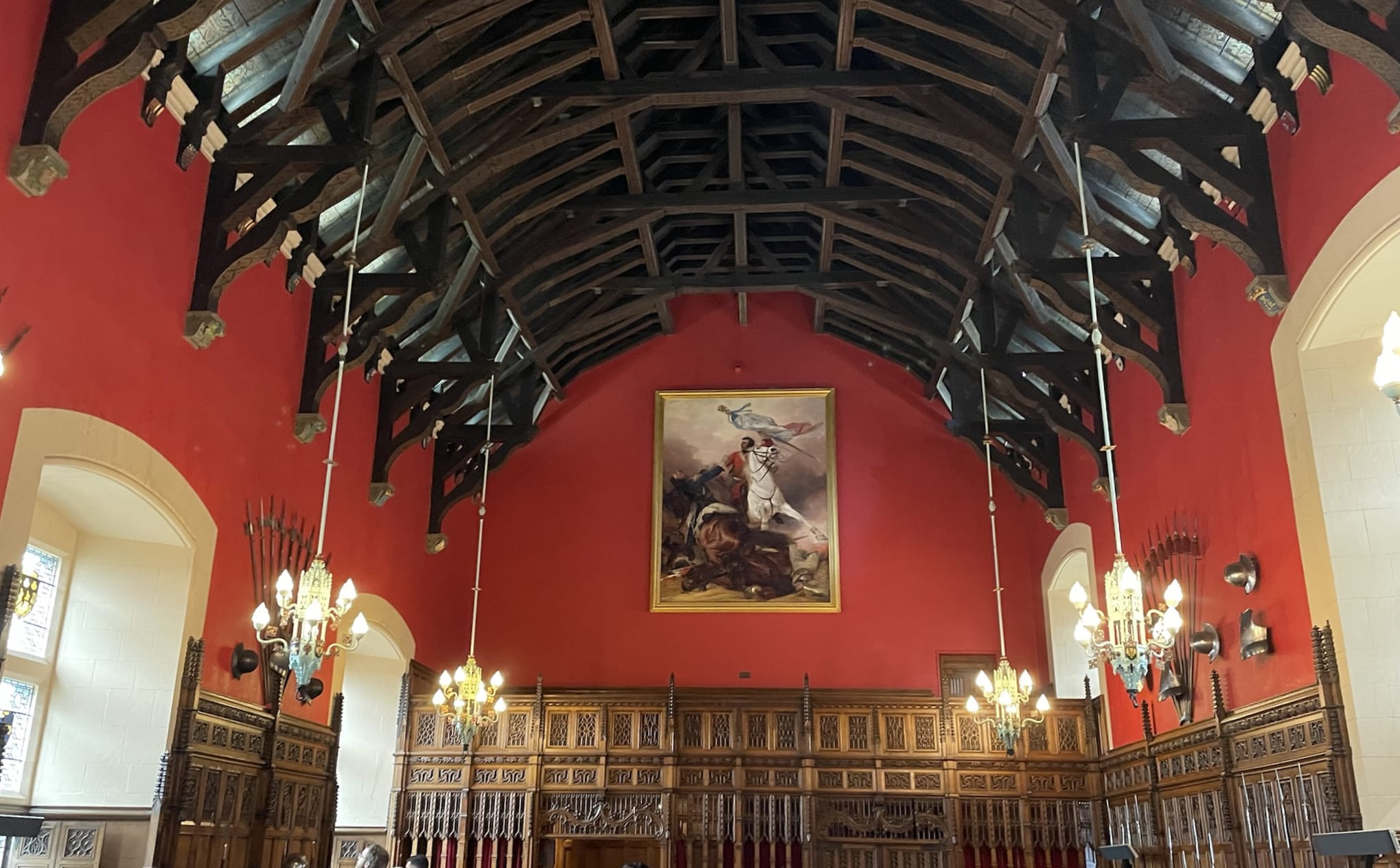 *The walls were decorated with medieval weapons throughout. The wooden roof is made of giant beams *
Grand state events took place here:
- Mary, Queen of Scots held a banquet here on her return to Scotland from France in 1561.
- Oliver Cromwell’s army captured the castle in 1650 and made the hall into barracks and later as a military hospital.

Crown Square and the Royal Palace
Crown Square is arguably the most important square of the castle, surrounded by:
- The Great Hall
- The Great Palace, which is split in two: the Honours of Scotland and the Royal Apartments.
 Exterior of the Royal Palace
Crown Square took shape over time, and many key moments of Scotland’s history took place here:
- King James IV completed the quadrangle in the early 1500s
- Queen Mary of Guise died in the palace in 1560.
- Her daughter Mary, Queen of Scots, gave birth to James VI here in 1566. His birth chamber is a highlight for many castle visitors today.
- King Charles I was the last monarch to stay at the palace, in 1633 ; before his Scottish Coronation
Inside the palace, one can see a number of interesting rooms. Pictures are not allowed except in a few areas.
 Royal coat of arms
The Royal Coat of Arms if full of symbols:
- The unicorn, the national animal of Scotland, symbolizes purity, strength and independence. It’s been used in Scottish heraldry since at least the 12th century.
- The unicorn is chained, symbolizing tamed power.
- The lion represents England, and together they represent the union of the two kingdoms.
- The shield in the centre shows the quartered coat of arms of the UK (England, Scotland, Ireland)
The Honours of Scotland were exhibited in the Crown Room, and they are the oldest Crown jewels in Britain. Made of gold, silver and precious gems, the priceless crown, sceptre and sword of state are objects of immense significance.
 The Crown of Scotland, crafted of gold and silver, is laden with 94 pearls and 43 gemstones including diamonds, garnets and amethysts. See this great 3D model.
The Crown weights 1.59 kg; James V had the crown made in 1540, likely in part from the earlier Scottish crown
 The Sceptre was created in Renaissance Italy and given to James IV by the Pope Alexander VI around 1494-1495
 The Sword of State, gifted by Pope Julius II to James IV in 1507
The Stone of Destiny (aka the Stone of Scone) is an ancient sandstone block used in the coronation of Scottish Kings at Scone Abbey; taken to England in 1296 and returned to Scotland in 1996.
- Its first recorded use was in 1249 for the coronation of Alexander III of Scotland
- Traditionally, kings were seated on the stone during their anointing
- Its symbolic power comes from contiguity and legitimacy, the idea that if a king sits on the stone he is part of a line stretching back to the ancient kings of Scotland.
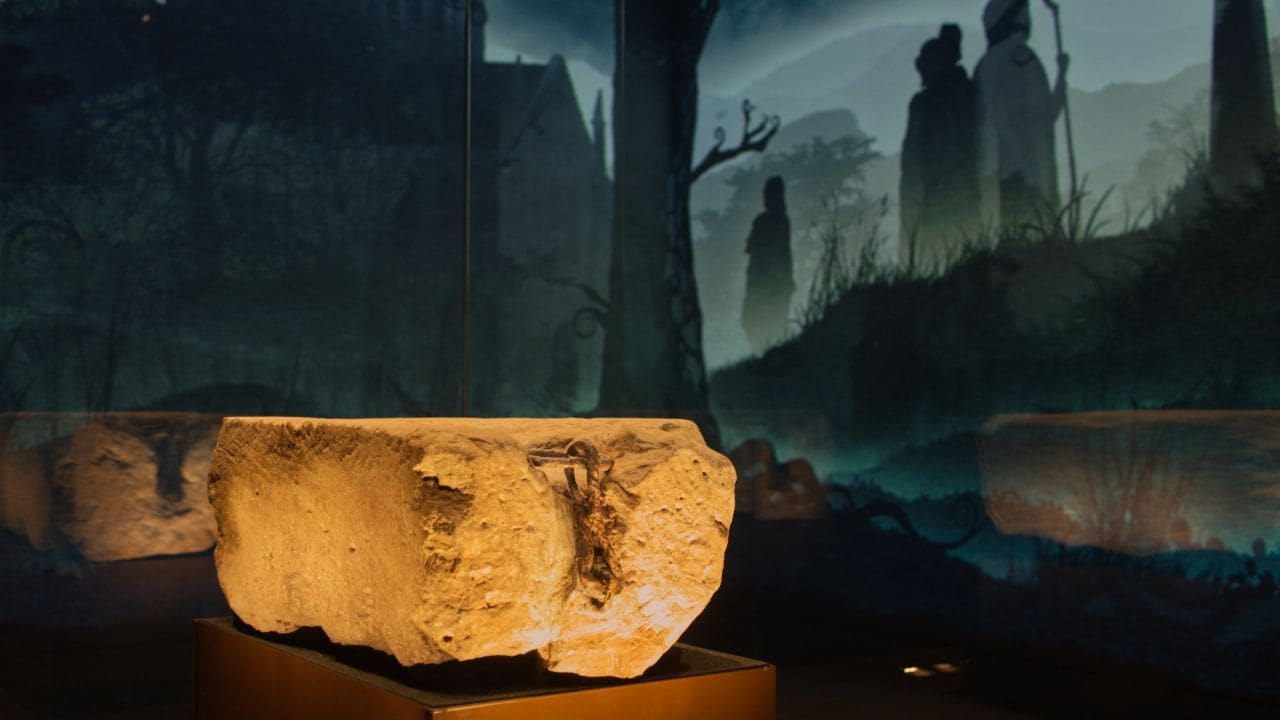 The stone has been recently moved, in 2024, from Edinburgh to Perth
The Honours have had a turbulent past. They were removed from the castle and hidden in 1651–60 to keep them from Oliver Cromwell’s army. In 1707, following the Act of Union between England and Scotland, they were locked in a chest and sealed away. It was only in 1818 that Sir Walter Scott, the famous novelist, rediscovered the Honours.
The Scottish Monarchy
The first King of a unified Scotland is traditionally considered to be Kenneth MacAlpin (c843-858), being the start of ruling dynasties (House of Alpin, Dunkeld).
In the late 13th Century, Scotland fought wars of independence against England, led by William Wallace; which resulted in a strong Scottish monarchy being established.
The castle exhibits focus on the late medieval monarchy: The House of Stewart (Stuart) ruled Scotland from 1371. This was the final royal dynasty of an independent Scotland, before the crowns of Scotland and England were united.
- Robert II (1371-1390) - First Stewart king of Scotland
- James IV (1488-1513) - One of the greatest medieval kings, who died at the Battle of Flodden against England.
- James V (1513-1542) - Son of James IV, he faced religious tensions and conflicts. He died when his daughter Mary, Queen of Scots, was an infant.
- Mary, Queen of Scots (1542-1567), became a queen as a baby. Her reign was marked by political intrigue, religious conflicts and eventual abdication.
- James VI (1567-1625) became a king as an infant, and later became James I of England in 1603; uniting Scottish and England.
The castle focuses heavily on Mary’s history.

Mary, was one of history’s most captivating figures. She became queen at just six days old after her father’s death, while Scotland was ruled by regents. Sent to France as a child, she was betrothed to the heir to the French throne and later became Queen Consort of France through their marriage.
Widowed young, Mary returned to Scotland in 1561, where she found a nation transformed by the Protestant Reformation. In 1565 she married her cousin, and a year later gave birth to her only child, James. But political turmoil and scandal soon followed: Her husband was murdered, and after Mary’s controversial marriage to the suspected culprit, she was imprisoned in Lochleven Castle and forced to abdicate in favor of her infant son, James VI.
Escaping captivity, she sought refuge in England, hoping for support from her cousin Elizabeth I. Instead, Elizabeth saw her as a dangerous rival to the English throne and kept her under house arrest. After nineteen years of confinement, Mary was accused of conspiring to assassinate Elizabeth and was executed in 1587, ending a life of ambition, tragedy, and enduring legend.
 Portrait of Mary at 17 years old
St Margaret’s Chapel
Scotland’s royal family once knelt to worship in this serene private chapel. King David I built the chapel around 1130 and named it for his mother. Queen Margaret, who was said to have performed many acts of charity, was canonised by Pope Innocent IV in 1250.
 The stained glass windows are great. From left to right: The lady St Margaret herself, St. Columba, William Wallace.
Castle Defences
 Half moon battery defences
 Great views of the city from atop the castle

 Leo posing
National War Museum
There were a few war museums throughout the castle, I loved the vintage posters from this one:
[carousel]
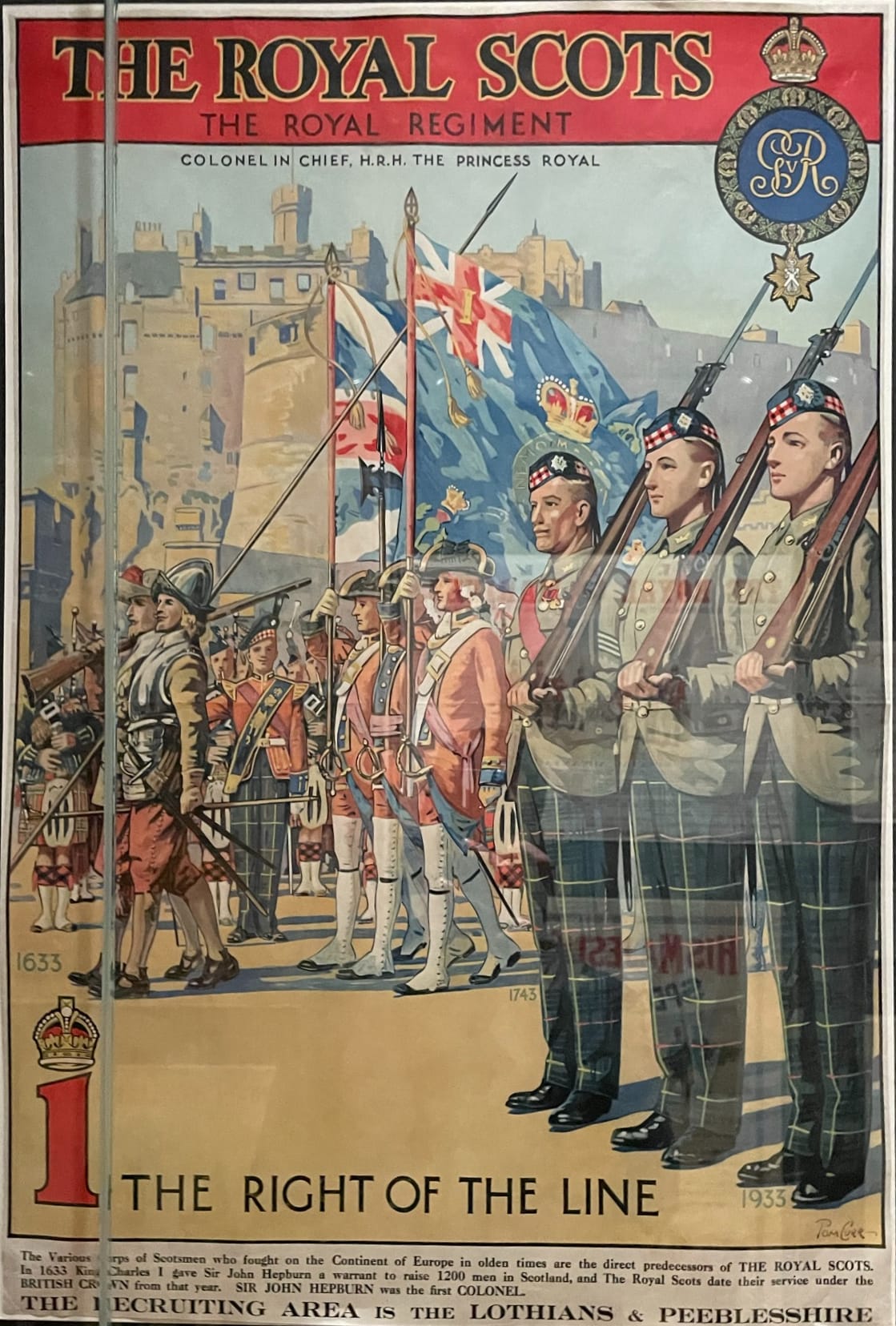
 A little misleading, wouldn’t you say?
[/carousel]
Greyfriars Kirkyard
One of my favourite places in all of Edinburgh, I just can’t help but come back here every time I visit. Most people just come here to visit the Greyfriars Bobby statue, but what makes the kirkyard so evocative about me are the Harry Potter connections.

To think that J K Rowling herself walked these paths, stealing names for her books, daydreaming about a story that would be a constant companion to me (and millions more!) for the rest of my life.
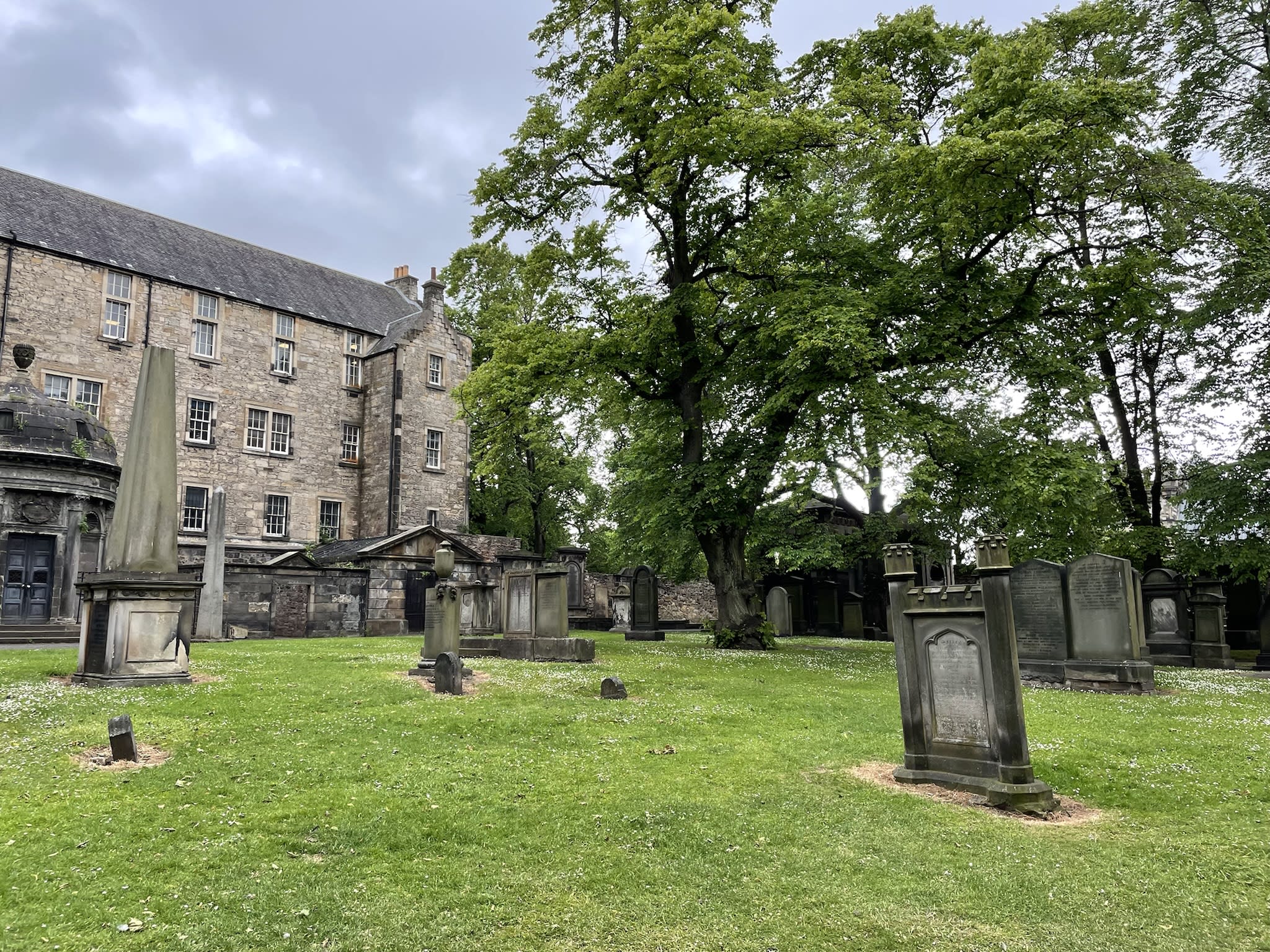
 Me at Voldemort’s grave
After that, I took Leo to Nicolson’s, one of the legendary coffee shops where unemployed J K Rowling is known to have written long passages of the first book. The whole city is a treasure trove for Potterheads!
 J K Rowling’s hand-prints in the Edinburgh City Chamgers
Haymarket Neighbourhood
We stayed the night at The Haymarket Hotel, in a slightly quieter and more local area. I love the terraced houses and the gloomy dark atmosphere. In fact the hotel rooms look just like the rooms of the neighbourhood homes, which gives it a very authentic feeling.
[carousel]


[/carousel]
St Giles’ Cathedral
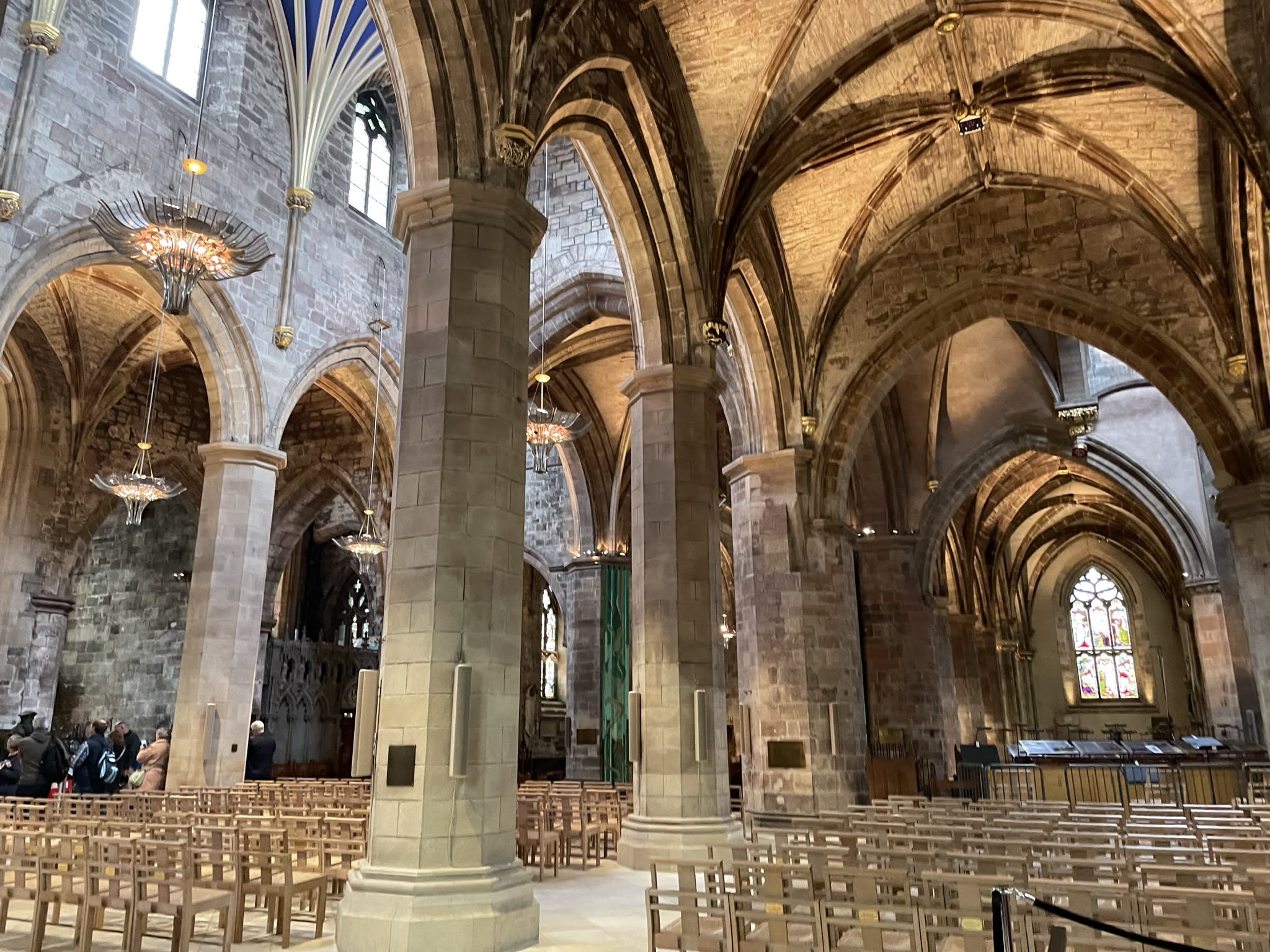
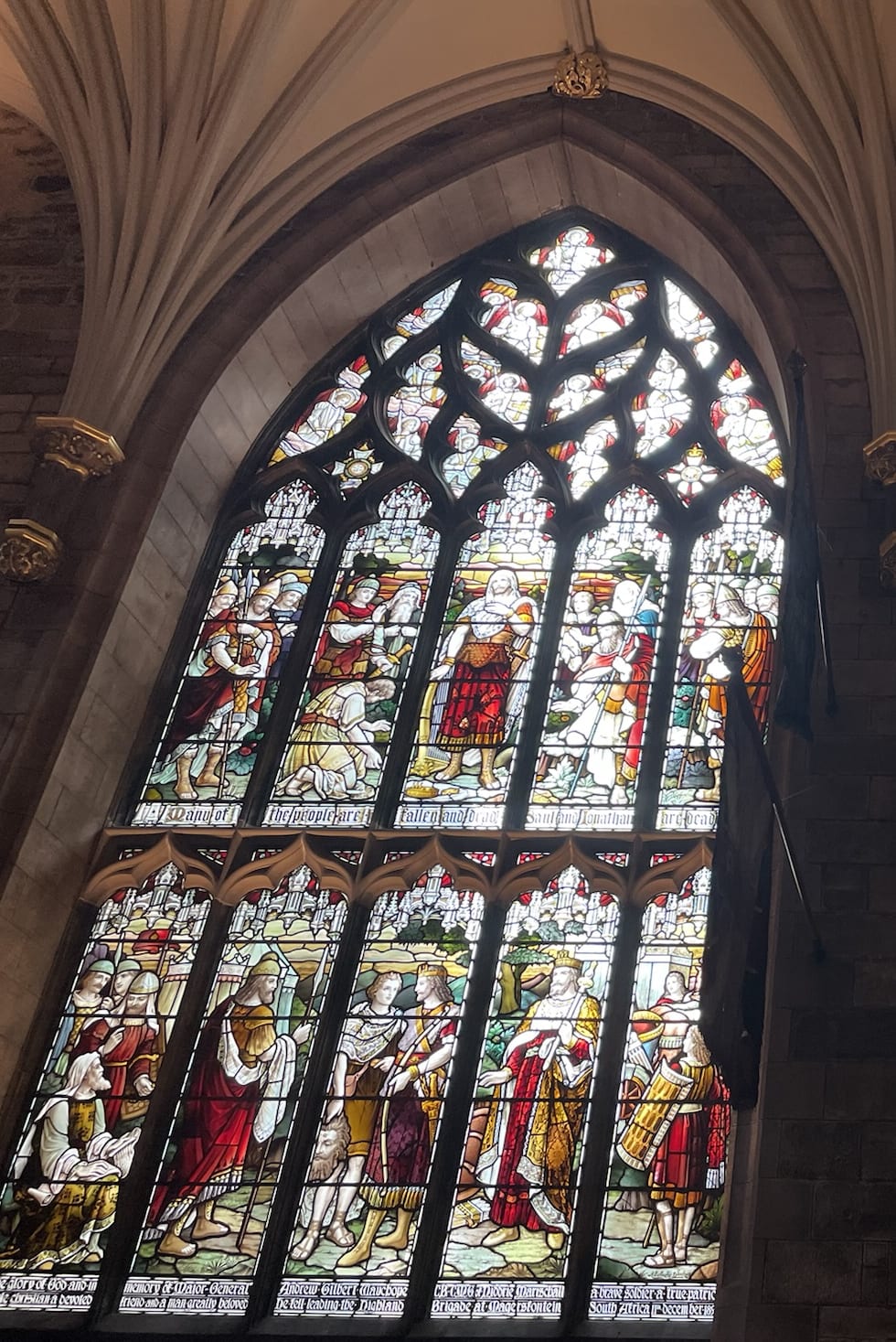
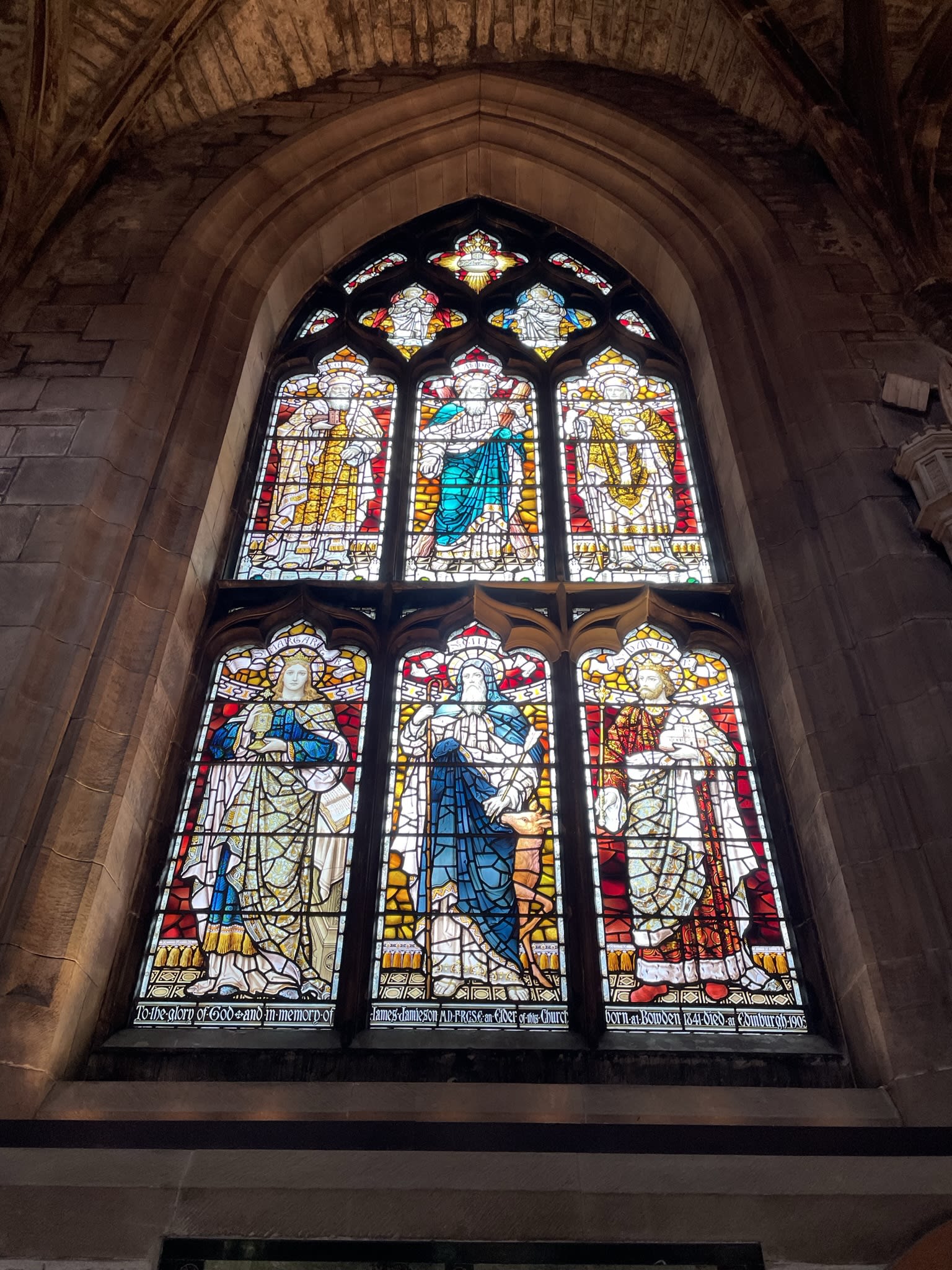
We visited the interior of the High Kirk of Edinburgh, which has stood here since about 1124. Interestingly, St Giles’ Cathedral is a Church of Scotland (Presbyterian Protestant) church, not part of the Roman Catholic or Anglican (Episcopal) traditions.
[carousel]
[/carousel]
Calton Hill
One of Edinburgh’s famous viewpoints, a UNESCO World Heritage Site landmark, easily distinguishable from its elevated position and its monuments.
 Dugald Stewart Monument, dedicated to philosopher Dugald Stewart in 1831
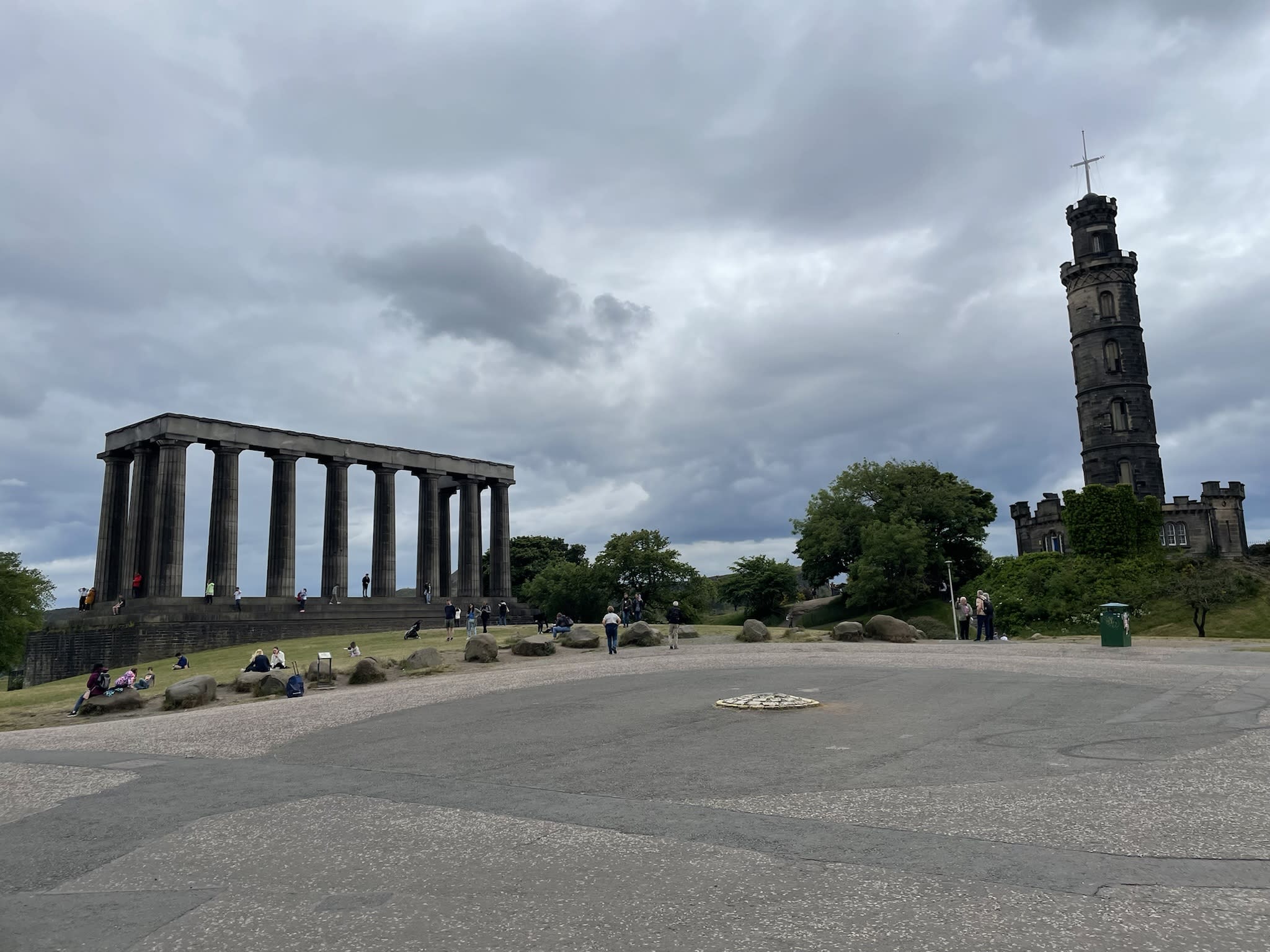 National Monument of Scotland (left, 1820) ; Nelson Monument (right, ~1815)
Castle Street, Prince St.
 View of the castle at the end of Castle St
Checkout these amazing google street views:
Dean Village
One of Edinburgh’s most picturesque and tranquil spots of the city, about 1 km from northwest of Princes Street. Dean Village was originally a wheat-milling village, dating back to at least the 12th century.

The area was very photogenic, with many footpaths going into green areas and near the river. We didn’t stay long though, since we found the old and new town much more scenic and we wanted to spend our last hours in the city there.

Back to London
We spent a couple of hours, until the train time, sitting at the best Starbucks in the world at Princes Street, with a privileged view of the castle:
 I distinctly remember sitting by the second floor window, eating a pack of small brownies and watching the castle. I tried to go back to this spot years later, but I noticed that this Starbucks seems to have moved to the building next door.

We caught a late (8 PM) train back to London, exhausted yet really happy that we managed to pack so many highlights in just two days. I wish we had had a few more days to visit the city at a more relaxed pace, but I’m glad I was able to introduce Scotland, my favourite country, to Leo; even if only a glimpse.
Final Thoughts
Visiting Edinburgh always feels like stepping into a fantasy world, and I’m grateful I had the chance to experience that magic with my partner. The long summer days made it easy to cover the main sights in just two days, though I’d honestly recommend allowing at least three or four to really take it all in at a slower, more enjoyable pace.
That first trip wasn’t my last. I’ve returned several times over the years, and each visit has felt a little different. Edinburgh is easy to reach, with a well-connected airport and plenty of low-cost flights from across Europe, which makes going back surprisingly simple.
No matter the season or the weather, Edinburgh always carries that dark and quietly magical atmosphere. Wandering its stone streets and shadowed closes still feels a bit like stepping into a Harry Potter world, and that familiar sense is exactly why I keep returning. And that’s why I keep coming back.