Amsterdam: Canals, Windmills & Golden Age Ghosts
Amsterdam → Zaanse Schans → Volendam → Edam
Four Days in Amsterdam
I had long wanted to visit Amsterdam, a city famous for its romantic canals, the flashy Red Light District, and its iconic terraced houses. I didn’t expect to be that impressed though, having already been to many European capitals, but the moment I arrived, the city completely blew me away.
Every street, every canal, every corner felt like a postcard come to life. At some point, I recall that I stopped taking pictures at all because everywhere I looked was stunning, and there was no way to capture it all. My strongest memory of Amsterdam is simply strolling for miles, constantly amazed at how neat, aesthetic, and perfectly arranged everything is.
 The windmills at Zaanse Schans make for an idilic day trip from Amsterdam
We visited in Summer 2022, which only added to the magic: blooming flowers, clear blue skies, and perfect weather. I left genuinely surprised that Amsterdam had leapt straight into my top-five favourite cities in the world.
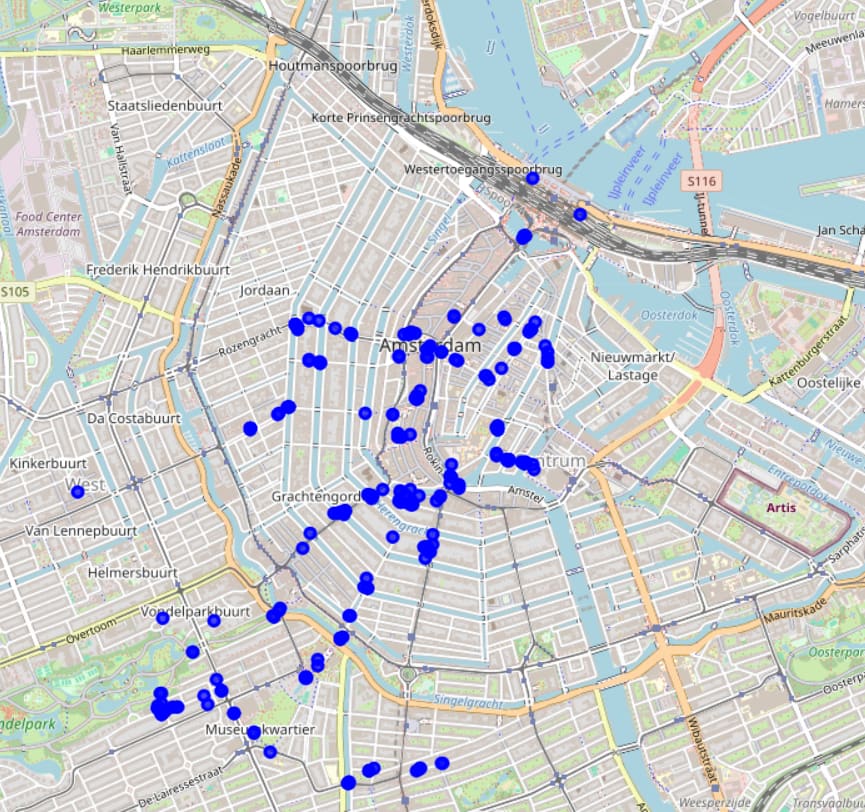 A map of Amsterdam, where I overlaid a blue dot for each picture I took during my visit.
[content_table]
Itinerary
I structured my visit to Amsterdam in a very different way than I’d normally do . I tend to meticulously go through the main landmark in town, touring palaces, castles, museums or churches; and making sure I hit all the major ones and a few off the beaten track.
Amsterdam is different, it is a city to wander rather than ticking off concrete landmarks on a list. Most of the main highlights are actually areas, not spots: The Canal Belt, The Nine Streets, The Red District, Dam Square, Vondelpark and the Museum District.
Therefore, I spent most of my time simply strolling around and taking in the sights, snapping pictures, browsing souvenir shops and drinking coffee.
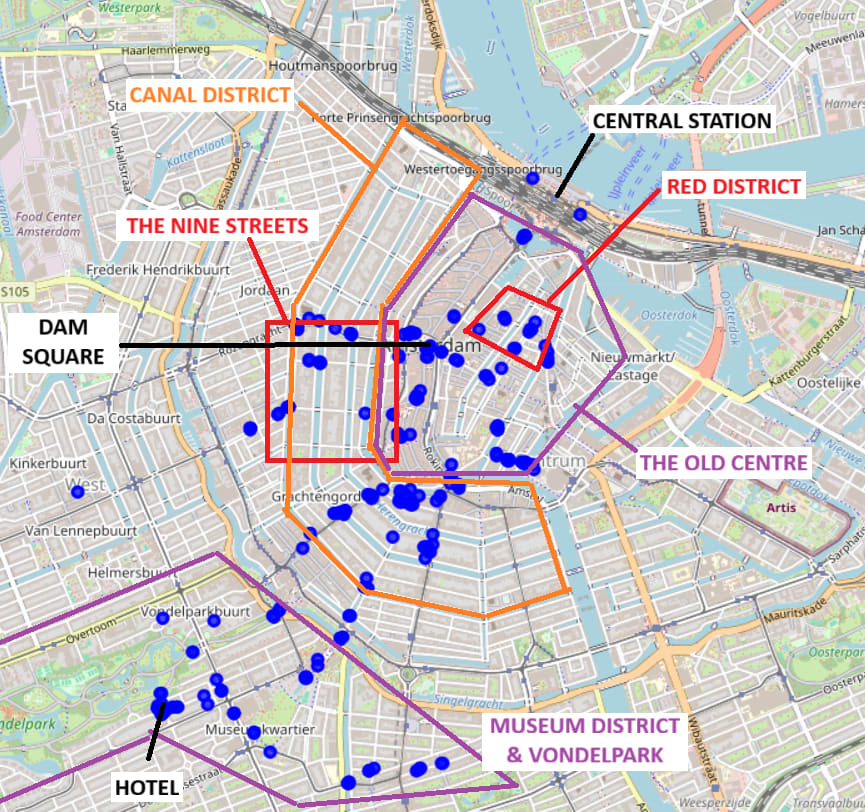 All the spots where I took pics, with the main city areas delineated.
Day 1, June 19
- Flew London to Amsterdam
- Strolled all over the city, including dam square, canal district, nine streets and the old centre.
Day 2, June 20
- Amsterdam’s Museumkwartier (Museum district, exterior)
- Vondelpark
- Canal district ; Oude Kerk ; Dam square again
- Albert Cuip Market
- Night out: the Red District
Day 3, June 21 - Day trips!
- Train from Amsterdam Central
- Zaanse Schans ; Edam ; Volendam
- Nightly stroll through canal district
Day 4, June 22
- Stroll through canal district & old centre
- Had a coffee with an old acquaintance from uni
- Amsterdam City Archives ; stroll more through canal district & dam square
- Central station, took Eurostar back to London
Sightseeing Amsterdam
Canal District
The Canal District, in Dutch Grachtengordel, is the historical and visual heart of Amsterdam, and the reason why the city feels so uniquely designed rather than accidental.

 Beautiful terraced houses at Nieuwezijds Voorburgwal street
The Grachtengordel is a 17th-century urban planning masterpiece built during the Dutch Golden Age (1600-1700), when Amsterdam was one of the richest cities on Earth.
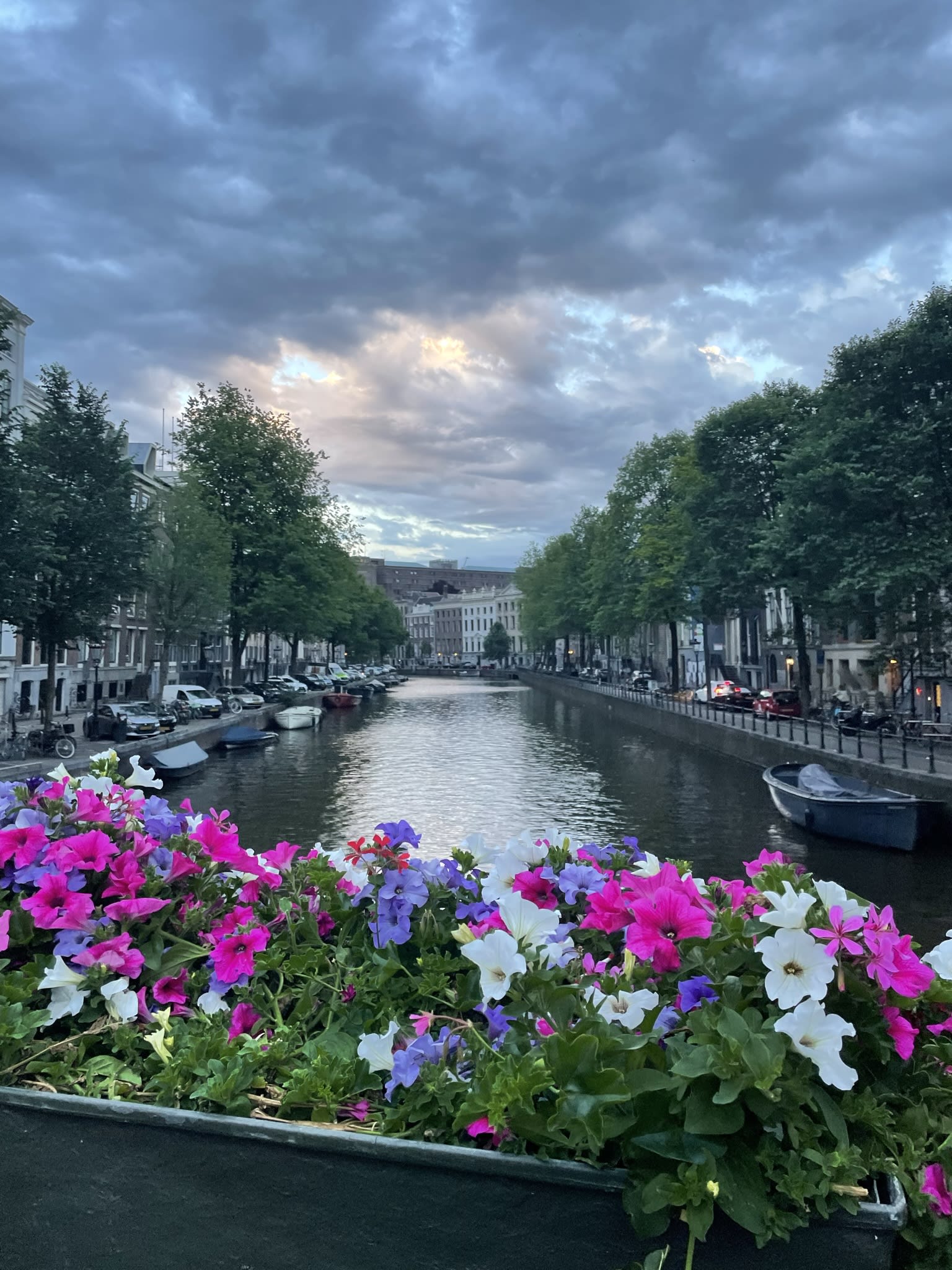 Herengracht (“Lords’ Canal”) is one of the three main canals of Amsterdam’s famous Grachtengordel (Canal Ring). It is considered the most prestigious of the three.
Three main concentric canals were dug south and west of the medieval core, with purposes of defense, drainage, transport and real estate especulation:
- Herengacht (“Gentlemen’s Canal”) is the most prestigious canal, home to wealthy merchants, mayors and regents. The “Golden Bend” containst the grandest canal houses.
- Keizersgracht (“Emperor’s Canal) is the widest of the three, with wealthy residences, warehouses and institutions.
- Prinsengracht (“Prince’s Canal) is the longest canal, more residential and slightly less elite.
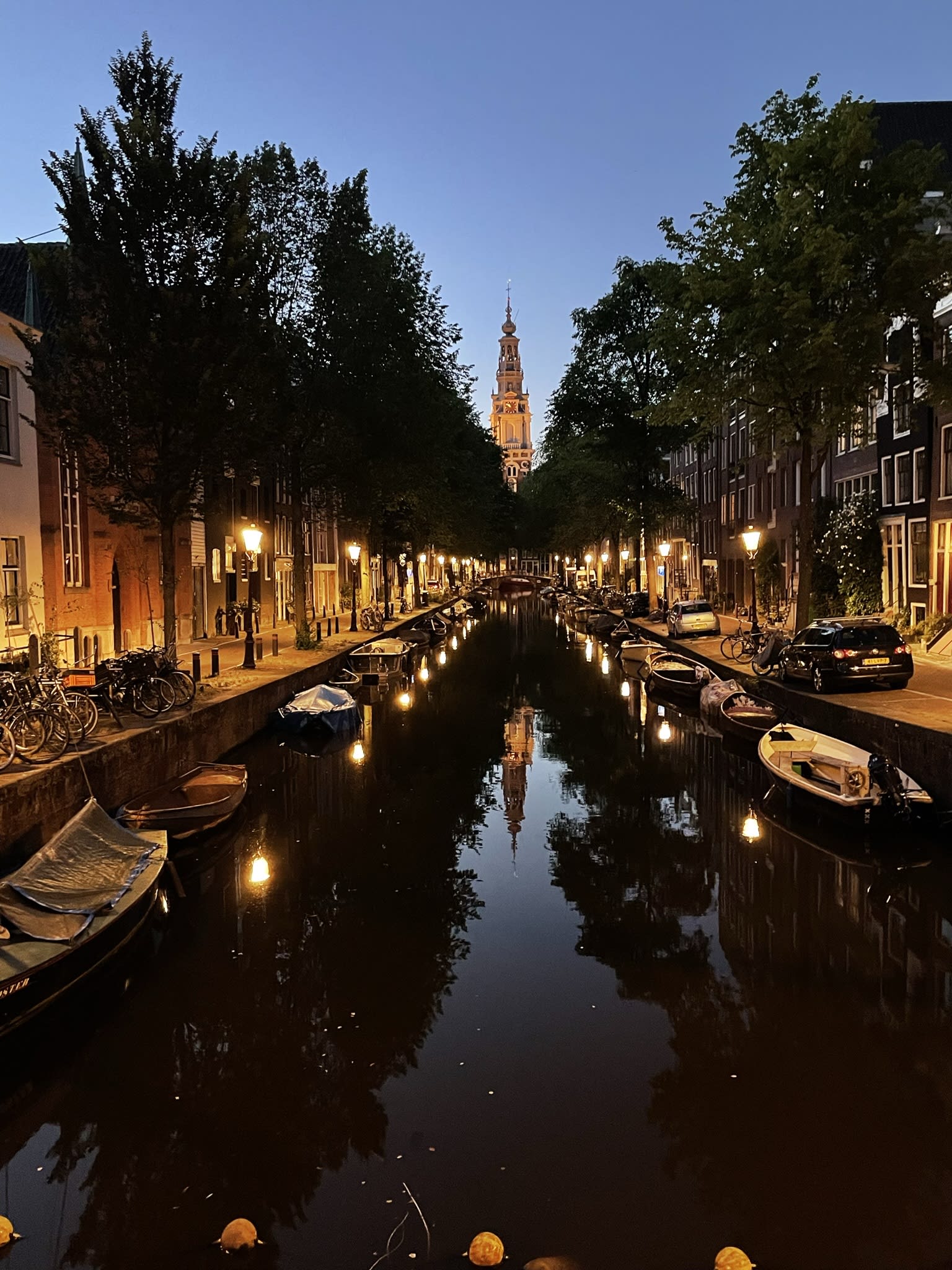
 The canals are beautiful during the evening and night
The canal houses are tall and narrow due to the fact that properties were taxed based on façade width, not depth. Interiors stretch far back and often include courtyards and warehouses.
 1649 expansion plan of the city - you can see the first part of the three new canals had already been dug, the Jordaan area (on the right)
By the end of the 17th century the city had some 200,000 inhabitants, making it the third largest city after London and Paris.
 The Munttoren (Mint Tower) was a historic entrance point to the old city, today a freestanding clock tower but built originally in 1480 as part of the city walls.
 Could there be a more beautiful Brasserie?
 Yet more beautiful terraced houses. VLEESCHHOUWERIJ is old Dutch spelling for butcher’s shop
Da Oude Kerk
Da Oude Kerk (“The Old Church”) is the oldest surviving building in Amsterdam, founded in 1213, which means it is more than 700 years ago!

Originally it was a Catholic parish church, later it was converted into a Protestant church after the reformation in 1578. Ironically, the church is right in the Red Light District!
De Oude Kerk is rather hard to actually photograph because it’s so surrounded by terraced houses with minimal separation

Amsterdam City Archives
The Stadsarchief Amsterdam is the largest city archive in the world in terms of preserved material.
It safeguards:
- Over 50 km of archives
- Documents spanning 700+ years of Amsterdam’s history
- Maps, drawings, ship logs, notarial deeds, letters, photographs, and posters
This isn’t a museum of objects — it’s a museum of memory and bureaucracy, which is exactly how Amsterdam became powerful.
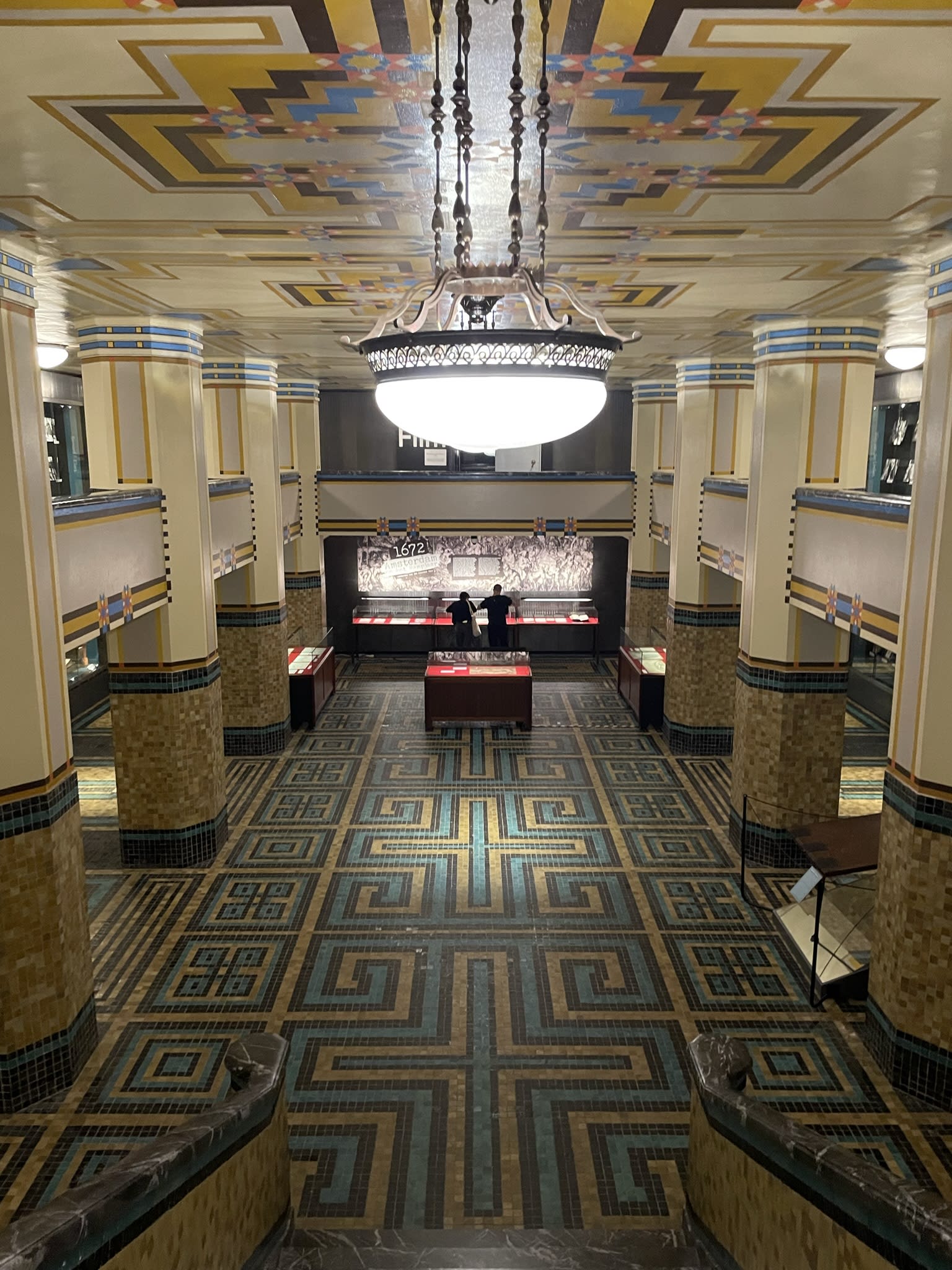 The archive is housed in the former Amsterdamsche Bank building on Vijzelstraat, completed in 1926.
 The exhibit has many old pictures showcasing the past and the evolution of the city
 1750 - Plantation in Surinam. During the Dutch Golden Age, Amsterdam was the commercial hub of a global colonial network. Through the Dutch East India Company (VOC) and West India Company (WIC), it was connected to Indonesia, Sri Lanka, parts of India, Suriname, the Caribbean, and trading posts in Africa
Red Light District (De Wallen)
The Red Light District, or De Wallen, combines medieval streets, canals, and historic churches with modern nightlife and legalized sex work.
At night time is bustling with tourists, neon lights and music. You can see windows with red lights where sex workers advertise their services. Sew work is legalized and regulated here.

De Wallen has approximately 300 one-room cabins rented by prostitutes who offer their services from behind glass doors. I remember being a little ashamed when we walked past the windows, at times we’d see the occasional client getting in.
 Screenshot of this video, showcasing the famous windows at the Red Discrict.
Naturally you are not allowed or supposed to snap pictures, yet the whole situation feels surprisingly natural. Tourists and locals of all ages and genres stroll next to the windows.

Because of its proximity to the harbor, Amsterdam’s old city center has attracted prostitution since the late Middle Ages, serving sailors and traders. Authorities generally tolerated but restricted the trade, confining it to specific areas and barring groups such as married men and clergy.
After the city became Protestant in 1578, prostitution was officially banned and forced underground. This changed in 1811, under Napoleonic rule, when prostitution was legalized and regulated, with compulsory health checks and work permits (often symbolized by a red card).
[carousel]


[/carousel]
In the early 20th century, religious and moral reform movements led to renewed crackdowns, including the 1911 Morality Acts, which banned brothels and again pushed sex work into semi-illegal forms.
A major shift came in 2000, when the Netherlands legalized brothels nationwide. In the 21st century, Amsterdam’s Red Light District operates under strict regulation: sex workers are legally self-employed, windows are licensed, and health and safety standards are enforced. At the same time, the city has moved to reduce the district’s scale, combat trafficking, and rebalance the area toward residents and other businesses.
Throughout the city, but especially here, you can see many shops selling soft drugs, mainly cannabis. Licensed coffeeshops are allowed to sell small amounts of cannabis (up to 5 grams per person).
Dam Square
Dam Square marks the birthplace of Amsterdam, growing from a simple dam on the Amstel into the city’s main civic and ceremonial stage.
[carousel]
 The royal palace was closed to visitors for an event when we visited. Completed in 1656, it was built as a city hall to replace the old one that burned down.
 The palace, surrounded by contructions in progress - I love the Atlas at the top of the facade
[/carousel]
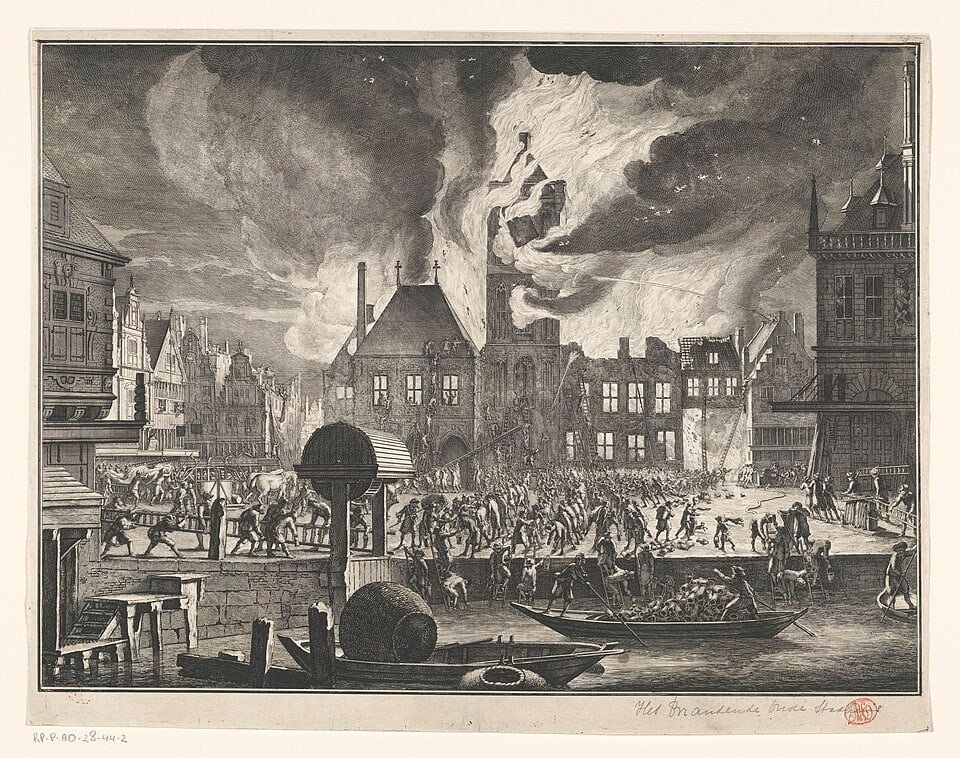 Townsfolk gathering water to douse the flames, by Jan van der Heyden
 The Palace, next to The New Church
 Madam Tussauds Amsterdam opened in 1970, a clothing store used to operate in this building before.
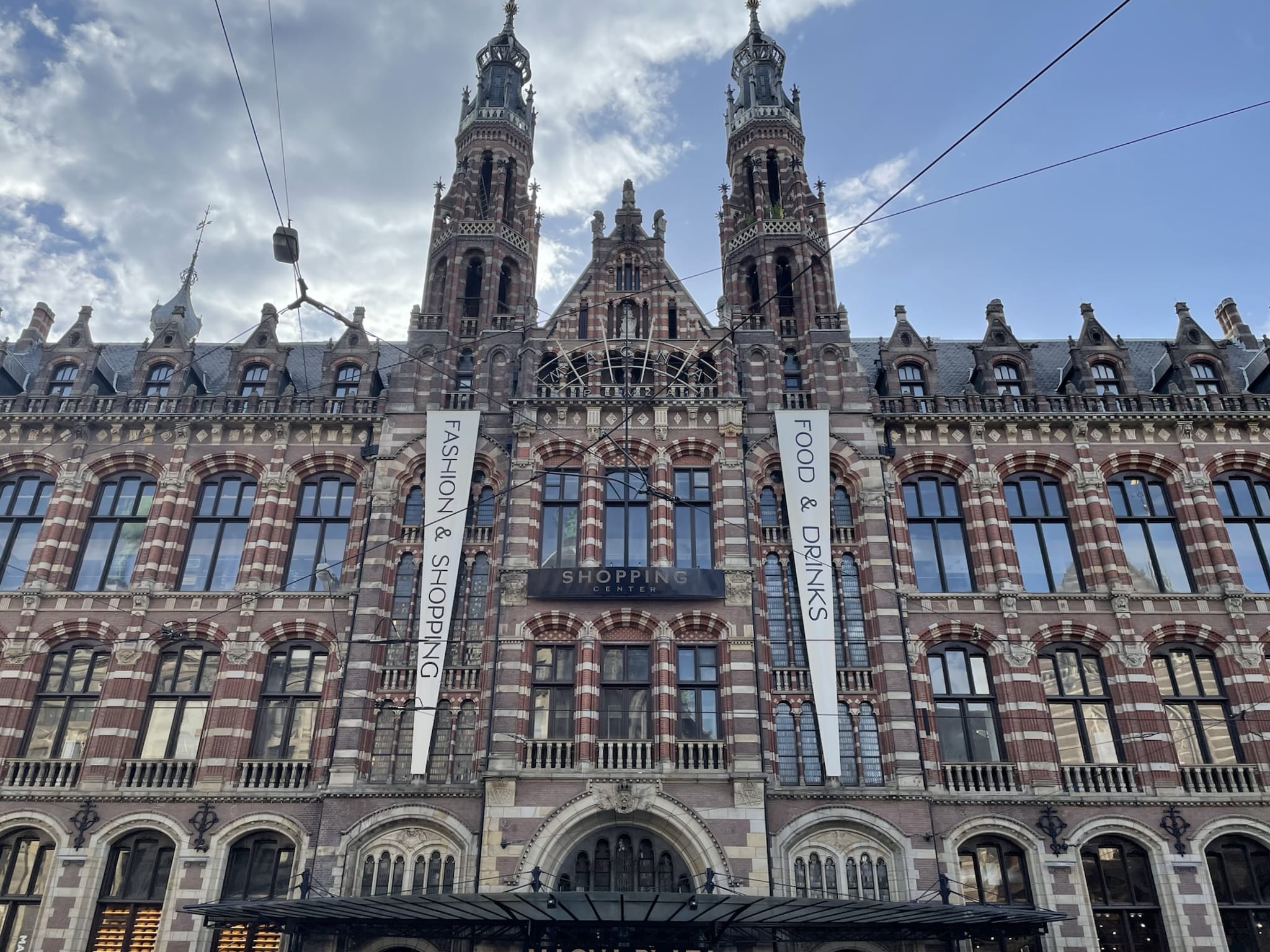 The former Amsterdam Main Post Office, now the Magna Plaza mall, was built in 1895-1899.
The 9 streets and around
De Negen Straatjes are nine narrow streets woven between the main canals, originally functional connectors and today one of Amsterdam’s most atmospheric areas for wandering.

Idylic canals
The Old Centre
Often called De Oude Stad or simply het oude centrum, it is is the medieval core of Amsterdam. This area predates the 17th-century canals and grew organically, not by design; thus you can see narrow maze-like streets.
[carousel]
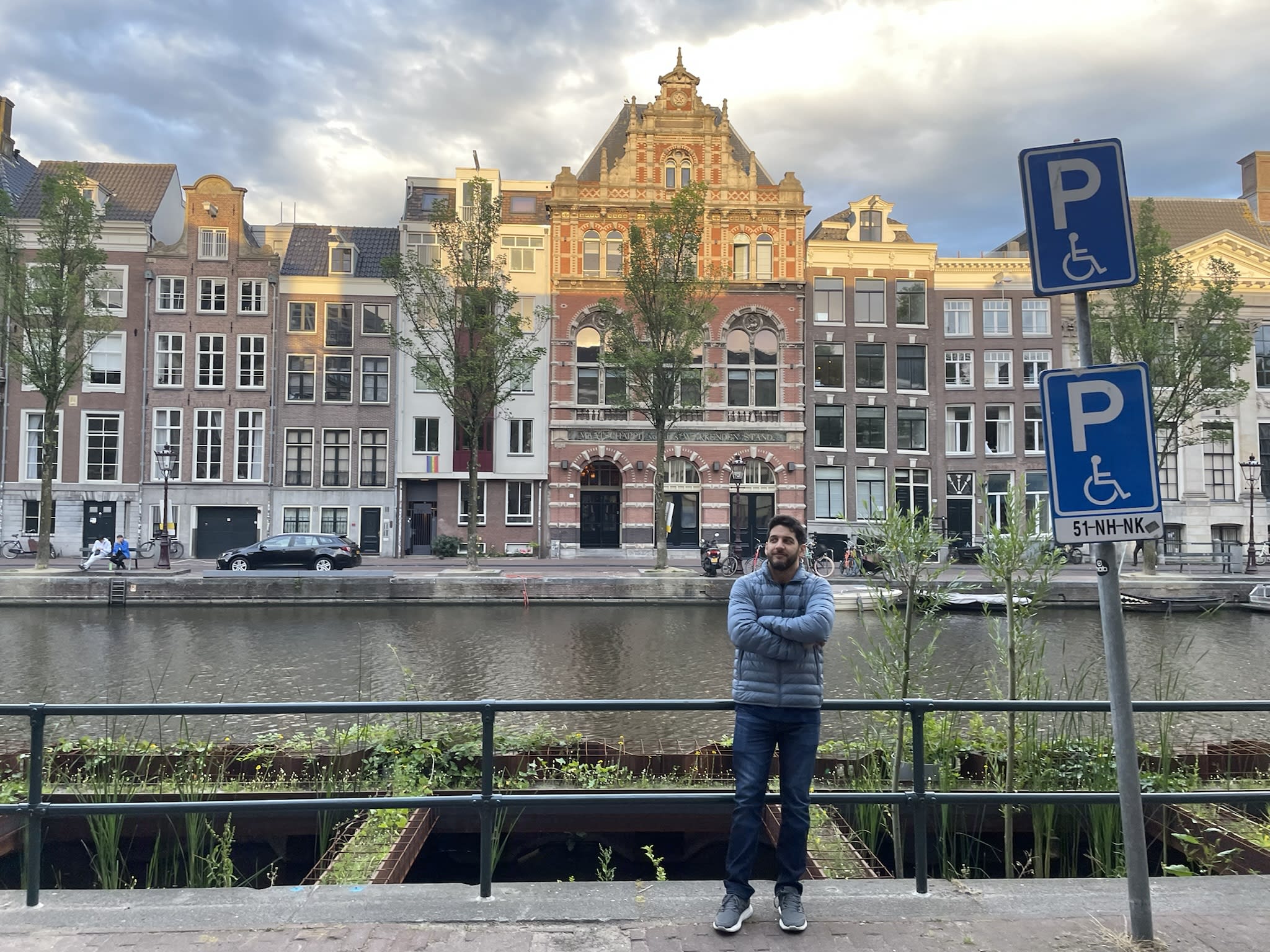 Leo posing with Kloveniersburgwal Canal
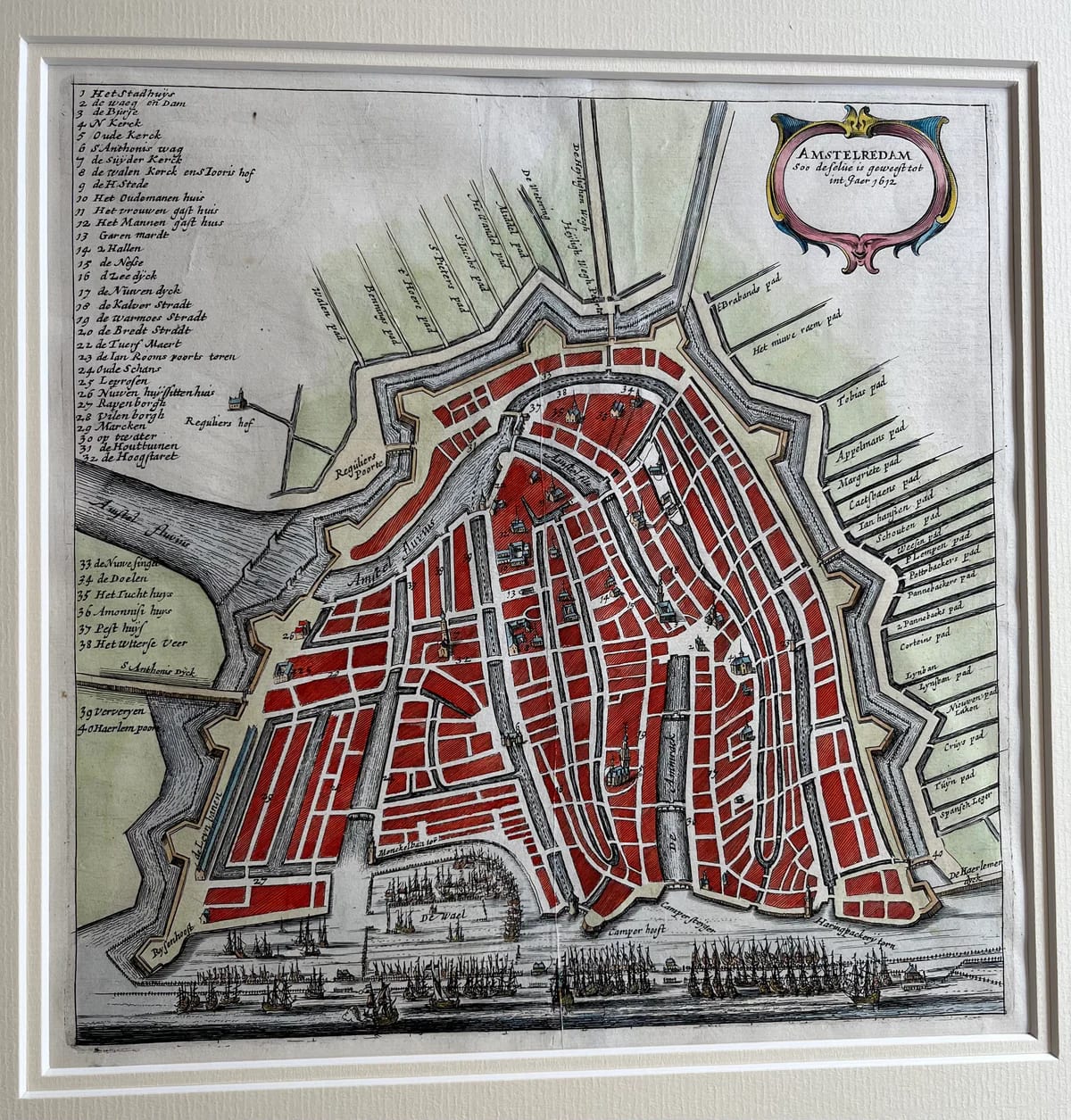 1612 map of Amsterdam, what is now the Old Town
[/carousel]
 This area is absolutely beautiful, this aerial view from Google maps convey the beauty of historical Kloveniersburgwal canal
De Waag is a historic building on the square Nieuwmarkt (historical market square), in the old heart (old centre) of Amsterdam.
[carousel]
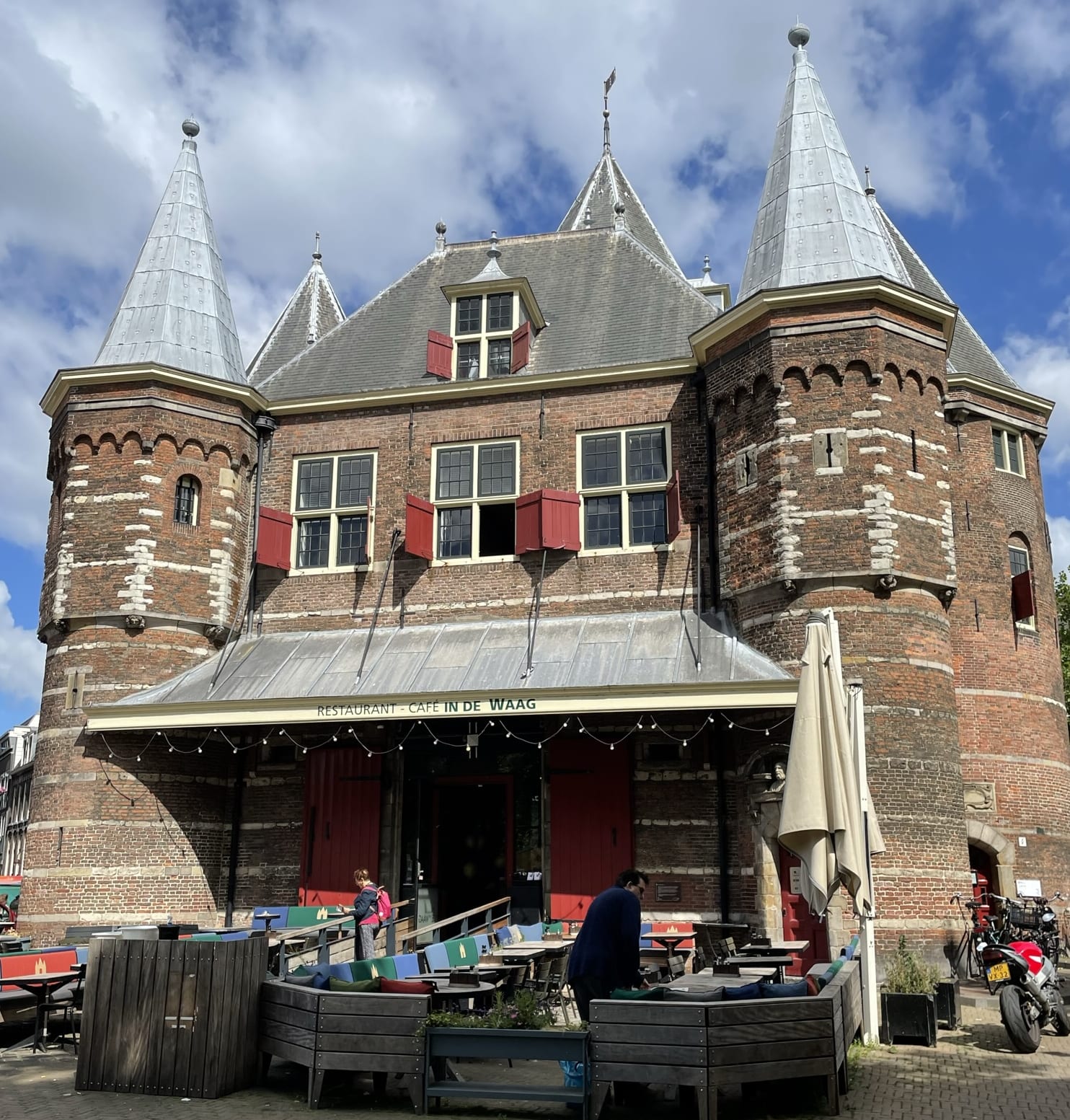 De Waag was originally one of the city gates, and later converted into a weigh house (where goods were weighed for trade and taxation). Over the centuries it has been a guildhall, a museum and even a cafe.
 Closeup of De Waag
[/carousel]
Panoramic view of the market square
Museum Quarter & Vondelpark
This is the area where we booked accommodation, being significantly cheaper than the old town yet at walking distance and very beautiful on itself.eeee
[carousel]
 Residential houses at Museum Quarter area

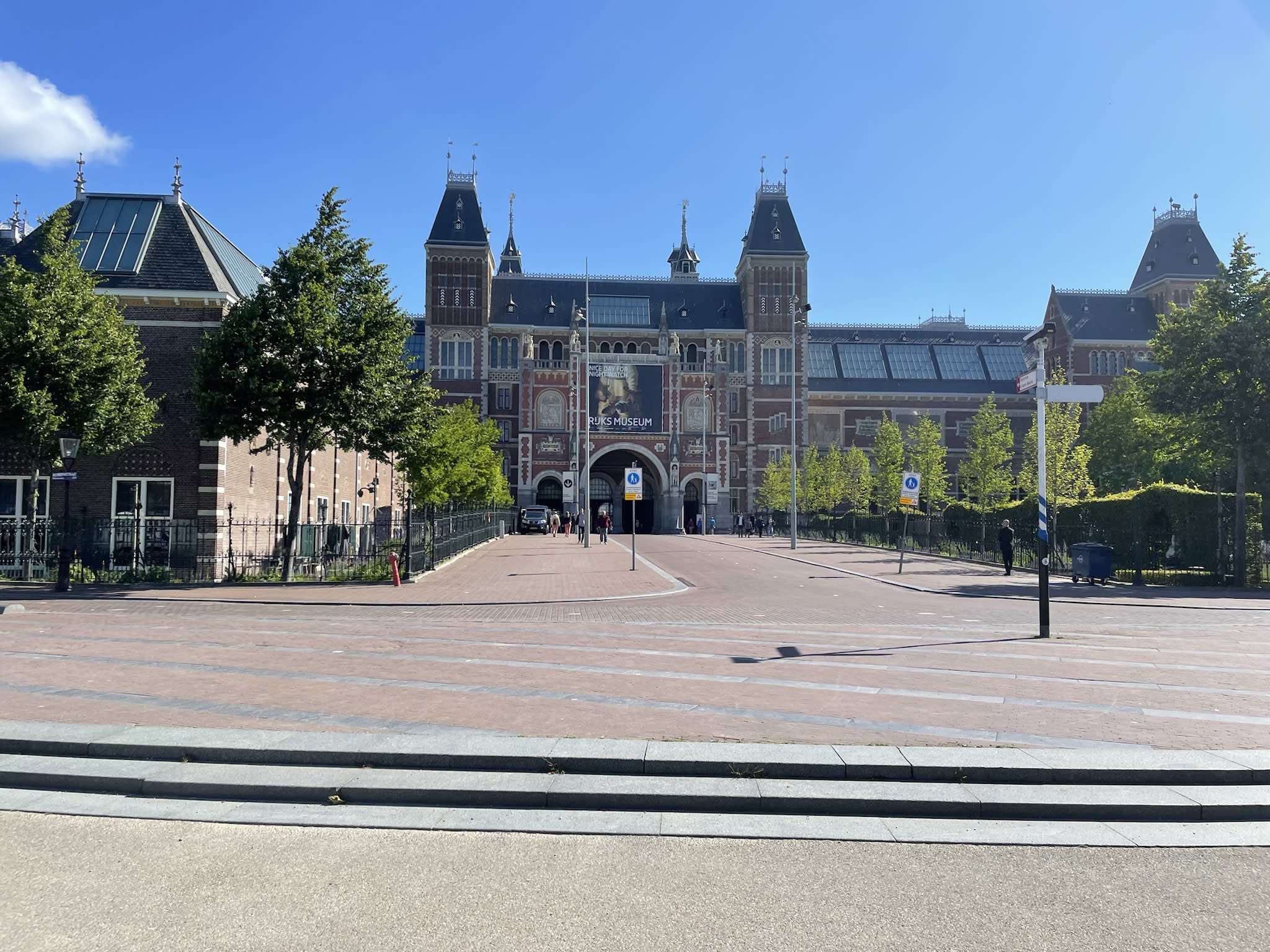 Rijksmuseum - The national museum of the Netherlands. The current building opened in 1885, but the museum itself was founded in 1800.
[/carousel]
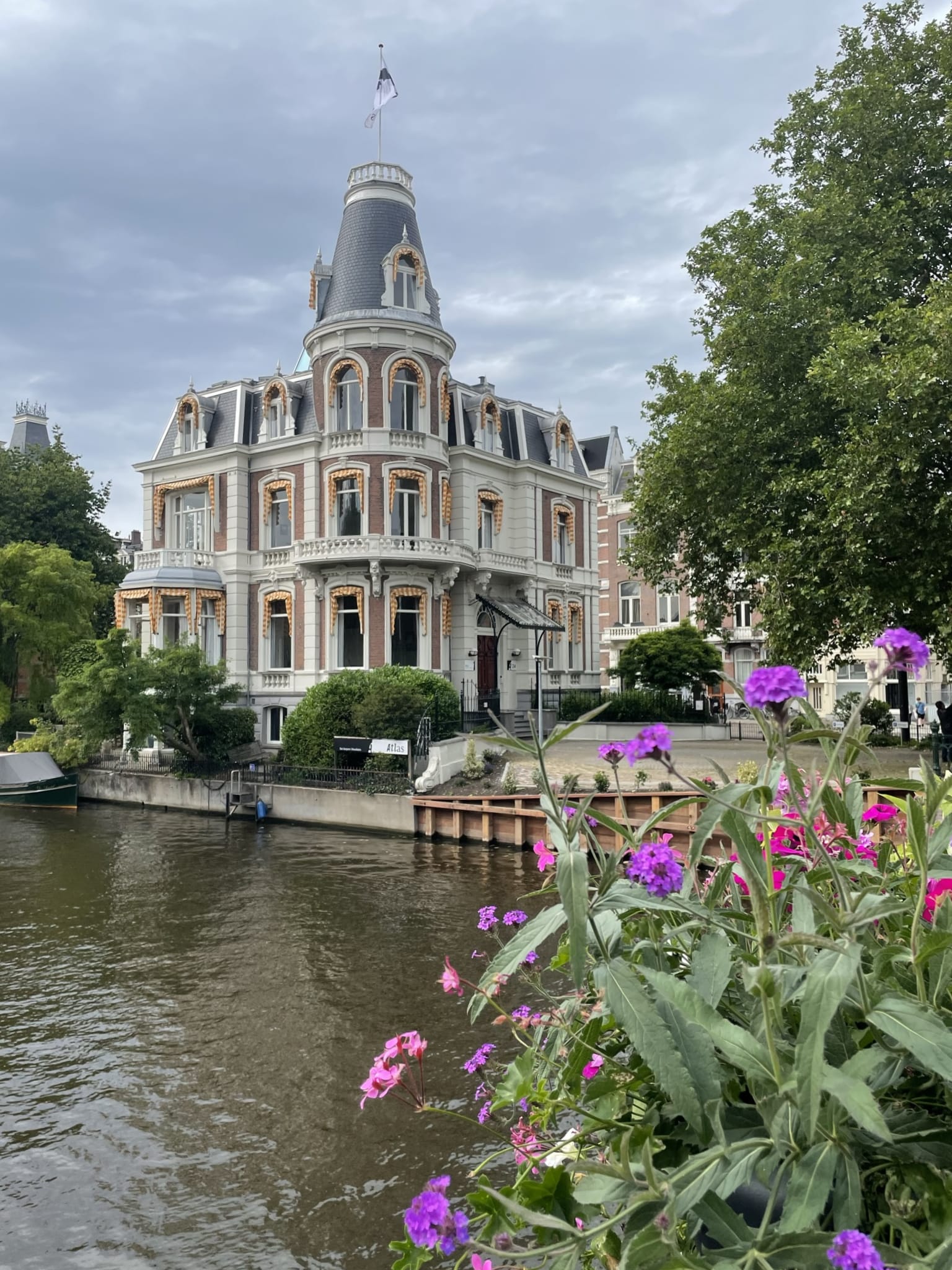 View of the Voormalig bolwerk Amstelveen, literally translating to ‘former bastion Amstelveen’, the 14th bastion in Amsterdam’s historical defense walls, built in 1660
Voormalig bolwerk Amstelveen right across to Rijksmuseum
[carousel]
 We stayed at quaint Hotel Atlas
 Side entry of our hotel, Atlas Hotel
[/carousel]
Waterland Villages
For our last day, we planned a full day trip through the countryside, visiting several charming towns—including the iconic windmills of Zaanse Schans, straight out of a postcard!
 The journey involved a mix of train and bus in order to make a loop.
 Our journey started at Amsterdam Central Station
Zaanse Schans
Zaanse Schans isn’t a traditional village that organically grew over centuries in its current form. It’s more like an open-air heritage area, created in the 1960s–70s to preserve historic buildings from the wider Zaan region. Many of the houses, barns, and mills were moved here piece by piece from nearby towns to save them from demolition
 Here’s the gmaps street view
The windmills are in working conditions, surrounded by canals. They convert wind power into mechanical energy through a brilliant system of gears and shafts. This allowed the Dutch to industrialize without coal, long before the steam engine.


The visit is not that long, you basically get off the train station (west to the river), walk the bridge and stroll around the riverside admiring the mills and countryside views.

 1679 - A river landscape with fishermen in rowing boats, windmills beyond
Edam
We caught a bus and headed towards Edam next. Upon arriving we were so surprised about the peaceful and quiet atmosphere. The town is full of cute and beautiful houses, and we mostly saw elder people peacefully riding their bikes or doing one or the other shore.
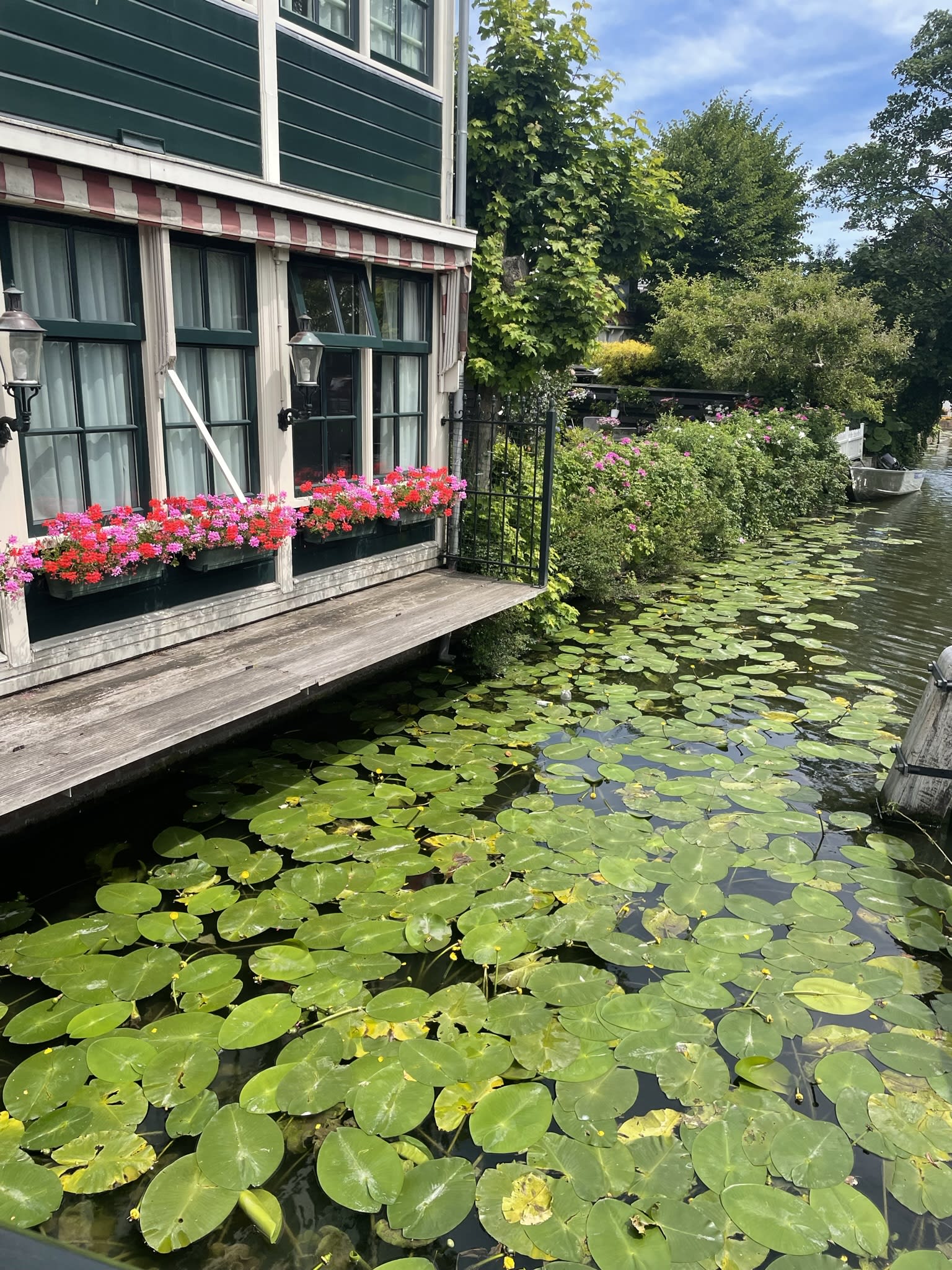
It stroke us as a beautiful sleepy town where people move after retiring to live their last years in peace. And I couldn’t agree more with their choice, I’d love to retire and live somewhere so nice.

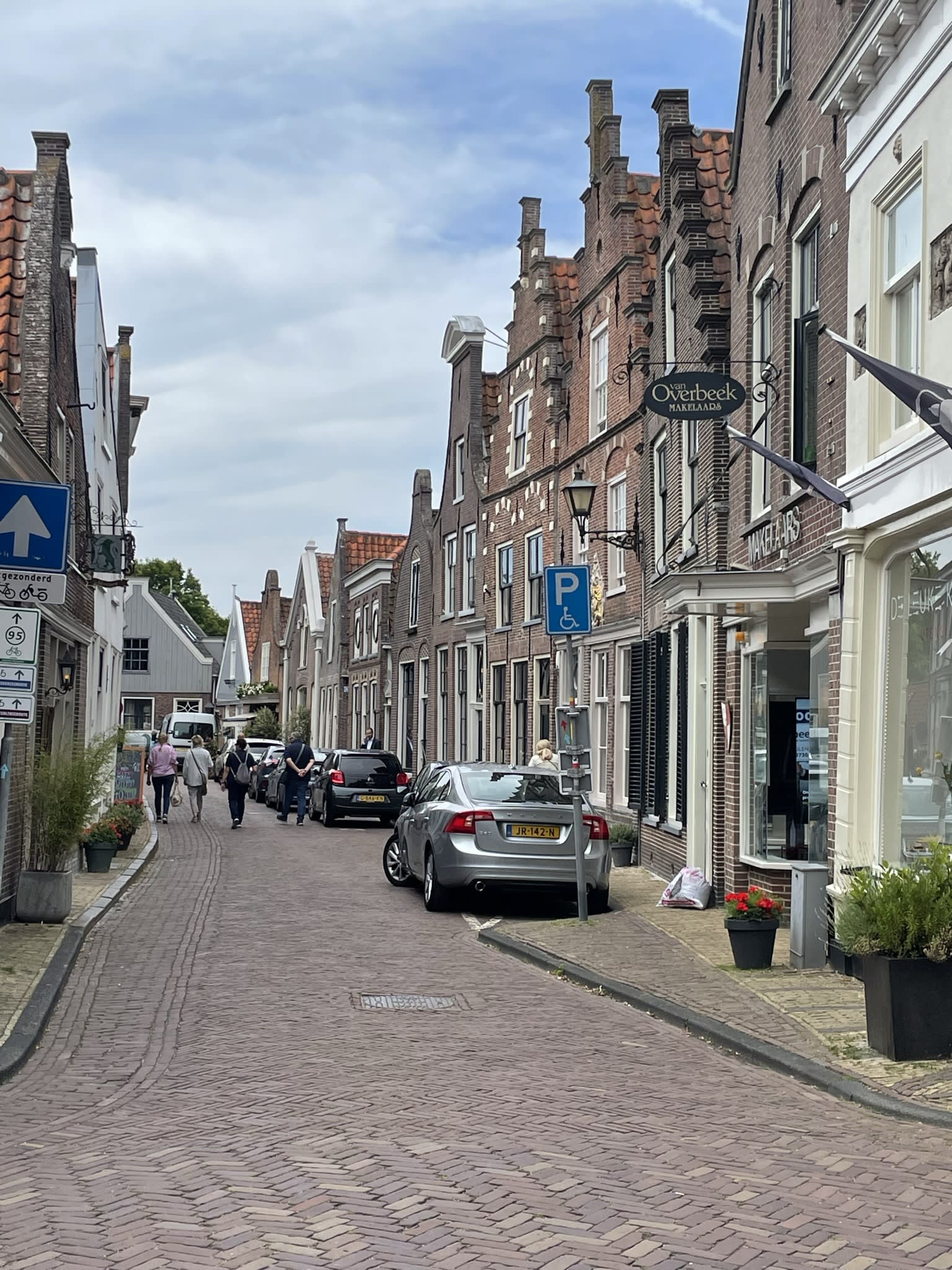
Edam may bee quiet now, but in the late Middle Ages and early modern period, Edam was a prosperous trading town. Edam cheese made the town famous worldwide, and the small, round wheels with red wax are everywhere. We even found a statue!

Edam cheese became a global export during the Dutch Golden Age, sailing to Asia, Africa and the Americas.
Tip: We purchased the “Amsterdam & Region Travel Ticket” for just 19.50 EUR, and it covered all the trains and buses needed for this day trip. There is no need to join a rushed organized tour, these towns are beautiful to enjoy at your own pace, and the logistics are very simple.
Volendam
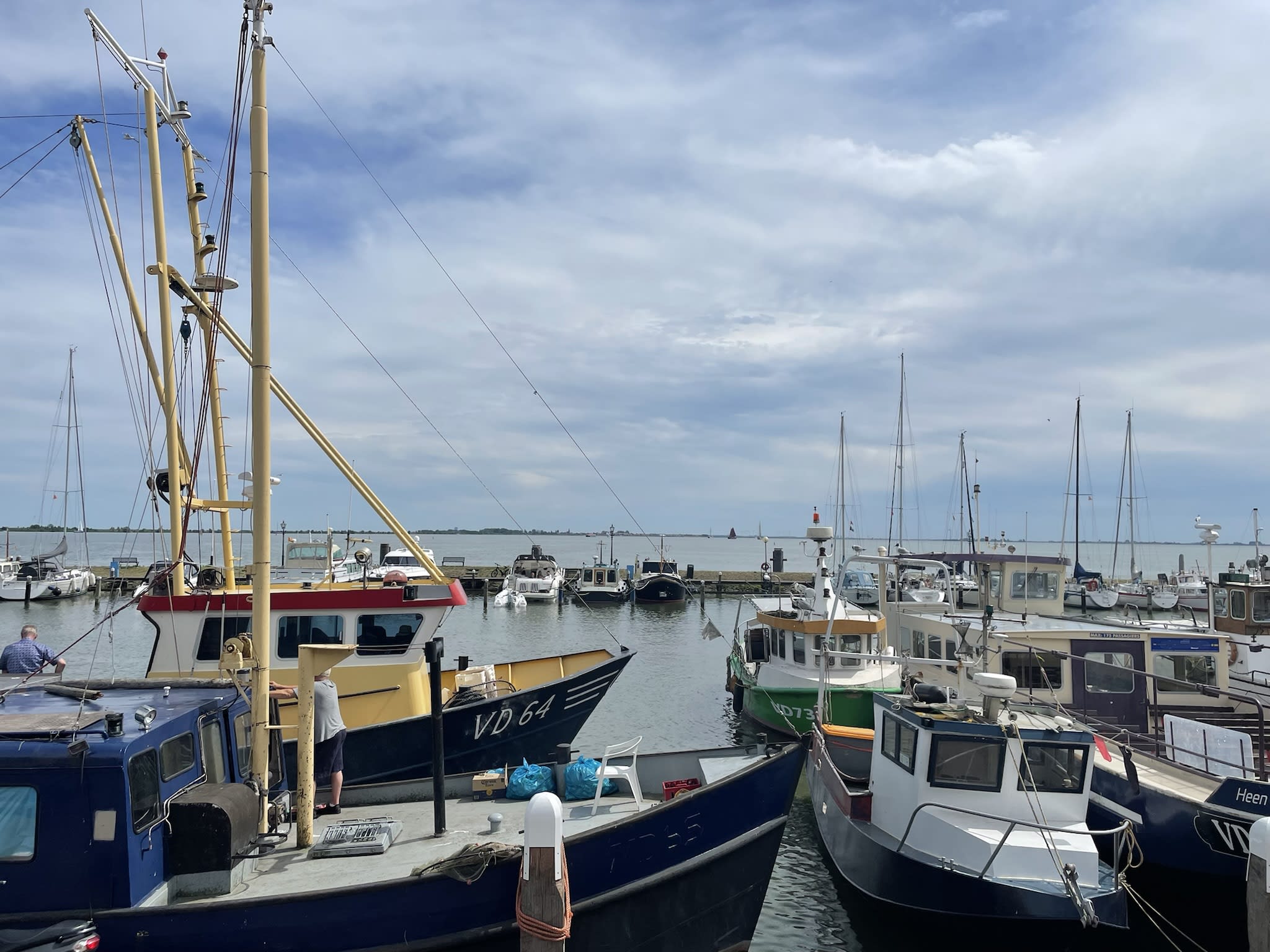
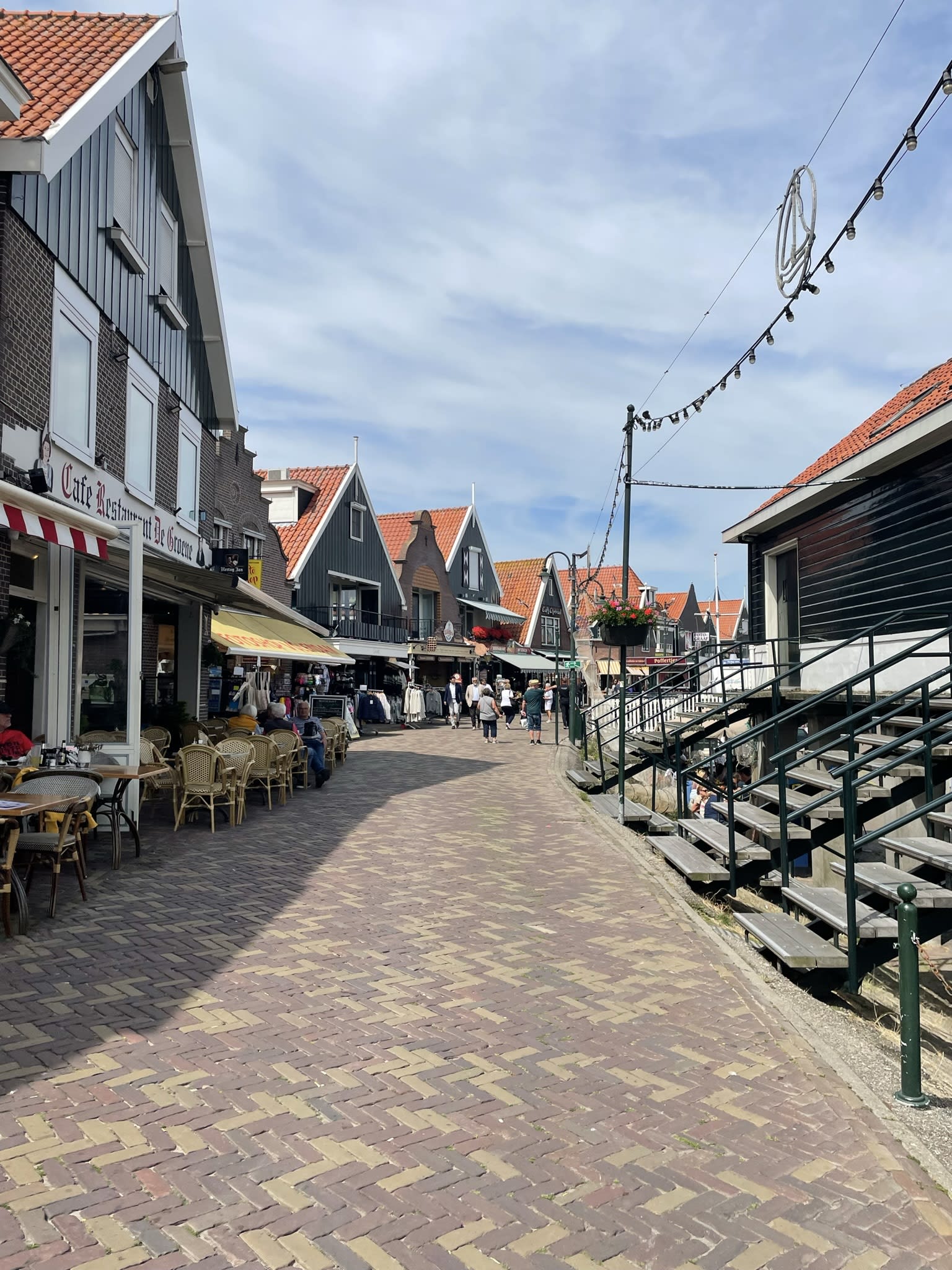
Our next stop was neighbouring Volendam, the louder and more touristy neighbour. The town began as a harbor settlement of Edam, its identity shaped by fishing.
Fishing here wasn’t romantic. It was dangerous, seasonal, and uncertain. Families lived with the constant risk of storms and shipwrecks, and the sea defined social life as much as it defined work.

The heart of Volendam is its dike-lined harbor, where boats, restaurants, and souvenir shops cluster tightly together.

Final Thoughts and Coming Back
Our trip to the Netherlands was remarkable: excellent weather, beautiful architecture, scenic canals and a very liberal society. I distinctly remember being in constant awe at the sheer beauty of the streets and canals. I am looking forward to visiting Amsterdam again, and I’m sure next time I’ll be better prepared to dodge bikers!
It’s usually impossible to cover all the highlights in a first visit, and that’s great because now I have several great reasons to come back, such as:
- Spending an afternoon at the world-class Rijksmuseum.
- Visiting the interior of the Royal Palace.
- Visiting the interior of the Old Church
- Perhaps the Anna Frank house, although it seemed overhyped
- Visit Utrecht and The Hague/Rotterdam
- If I manage to visit ever in mid-March to early May, I’d love to see the world-famous tulip fields 🌷
 From the BBC - tulip fields. Interesting tip: read about the Tulip Bubble that caused a serious economic crisis in the 17th century
Annex: History & Stats for Nerds
Basic Facts
| Category | Stat | EU Rank |
|---|---|---|
| Population | ~18 million | 7th |
| Area | 41,865 km² | ~22nd |
| Population Density | ~430 people/km² | 2nd (after Malta) |
| GDP (nominal) | ~€1 trillion | 5th |
| GDP per capita | ~€55,000 | 5th–6th |
| Exports (value) | ~€750 bn/year | 3rd |
| Port Throughput | Rotterdam | 1st |
| Cycling Infrastructure | ~35,000 km | 1st |
| Land Below Sea Level | ~26% | 1st |
| Language | Dutch |

- The Netherlands is extremely rich for its size and population, especially in terms of per-capita income, trade efficiency, and standard of living.
- The name Netherlands literally means “low lands” (from Nether + Landen), reflecting the country’s geography of flat, low-lying terrain, much of it below sea level, requiring extensive land reclamation. Historically, it referred to the Low Countries region, and the name became official as the northern provinces unified, with “Holland” being just two of the twelve provinces, often mistakenly used for the entire nation.
- The Netherlands has two capitals with different roles. Amsterdam is the constitutional and ceremonial capital, named in the constitution and used for royal events, while The Hague is the political capital, housing parliament, the prime minister, ministries, and the courts.
Glossary:
- Low Countries (Low Lands): Today Netherlands + Belgium + Luxembourg
- Netherlands is a modern country (whose name literally means low lands) ; Holland is a historical sub-region of the Netherlands.
- Belgium is a separate modern country, historically part of the Low Countries. It became independent in 1830.
- Benelux = BElgium + NEtherlands + LUXembourg, a modern alliance

History Overview
Let’s quickly walk through the history of the region that is today The Netherlands.
Early Inhabitants, Roman and Early Medieval Period (55 BC – 15th century)
The area was first settled during the last glacial period by reindeer-hunting populations, which transitioned to farming. During the Iron Age the region became part of the Celtic realm, and Germanic people began migrating into the area.
The southern Netherlands was integrated into the Roman Empire from around 55 BC to the early 5th century. Roman roads, forts, and trade networks shaped local culture and settlement patterns.
By the 5th century the Franks, led by Charlemagne, took control of the Netherlands. During this period Christianity spread across the region, Viking invasions contributed to chaos and trade flourished along the rivers.
Around 1000 people began constructing dikes and levees to manage flooding, resulting in the reclamation of highly fertile land. Although nominally part of the Holy Roman Empire, the Netherlands operated independently during most of the middle ages. Amsterdam first emerges around 1275 as a small fishing village and grows as a port town.
 Altar piece depicting St Elizabeth Flood (18/11/1421) at Dordrecht, the oldest city in Holland, older than Amsterdam or Rotterdam
Dutch lands were unified under French control in the late 15th century. Throughout a tumultuous period of wars that started due to Protestantism, Spain recognised Dutch independence in 1648.
The Dutch Golden Age (17th century)
During the 1600s, the Netherlands thrived in what is known as the Dutch Golden Age, characterized by unprecedented wealth, cultural expansion, and scientific advancements. The industrious Dutch built a vast trading empire, achieved maritime victories, and made significant contributions to science and the arts, with figures like Rembrandt and Vermeer rising to prominence.
 Allegorical representation of Protestants versus Catholics during the Twelve Years’ Truce (1609–1621) between the Dutch Republic and Spain
The Dutch also dominated trade between European countries. The Low Countries were favorably positioned at a crossing of east–west and north–south trade routes and connected to a large German hinterland through the Rhine river.
 1655 - New Town Hall engraving
Famous artists such as Rembrandt and Jan van der Heyden captured the city’s vibrancy in paintings and etchings, while detailed maps by Blaeu illustrate its expanding port and canal network.
 The Dutch had the largest merchant fleet in Europe in the 17th century.
Outside of Europe, the Republic also prospered. The Dutch East India Company (VOC) and the Dutch West India Company (WIC) not only obtained a monopoly on the spice trade, their ships also controlled the world’s seas
 Dutch Colonies during the Golden Age
However, the period ended tumultuously with the invasion by Louis XIV of France, which nearly brought the country to its knees.

Post-Golden Age and Industrialization (18th–19th centuries)
After the Golden Age, the Netherlands experienced economic slowdown, but trade, culture, and science continued to develop.
By the 1830s, significant differences emerged between the Southern Flemish and their Protestant Northern Dutch neighbours. Following a revolution, the South declared its independence, forming Belgium, while the Netherlands quickly modernized, enhancing trade and benefiting from colonial riches.
20th Century
The Netherlands remained neutral in World War I but was occupied by Germany in World War II, suffering significant losses, particularly in its Jewish population. Amsterdam’s Jewish Quarter and the Anne Frank House are poignant reminders of this period. Post-war reconstruction modernized parts of the city, including the Nieuwmarkt area, while preserving historic buildings and the canal belt.
 1890-1905 Amsterdam photocromp
Contemporary Netherlands
Today, the Netherlands is a wealthy, highly developed country. Amsterdam is a global tourist, cultural, and economic hub, renowned for its museums (Rijksmuseum, Van Gogh Museum), historic canals, and vibrant urban life. The city balances heritage preservation with modern infrastructure, making it a symbol of Dutch prosperity and culture.
![[img_netherlands_2022_064.png]] *Contemporary countries and federated states which were significantly colonised by the Dutch. In the Netherlands, these countries are sometimes known as verwantschapslanden (kindred countries).*Belgian Revolution
 Episode of the Belgian Revolution of 1830, Gustaaf Wappers
In 1815, modern Belgium and Netherlands used to be part of the United Kingdom of the Netherlands, ruled by King William I. The north was largely Protestant and Dutch-speaking, while the south was predominantly Catholic, French-speaking, and industrial. Differences in religion, language, and economic priorities created growing tensions between the two regions.
In August 1830, inspired by revolutionary movements elsewhere in Europe, Belgian rebels in Brussels rose up. The revolt quickly spread across the south, and Dutch forces failed to suppress it. By October 1830, Belgian leaders had declared independence, establishing a separate state.
Monarchy in the Netherlands
The modern monarchy of the Netherlands has its roots in the House of Orange-Nassau, which played a central role during the Dutch Republic (1581–1795). Although the republic had no king, members of the Orange family often served as military and political leaders. Even during the republic, the House of Orange became a symbol of national unity and leadership.
After the Napoleonic Wars, the European powers reorganized the region and formed the United Kingdom of the Netherlands, creating a buffer state against France. William of Orange, with his dynastic legitimacy, popularity in the north, and acceptance by European powers, was chosen as king.
Over the next two centuries, the Dutch monarchy transformed alongside the nation. Kings and queens navigated revolts, revolutions, wars, and social change, gradually exchanging direct political power for a role as a unifying symbol of the Dutch people. From Wilhelmina’s wartime radio speeches that bolstered national morale to Beatrix and Willem-Alexander’s modern, approachable presence, the monarchy has remained a link between the country’s history, identity, and democratic values.
 Wilhelmina reigned for nearly 58 years (1880-1962). She endured through WWI and WWII and became a symbol of Dutch resilience.
Interesting facts of today’s monarchy:
- The monarchy receives an annual budget from the state, called the “civil list” (around €45–50 million in recent years), which covers salaries of the king, queen, and close family, as well as the costs of running palaces, staff, and official duties.
- The Dutch royal family is wealthy but not extremely rich compared to global billionaires. Their private fortune is estimated at around €300–600 million, which is three orders of magnitude than e.g. Elon Musk’s
Biking culture
It might seem weird to have a whole section about biking, but as soon as you step into central Amsterdam, it’s impossible to ignore: bikes are everywhere. People are riding fast, sometimes recklessly, and it feels like they’ll crash into you at any moment. Crossing the street as a pedestrian is basically a sport.
Almost everyone owns a bike, and you can see them parked literally everywhere, on sidewalks, on bridges, stacked in racks, even hanging off canal railings. Students, parents with kids, delivery workers, everyone uses a bike. Some carry groceries, babies, or even small trailers. Honestly, it’s the easiest and fastest way to get around the city.
There are a few reasons why cycling is so ingrained here. The city is built for bikes: streets are narrow, car parking is limited, and there are tons of bike lanes and traffic rules that favor cyclists. On top of that, it’s cheaper, healthier, and better for the environment than driving. Add a culture where kids grow up riding everywhere, and it makes sense why biking isn’t just convenient; it’s basically the Dutch way of life.
 Beautiful sunset colours at Vandelpark, right in front of our hotel