Oxford: Walking Through a Thousand Years of Knowledge - Day Trip from London
Oxford
A Summer Day in Oxford: Cloisters, Colleges, and a Glimpse of Hogwarts
On a warm summer day in 2022, I took a day trip from London to Oxford, a city that feels like it hasn’t changed in hundreds of years. From the moment I arrived, I was surrounded by cobbled streets, quiet courtyards, and old gates that seemed to belong to another time.
I spent the day wandering through colleges, libraries, and hidden courtyards, each more beautiful than the last. The architecture alone could fill a book: vaulted ceilings, ancient chapels, stone passages glowing in the afternoon light. At times I literally felt I was at the Great Hall or the Library in Hogwarts!
Unlike most cities that happened to have a university, Oxford ciy is the university. The colleges, libraries, chapels, and even many of the pubs and shops exist because of the students and professors who’ve lived there for centuries. Everything in the city traces back to that purpose. I loved this summary: London was built for power, trade, and politics, Oxford was built for learning.
 The Great Hall of Magdalen College - Almost like Hogwarts!
[content_table]
A Short History of Oxford
Oxford’s roots as a centre of learning reach back to the late 11th century, making it the oldest university in the English-speaking world. Teaching began informally, with small groups of scholars gathering to discuss theology and philosophy under the guidance of the Church. Unlike London, which was already a busy hub of trade and politics, Oxford offered something rare at the time — quiet, safety, and space to think.
Its location helped too. Set by the Thames and within a few days’ ride from London, Oxford was close enough to the capital to stay connected, yet far enough to avoid its noise and intrigue. The early schools grew around monasteries and churches, and by the 12th century the town had become a magnet for scholars from across England.
A turning point came in 1167, when King Henry II forbade English students from attending the University of Paris. Many returned home and settled in Oxford, where a small academic community was already forming. From there, the university took on a life of its own. Colleges began to appear, each with their own libraries, chapels, and cloisters. Over the centuries, Oxford produced generations of writers, scientists, and leaders, from John Locke and Oscar Wilde to Stephen Hawking and J.R.R. Tolkien.
What makes Oxford special is how much of that past still feels alive. You can walk through the same lanes where medieval scholars once hurried to lectures, study under ceilings that have stood for centuries, and see learning woven into the very stones of the city.
Getting to Oxford from London
Just a 1-hour train ride away, Oxford is one of the easiest and most accessible day trips from London. We purchased open-return tickets for just 30£, meaning that we were able to travel back to London at any time we wanted.

Sightseeing
The main draw of the city are (A) the Bodleian Library buildings and (B) the many colleges, with pristine campuses and medieval architecture.
| Place / College | Founded | # Students (approx.) | Fun Fact |
|---|---|---|---|
| Balliol College | c.1263 | 700 | Famous for its cheeky rivalry with Trinity next door, they exchange pranks every year |
| Magdalen College | 1458 | 580 | Every May 1st at dawn, the choir sings from the top of Magdalen Tower to greet spring |
| Jesus College | 1571 | 610 | Founded by Elizabeth I for Welsh students, today affectionately known as “the Welsh college” |
| New College | 1379 | 700 | Its cloisters were used in Harry Potter and the Goblet of Fire, and its gardens hide a 14th-century city wall. |
| Christ Church | 1546 | 640 | The only Oxford college with its own cathedral, and the Great Hall inspired Hogwarts. Alice in Alice in Wonderland was the Dean’s real daughter. |
| The Divinity School | 1427–1483 | (not a college) | Built for theology exams; its ceiling is so ornate it took over 50 years to carve. In Harry Potter, it doubled as the Hogwarts hospital wing. |
| Bodleian Library | 1602 | (not a college) | One of the oldest libraries in Europe, holding over 13 million books. The Duke Humfrey’s Library inside was used as Hogwarts Library in the films. |
| Radcliffe Camera | 1737–1749 | (not a college) | Originally built for the Radcliffe Science Library. The name “Camera” means “room” in Latin. |
| University Church of St Mary the Virgin | 13th century | (not a college) | The spiritual and historical heart of Oxford University — the earliest scholars gathered around it, giving birth to the university itself. |
The Divinity School
Built between 1427 and 1483, the Divinity School is the oldest surviving purpose-built building for university use, which was used for lectures, oral exams and theology (divinity) discussions. The building is a heritage site nowadays, open for visitors (£2.5 for a single entry ticket), and it takes only a few minutes to visit the interior.
 The most distinctive feature of the hall is the stunning late Gothic vaulted ceiling
 The oldest surviving visual depiction of Divinity School, from ‘Oxonia Illustrata’, David Loggan, 1675. The interior looks just like today.
Fun facts:
- In the past, students seeking degrees in theology would stand before professors and argue complex points of doctrine, all in Latin.
- King Charles I held parliament sessions in the Divinity School in the 1640s, after he fled London during the English Civil War.
- Attention Potterheads! This is a filming location of Harry Potter! The most iconic scene filmed here is perhaps the practise session for the yule ball, where professor McGonagall teaches Gryffindor’s how to dance.
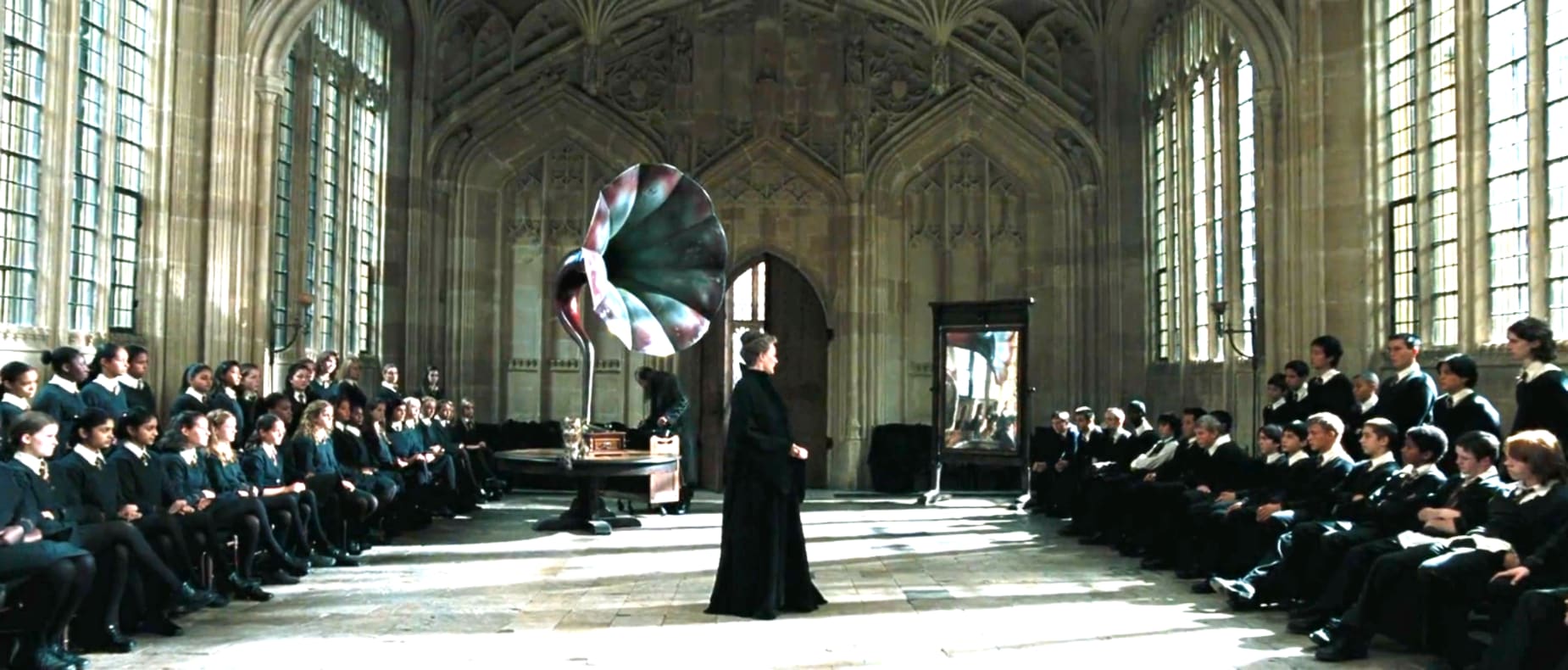 Here’s McGonagall’s dancing lesson, with increased brightness to highlight the room features. Filmed in 2004.
The building is physically attached to the Bodleian Library
The Old Bodleian Library
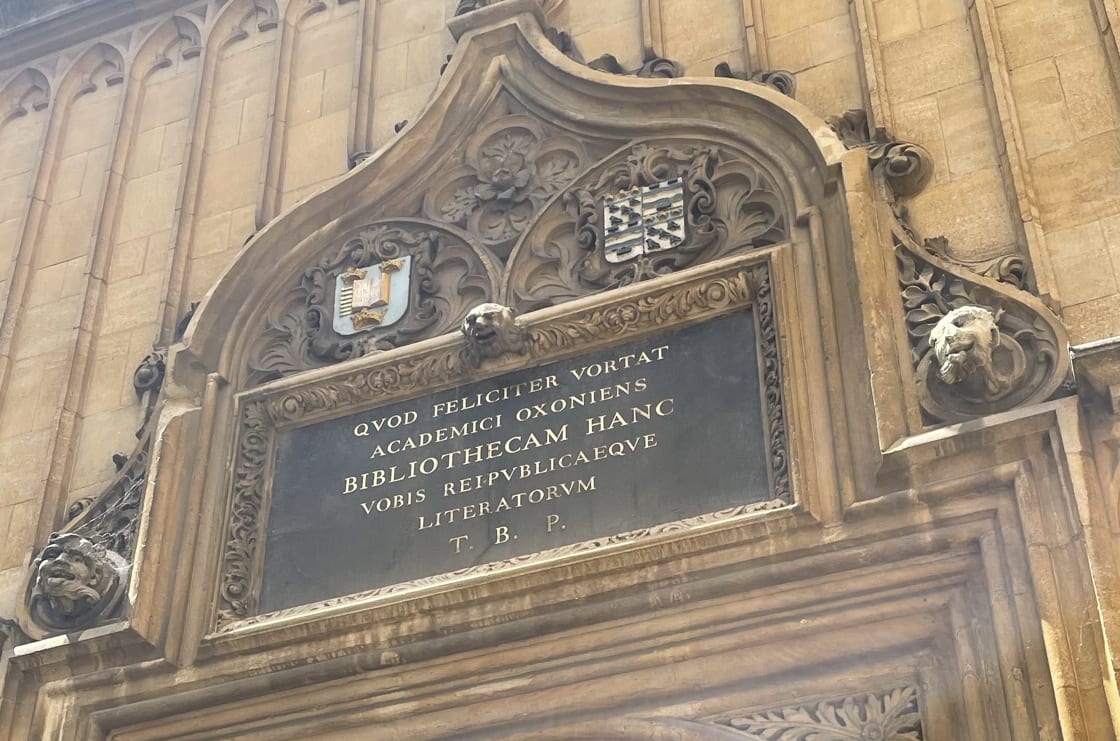
The Bodleian Library is actually a whole system of many libraries across Oxford, conforming the main research library of the University of Oxford. Founded in 1602 by Sir Thomas Bodley, the library has over 13 million books and it’s one of the oldest and largest in the world.
The Old Bodleian complex, which most people simply refer to as the Bodleian Library, is a must-see and it was the highlight of my day trip. You can only visit by booking a guided tour, and beware they are on high demand!
 North entrance of the Bodleian Library - The statue depicts Sir Thomas Bodleian himself, an Oxford scholar, diplomat and book lover in service of Queen Elizabeth I
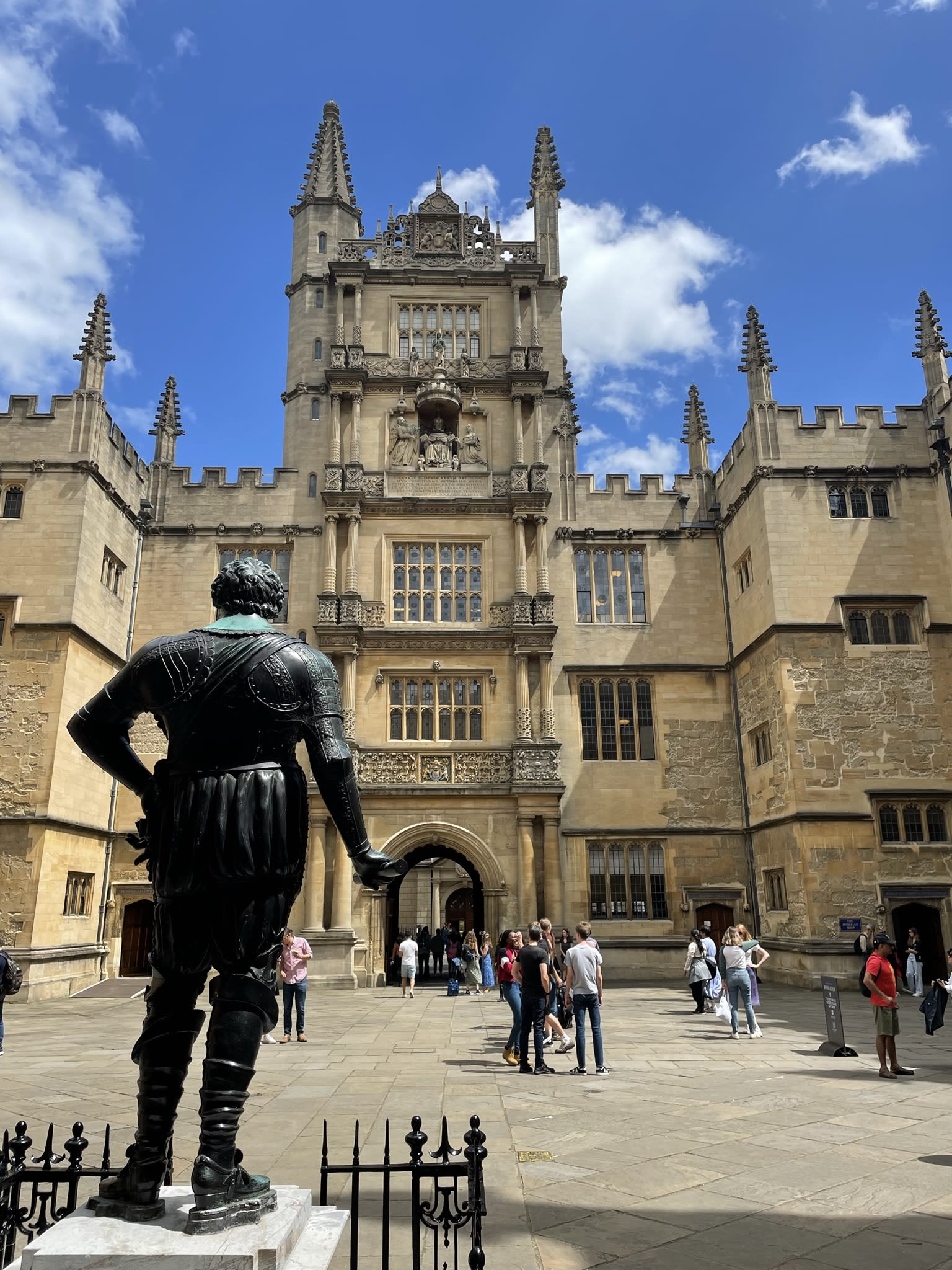 The Tower of the Five Orders, standing at the western end of the Bodleian Library, right next to the Divinity School entrance. Built in the 1600s, it has five stories decorated using the five classical orders of architecture from ancient Greece and Rome: Tuscan, Doric, Ionic, Corinthian and Composite.
I would’ve spent hours wondering the reading rooms on my own, it feels as though you had suddenly stepped out of this world into the medieval library of a wizard’s school. No wonder Hogwart’s Library scenes were shot here!
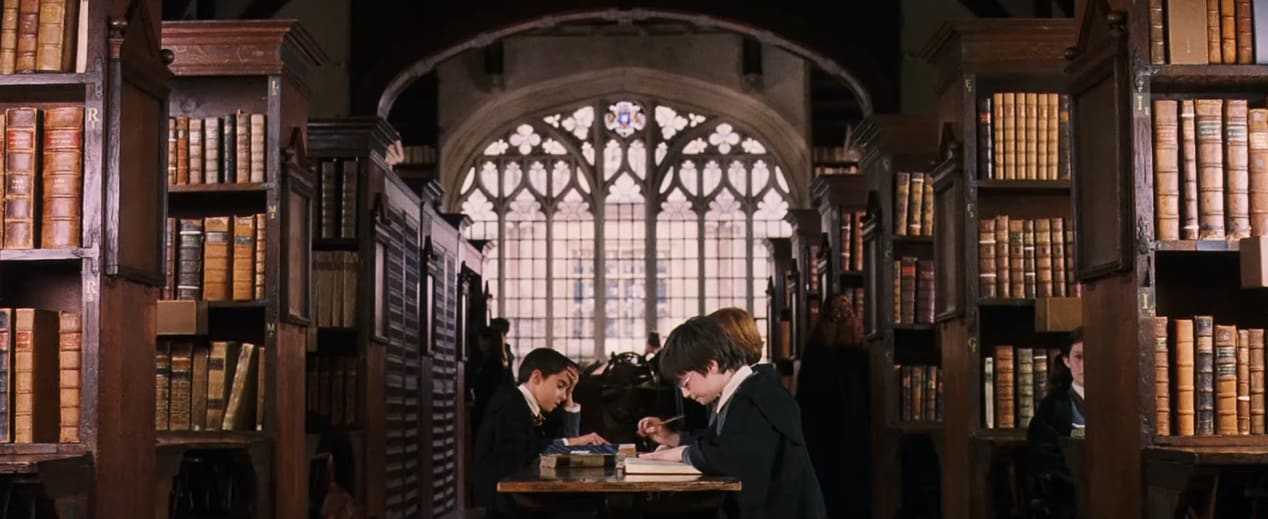 Harry and Ron studying at Hogwarts Library
 One of the few pictures I was able to sneakily take in the library, exactly where the scene above was shot. The upside of the guided tours is that there are very few people around. The downside: No pics allowed.
The Duke Humfrey’s Library (1610), located just above Divinity School, is the most ancient library room. Here you can see shelves of ancient books arranged in multiple levels, wooden desks and reading areas, a higher gallery and large stained glass windows.
 Pictures were not allowed - These are internet photos

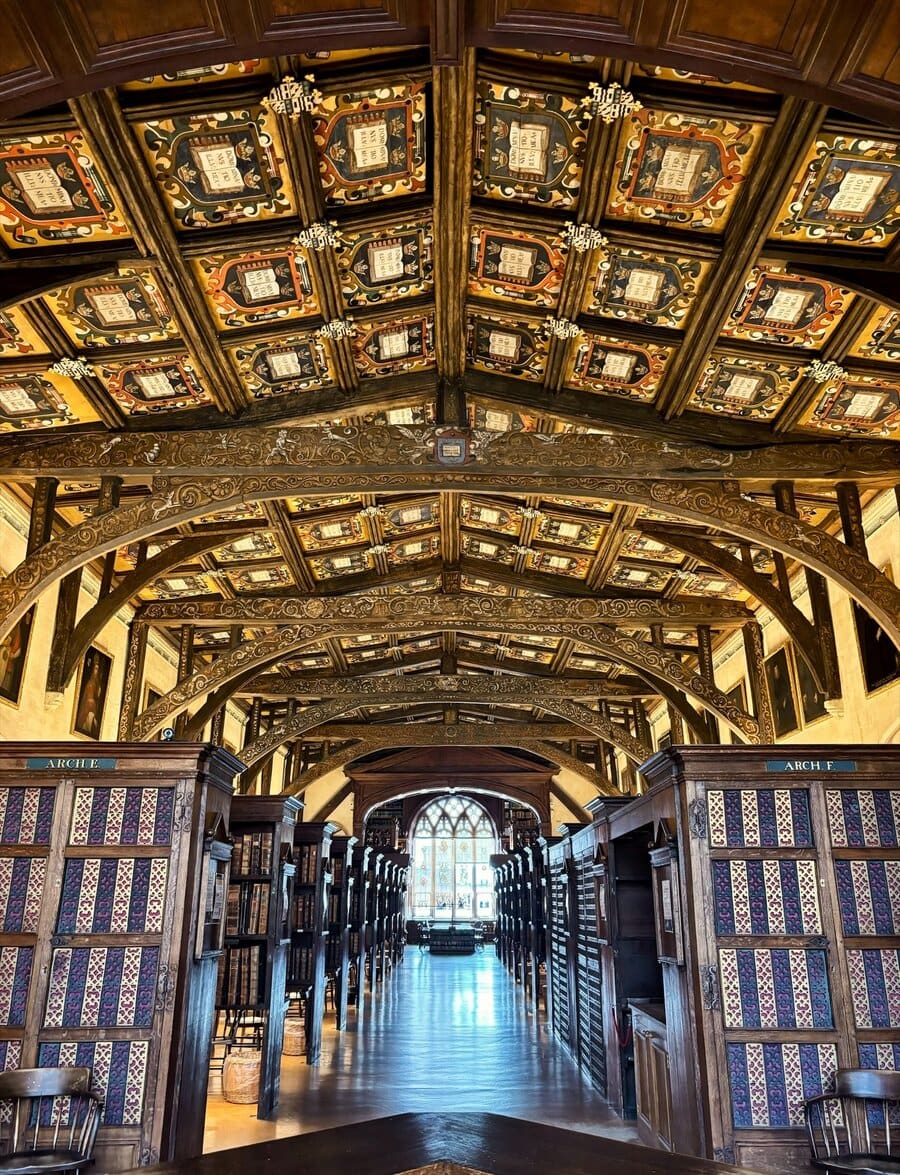 The ceiling is just mesmerising
 Pictures were not allowed, neither were you allowed to wander on your own. I managed to snap a few pictures, anyways.
 A quick picture that I managed to sneakily take. In these studying desks Harry, Ron and Hermione were shot studying at the Hogwarts Library
 The restricted section of Hogwarts Library, also shot here
The Duke Humfrey’s Library in my opinion the most evocative highlight in all of Oxford, and the heart of the Bodleian. It was built between 1450 and 1480, and named after Humfrey, the Duke of Gloucester (1390-1447), the younger brother of King Henry V. The duke was an early book collector, who donated 280 manuscripts to Oxford (a huge amount at the time). To house them, the university built this library.
 Scan of my entry ticket
Fun facts:
- The books are chained to the shelves! an authentic detail preserved to show how libraries protected their volumes before locks and security systems.
- The light is dim and golden, with the sense of stepping into the 1400s intact. It’s one of the few interiors in England that still looks almost exactly as it did half a millennium ago.
- During the Reformation (1550s), Duke Humfrey’s collection was destroyed because it contained Catholic and “superstitious” works. The library was rebuilt and refubrished, but almost none of the original gift survived.
- Today it is still part of the working Bodleian Library, Oxford students and scholars use it for real study and research.
- Some of the collections it holds date back to the 15th and 16th centuries, including illuminated manuscripts and early printed books.
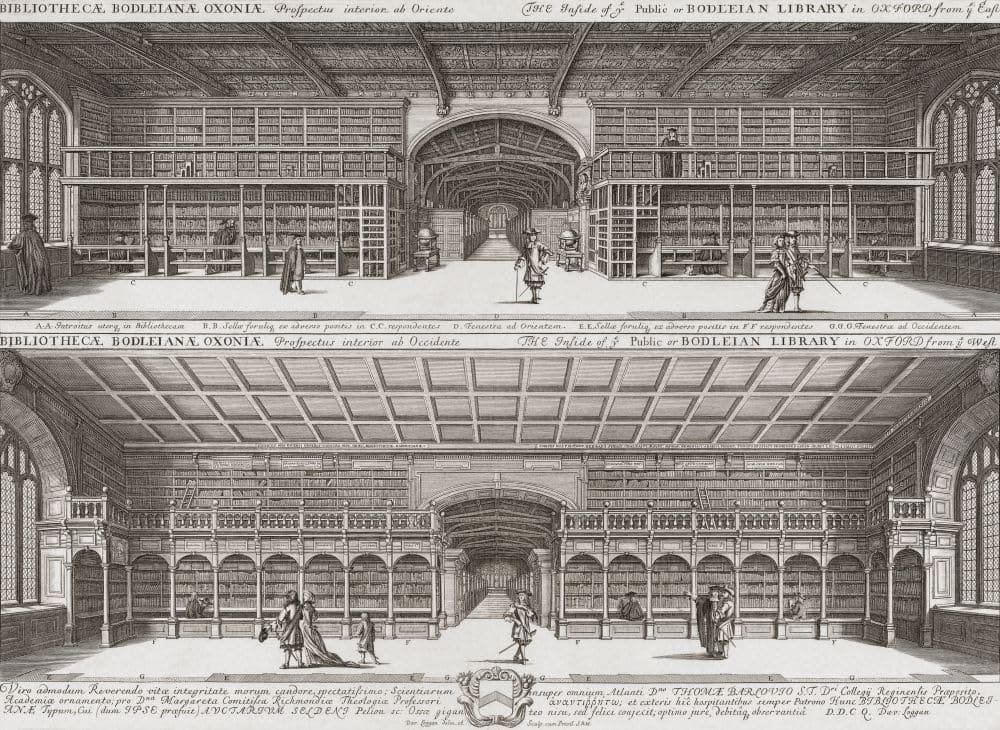 The interior of the Bodleian Library by David Loggan, ‘Oxonia illustrata’, 1675.
 Detail of the Oxonia illustrata engraving.
The Radcliffe Camera
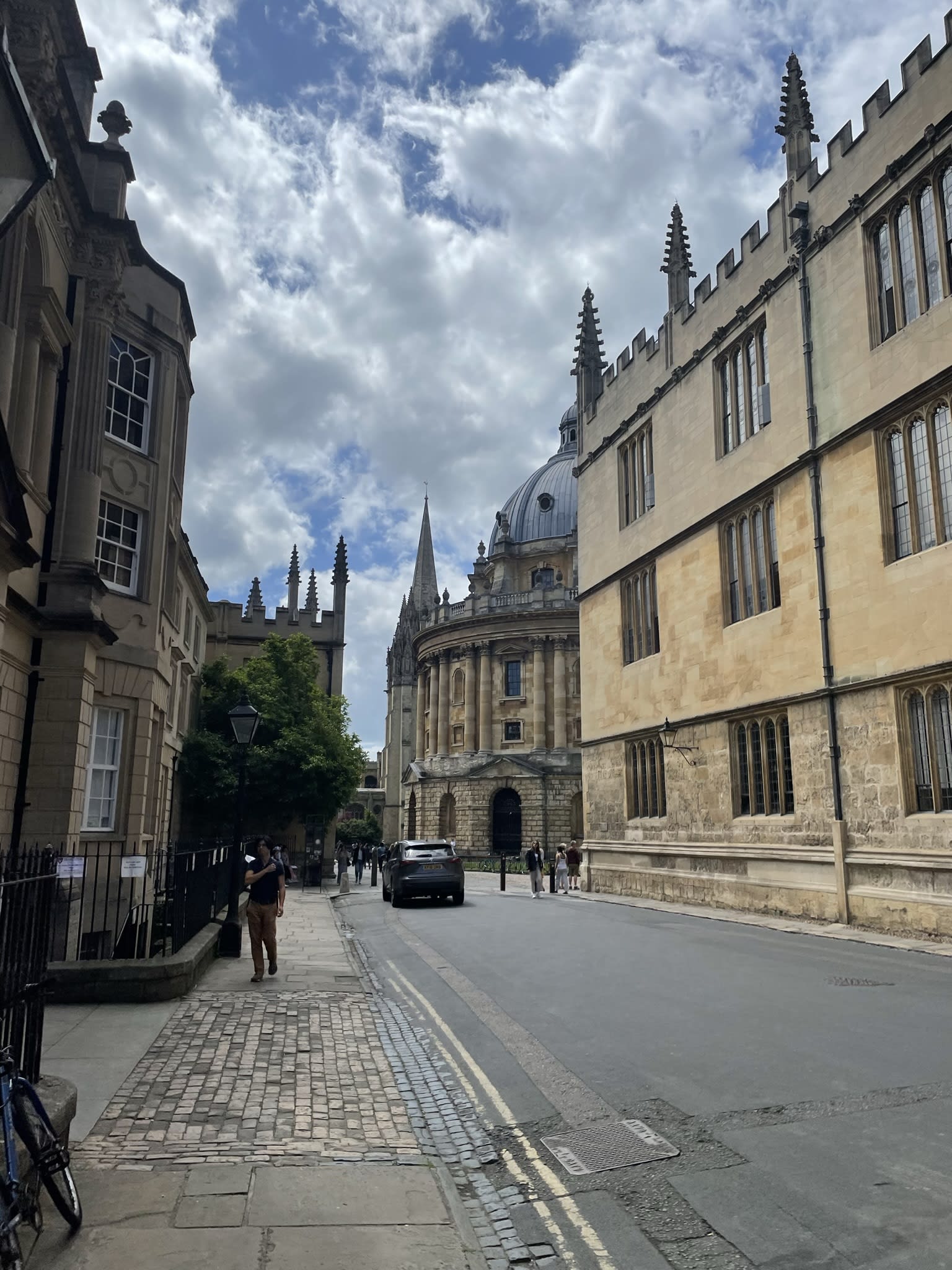
The Radcliffe Camera is yet another building conforming the Bodleian Library, built in 1737-1749 to house the Radcliffe Science Library. It is one of the most recognizable landmarks of the city due to its circularity and its position in the hearth of Oxford.e
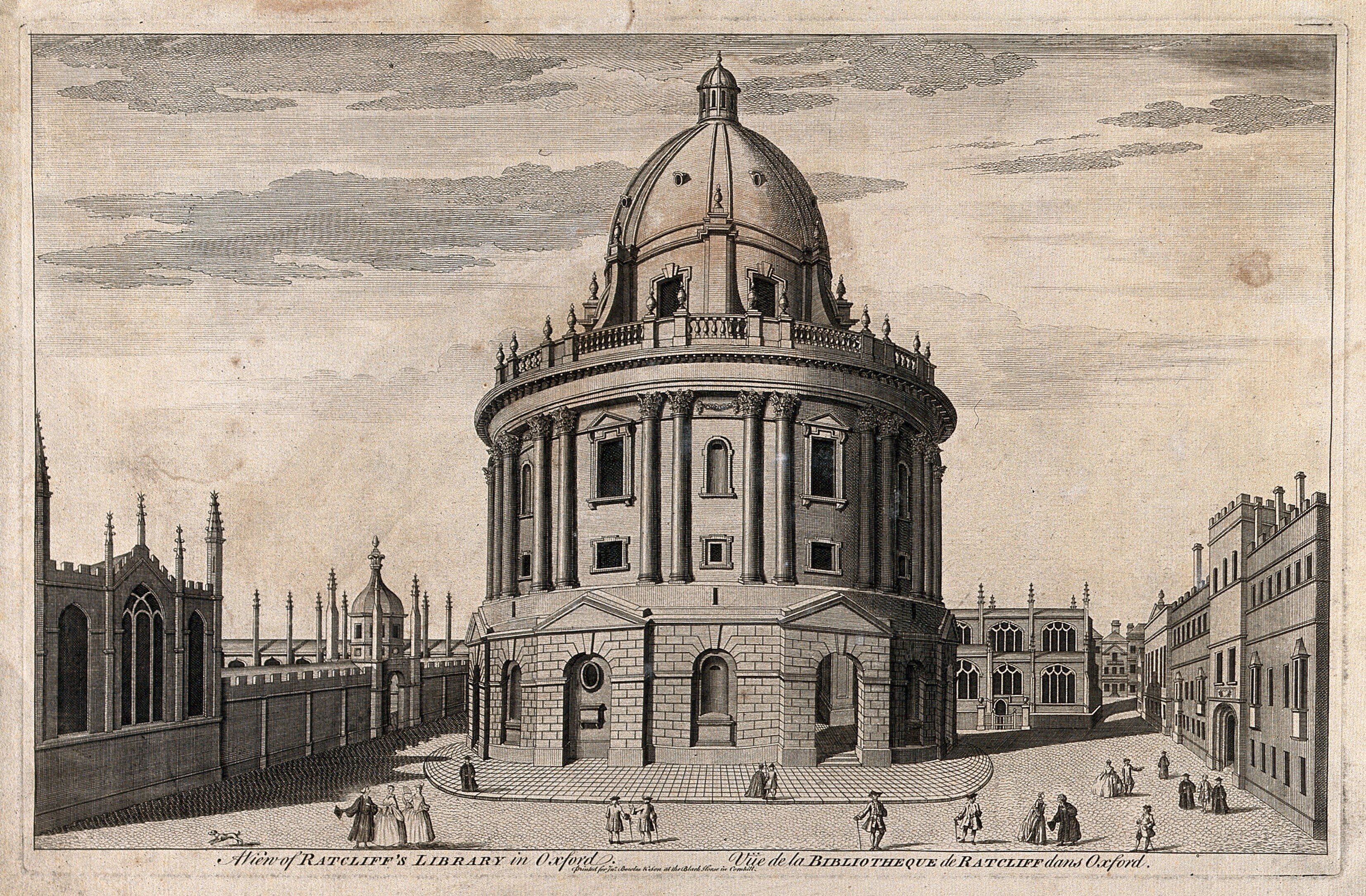 Engraving from Oxford illustrata
We were not able to visit the interior, since it can only be visited on guided tours with very limited availability.
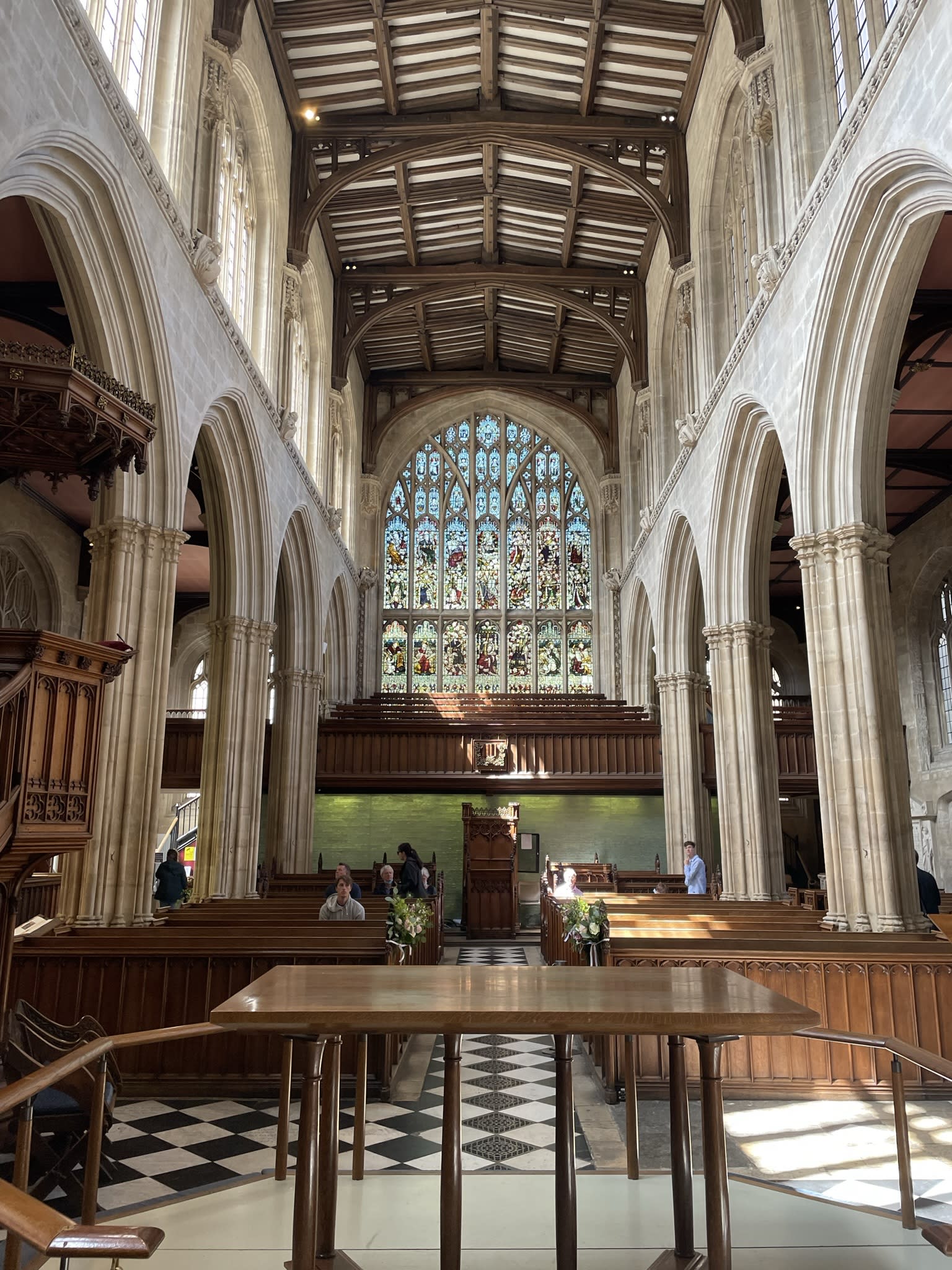
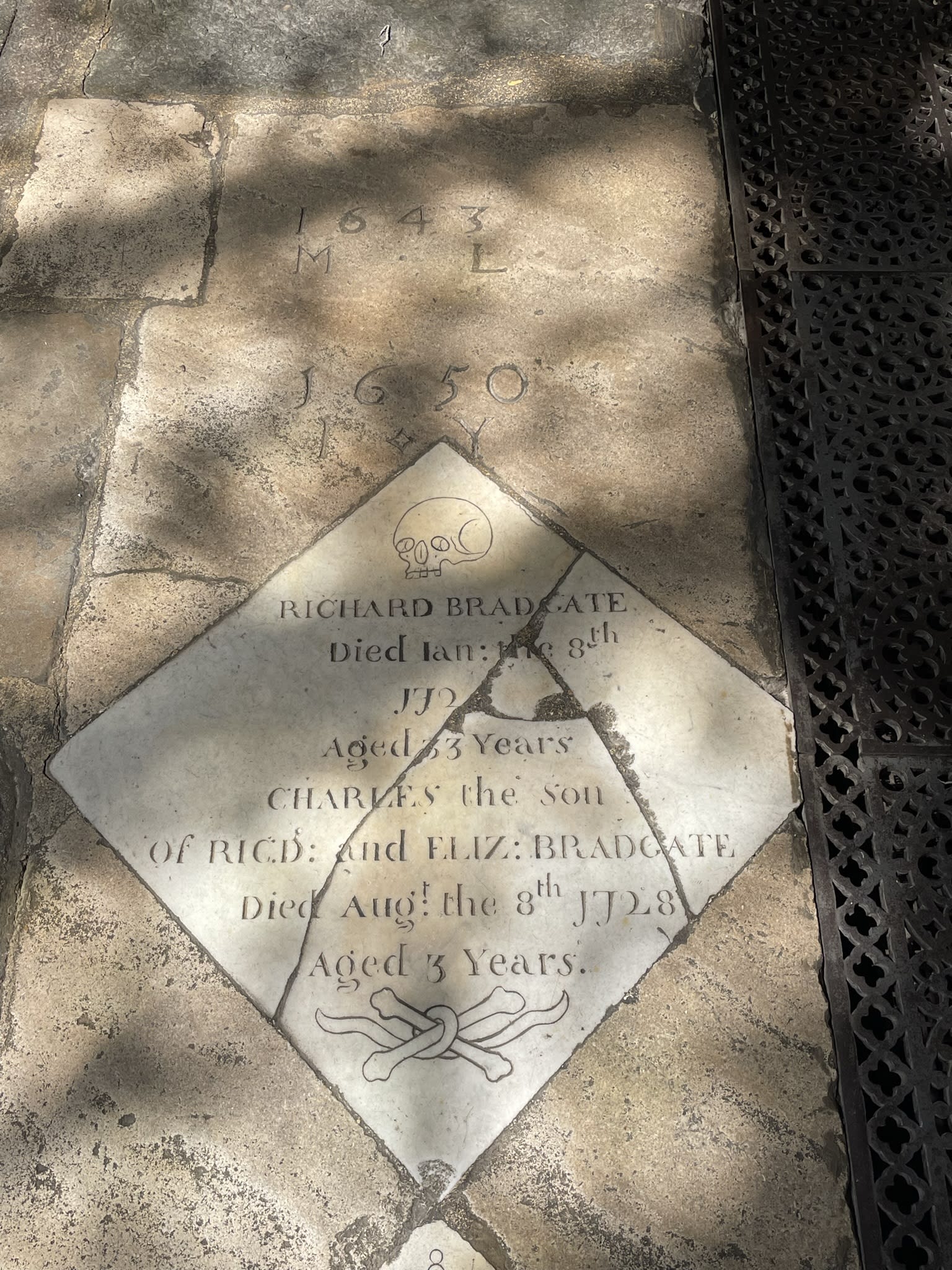
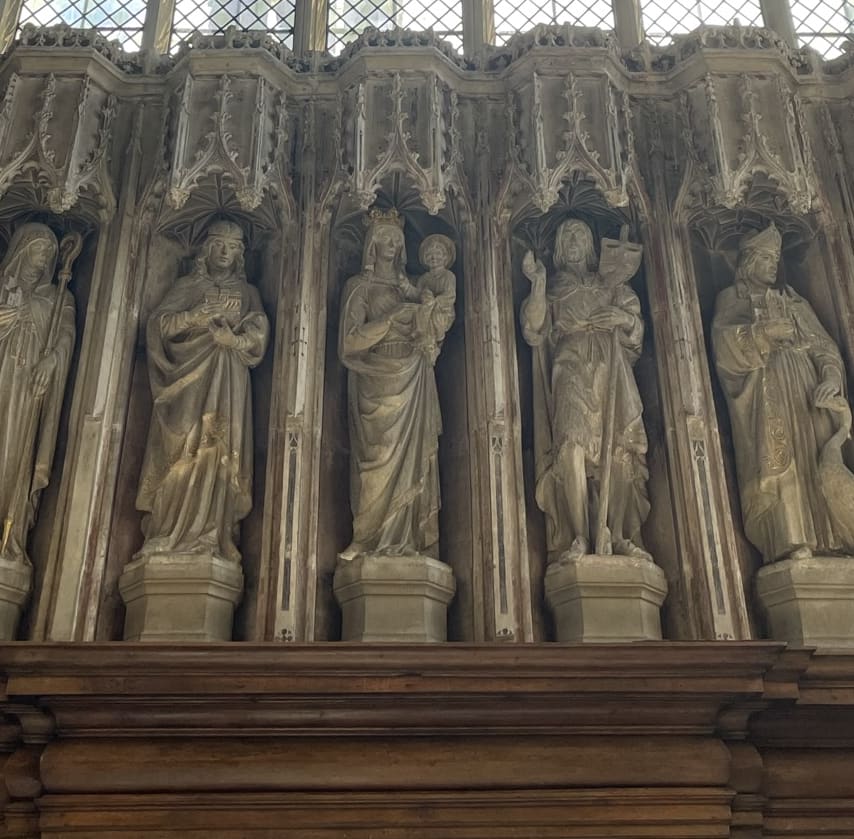
University Church of St Mary the Virgin
St Mary the Virgin is Oxford’s University Church, founded in the 13th Century. Back then, Oxford was just beginning to from as a place of learning. Scholars gathered around St Mary the Virgin because:
- The church was the central meeting point in town.
- Lectures and theological disputations (the earliest form of “university teaching”) were often held nearby.
- Church authorities provided clerical oversight, since most scholars were clergy at the time. Thus, Oxford University literally grew out of the congregation and activities around this church. The church has been the spiritual center of the university for centuries.
[carousel]

[/carousel]
Lincoln College
Next to the church we can find this intimate, small college.

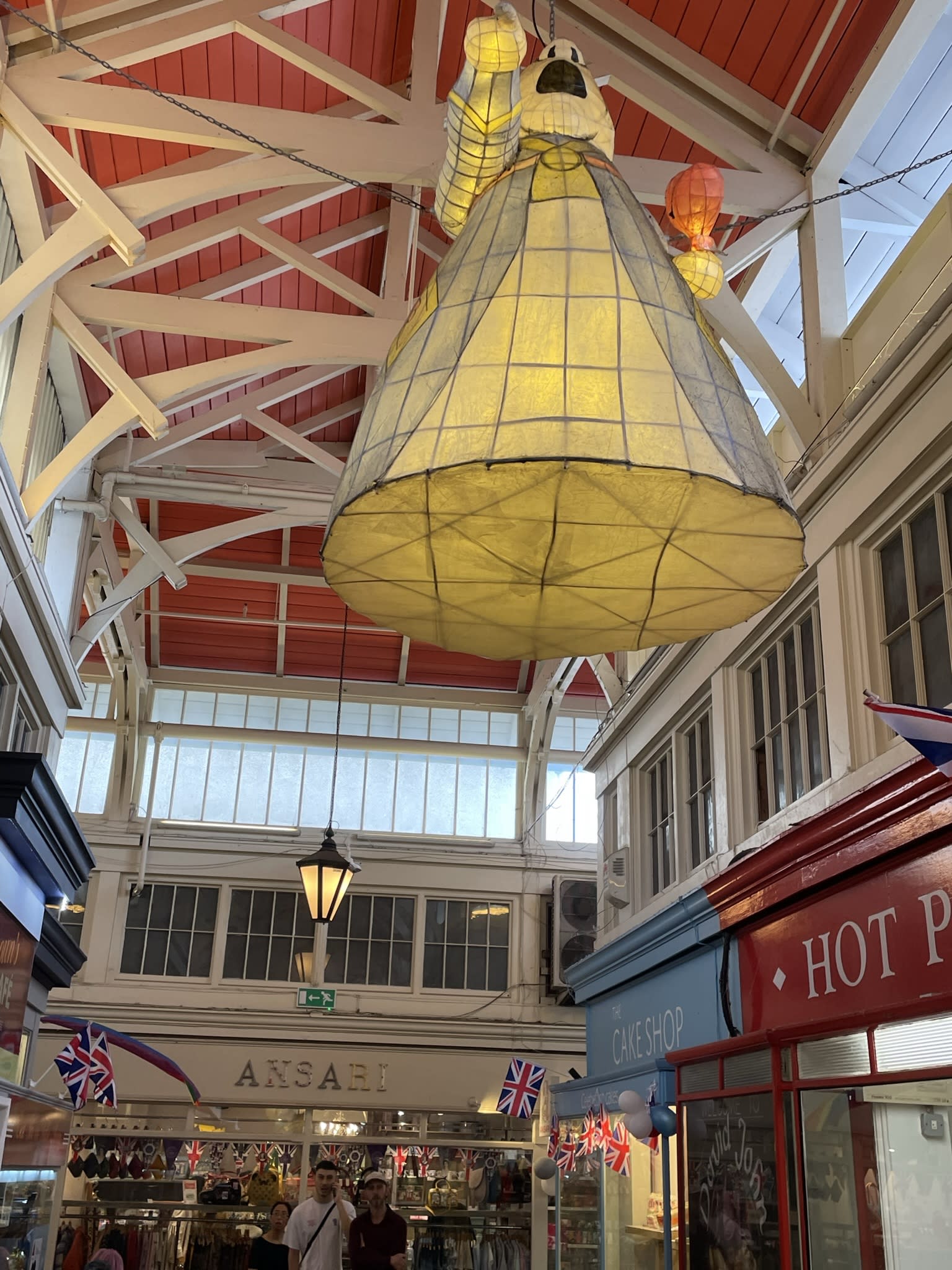
The Covered Market
Perfect for a lunch break, Oxford Covered Market is a historical indoor marketplace that has been operating nonstop since the 1770s!
[carousel]

[/carousel]
Christ Church College
Oxford’s crown jewel, both historically an architecturally, is one of the largest and most famous. Unfortunately it was closed for visitors, so we had to content ourselves with a distant photo.
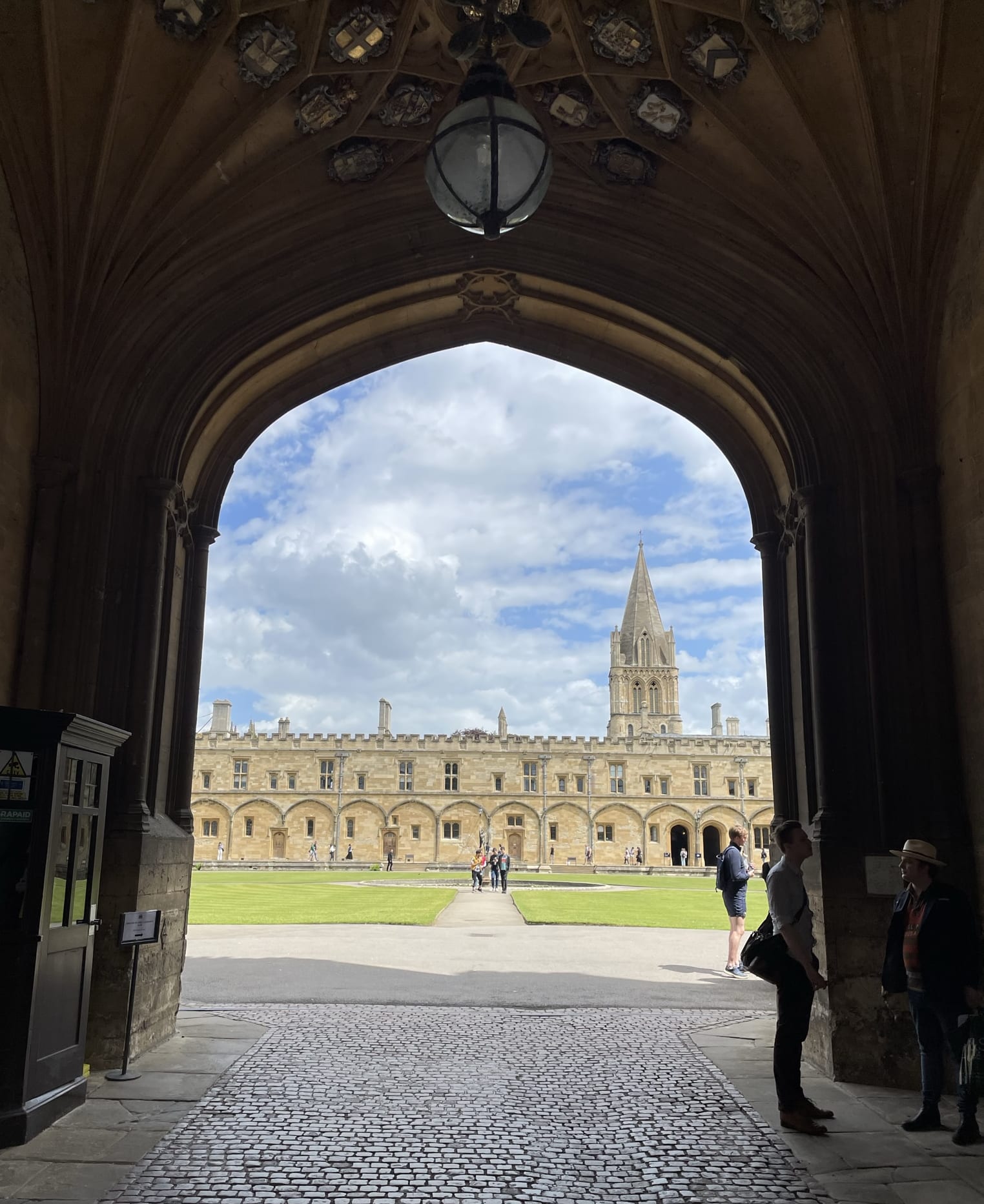
I really regret not having been able to visit the famous great hall, which inspired the sets of Hogwarts’ Great Hall.
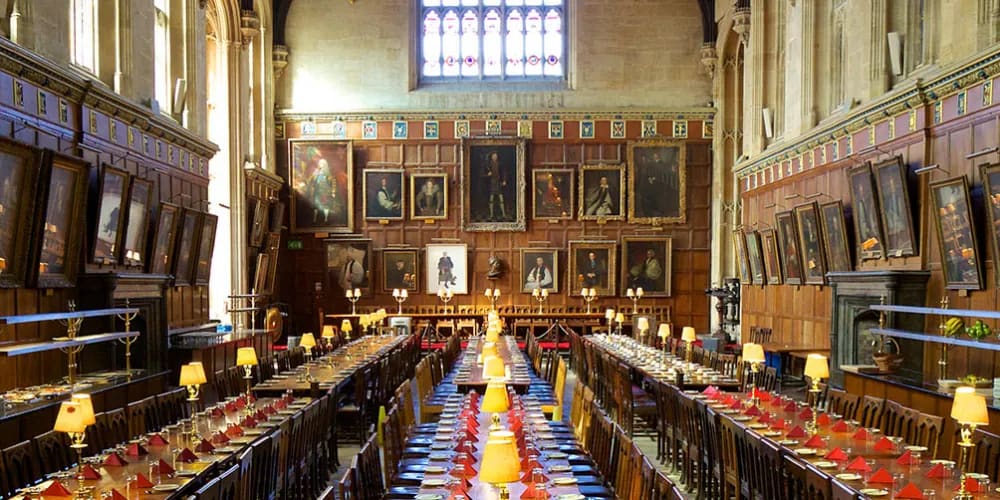 Photo from the official website
This college has many notable graduates, including 13 prime ministers!
Jesus College
One of Oxford quieter gems is Jesus college, extremely peaceful and quaint. Founded in 1571 by Queen Elizabeth I, it has deep Welsh roots and students affectionally call it “the Welsh college”

Balliol College
Balliol College is one of the three oldest and most intellectually influent colleges, with a reputation for academic excellency. The full name of the college is “The Master and Scholars of Balliol College in the University of Oxford, founded in 1263 by John de Balliol, a wealthy noblemen. His wide, Dervoguilla de Galloway, secured and formalized the financial foundation of the college, and it is often regarded as the true founder.

Balliol has an exceptional academical and political tradition, known for producing prime ministers, philosophers and Nobel laureates.
[carousel]
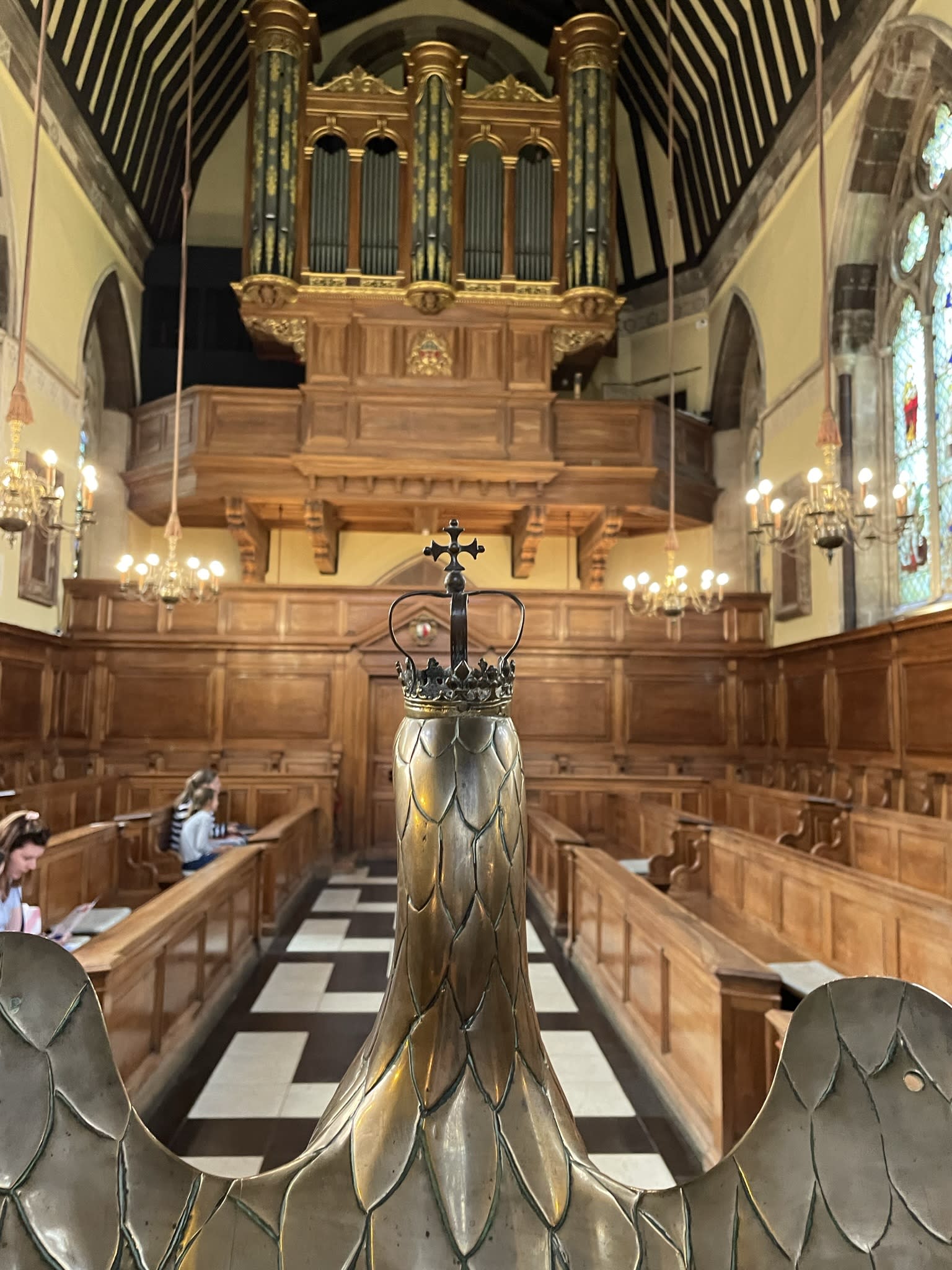 Balliol College Chapel


[/carousel]
 Dining hall of Balliol College, built in 1877 to replace an older hall
 Dining hall - Students actually regularly eat in their historic dining halls, just as they have for centuries

Dervoguilla was a wealthy, influential Scottish noblewoman in the 13th Century. Her name is a Latinisation of the Gaelic Dearbhfhorghaill. In 1263, her husband Sir John was required to make penance after a land dispute. Part of this took the very expensive form of founding a college for the poor at the University of Oxford.
Sir John’s own finances were less substantial than those of his wife, however, and long after his death it fell to Dervorguilla to confirm the foundation. She established a permanent endowment for the college in 1282, as well as its first formal statutes
Sheldonian Theatre
Since we were already short in time, we quickly walked past this historical landmark and were unable to properly admire it. Built in 1664-1669, it was designed as a ceremonial hall for the university to hold graduations, lectures, ceremonies, concerts and public events.
 The North facade of the theatre. Dozens of Sheldonian’s stone heads decorate the exterior.
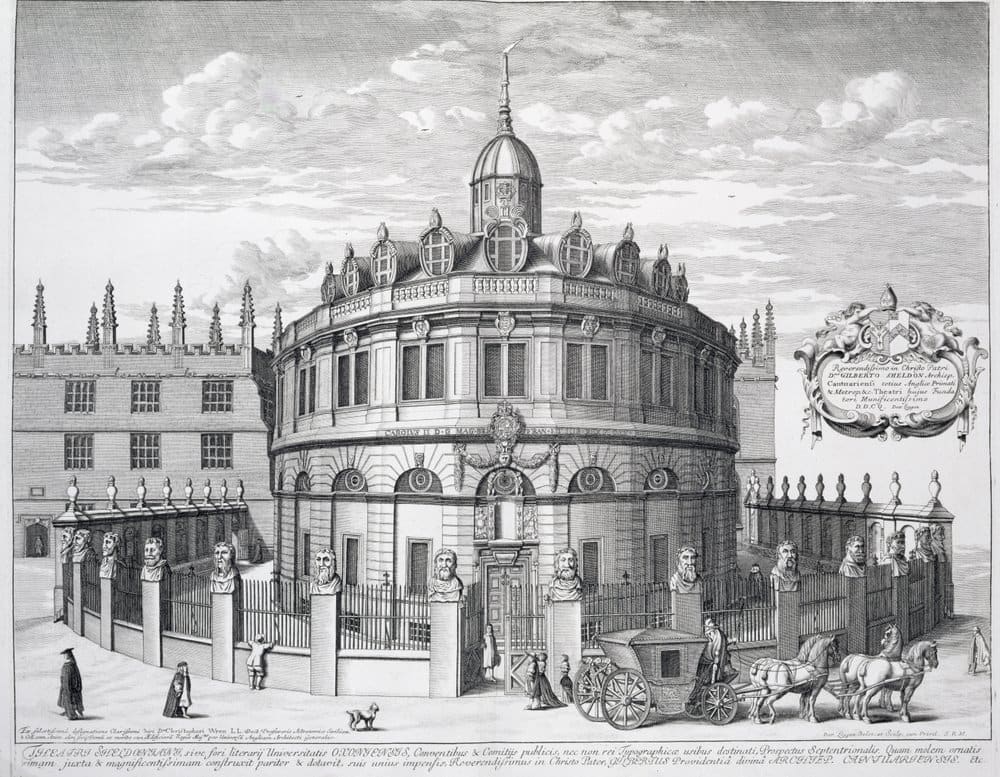 The theatre in 1675, according to Oxfonia Illustrata
Westone Library
Part of the Bodleian Library, it houses special collections, rare books and exhibition spaces. We briefly browsed the exhibits before moving on to our last college of the day.
[carousel]
 Closeup of an old book
 Ga’ez Gospel book , Four Gospels, late 15 or early 16th century
[/carousel]
Magdalen College
Our final stop was Magdalen College, one of the most picturesque and iconic colleges. Founded in 1458 by William of Waynflete, Bishop of Winchester, it is known for academic excellence and beautiful grounds.

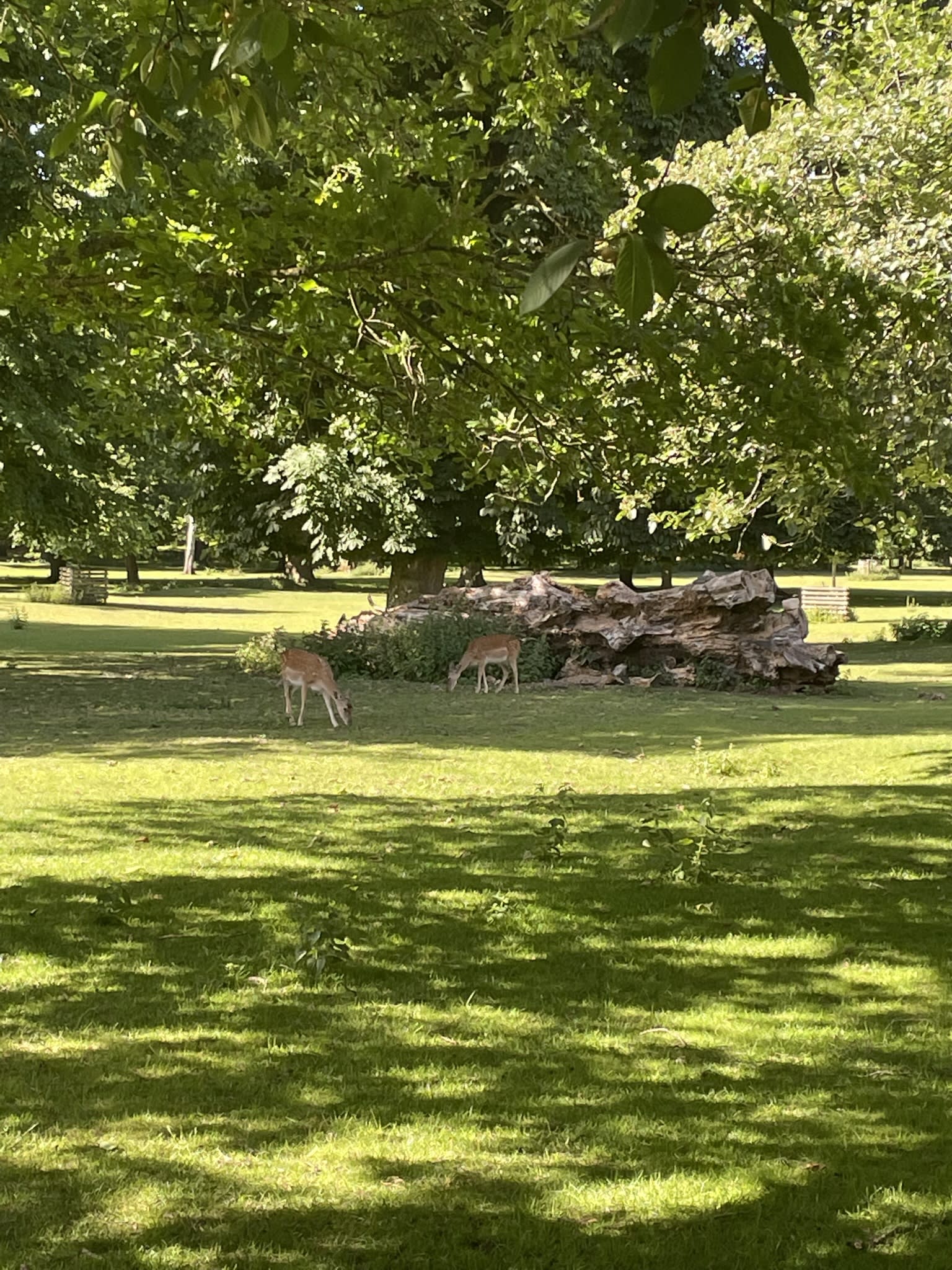 Magdalen’s deer park is perhaps its most famous feature


 The Dining Hall is beautifully decorated
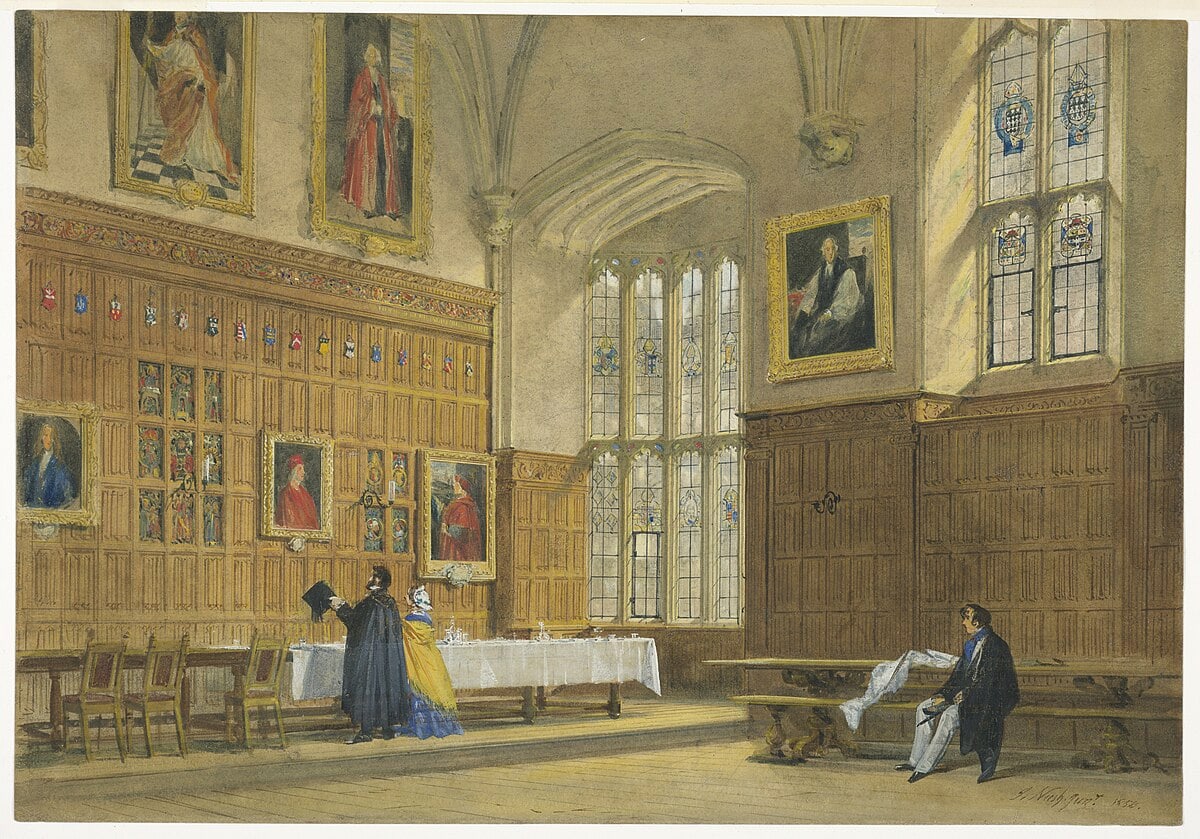 Drawing, View of the Dining Hall in Magdalen College, Oxford, 1856
 The three paintings that hang over the High Table are William Freeman (left, 1702-1750) ; William Waynflete (centre, 1398-1486, founder of the college) ; Edward Butler (right, 1686-1745)
 Exterior of the chapel
Queen’s College
This is a rather unimportant college that we only walked past by, but I was mesmerized by the sight of a graveyard full of students sunbathing, lying on the tombstones. What an unlikely sight!

Attractions we missed
It’s hard to hit all major attractions in a single day, especially since visitor hours are reduced, colleges have closure days and tickets may have ran out. I missed a couple crucial spots that I hope to visit next time:
- Christ Church College, arguably the most famous college in Oxford and whose Great Hall inspired Harry Potter. It was closed.
- New College: One of the grandest medieval colleges, whose courtyard was used in Harry Potter and the Goblet of Fire
- Interiors of the Sheldonian Theatre and the Radcliffe Camera
- The Ashmolean Museum
- The Pitt Rivers Museum
- The Bridge of Sighs
 Browsing the shops - I wish I had had more time to look around
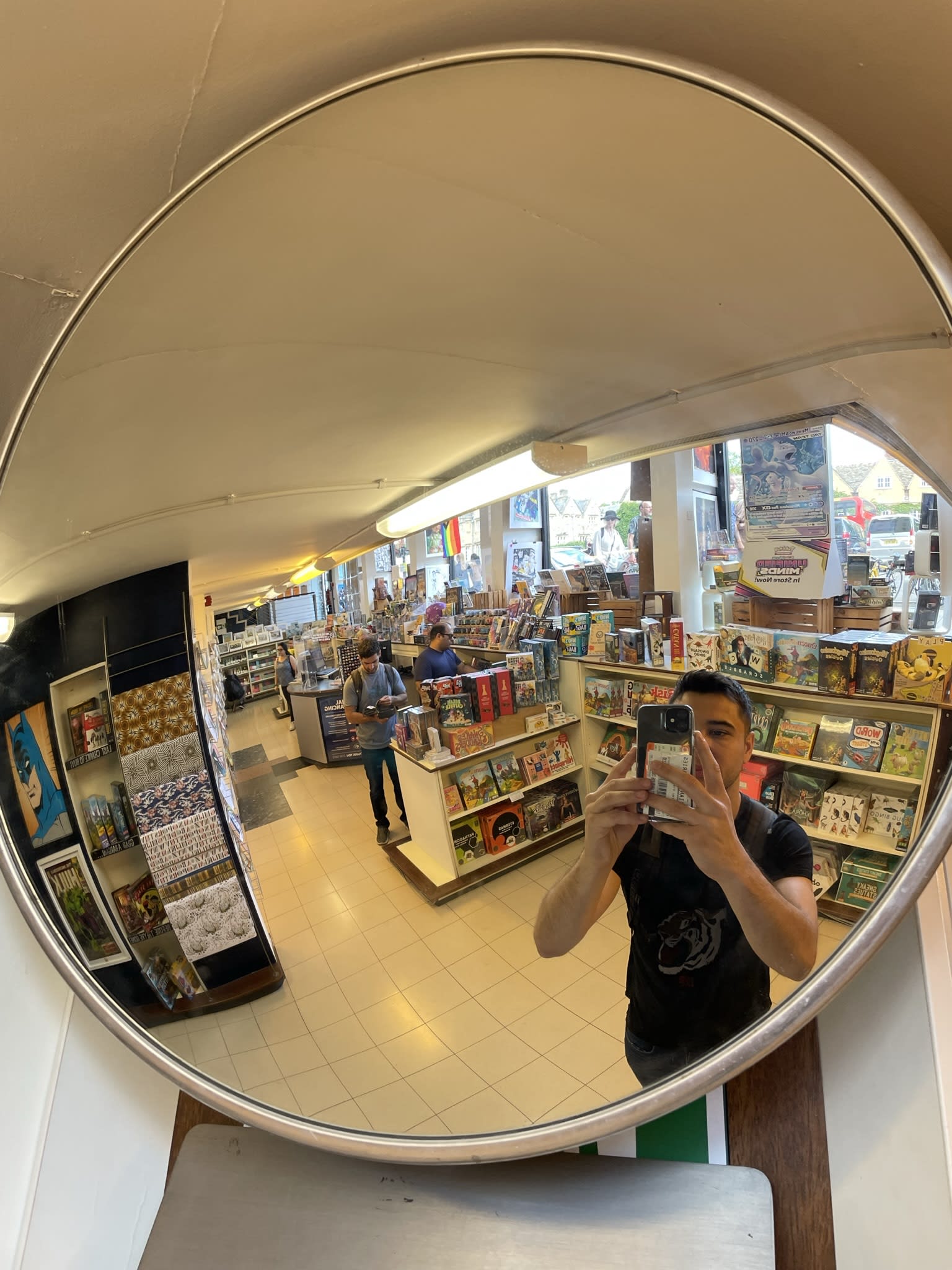 Astounding board game floor at Blackwell’s Sci-fi, Manga & Games
Interesting Facts about the University

- As of 2025, Oxford has approximately 26,595 students in total: ~12,375 undergraduates and ~13,650 graduate students.
- International students make up a significant slice: Oxford states that students come from more than 160 countries and territories
- Each student belongs to a college or hall which handles residential, social, and pastoral functions alongside the central university teaching and research. The university-level administration handles degrees, examinations, policy, and research governance. In other words, Oxford University is an umbrella institution that handles the academic part (similarly to Cambridge University).
- Oxford still emphasises college membership: even though you study within the university, your “home base” is a college with its own traditions
- The admission rate is highly competitive — around 13-17% depending on course and year.
- Visiting the city is remarkably reminiscing of visiting Cambridge, which I had visited only a month before.
- Oxford has held the #1 spot in the Times Higher Education (THE) World University Rankings every year since 2017. In most of the rankings out there, Oxford is going to be in the top-5 best universities in the world!
Final Thoughts
Walking through Oxford colleges feels like moving through time: centuries of scholarship, medieval buildings that look exactly as they did 400 years ago and young students receiving the highest quality, most modern education in the world.
The Harry Potter connections made this trip particular special for me: I had the unforgettable chance to visit Hogwarts Library, hospital wing and classrooms. I left wishing I had one more day to peek into a few more colleges, perhaps at a more relaxed pace where I can enjoy the relaxed student vibe. The good news is that Oxford is so easily accessible from London, that I am sure I will be visiting again soon.
 Christ Church College, which I hope I get to visit in my next trip