The Founding Trail: Philadelphia to Washington
Philadelphia → Washington DC
An Unexpected Visit to Philly and DC
 Philadelphia City Hall
I had the privilege to attend the 2022 International Conference on Robotics and Automation (ICRA) in Philadelphia, Pennsylvania during a company trip. I spent most of the weekdays attending lectures and expositions at the Pennsylvania Convention Center.
It was a unique opportunity to get up to date with the latest trends in robotics, and I remember more than half the talks were already about transformers, the base technology that shortly after massively reshaped our life via smart chatbots like ChatGPT.
Outside lectures and during weekends, I visited the highlights of Philly ; and even managed to squeeze in a day trip to one of my favourite cities in the US: Washington DC.
[content_table]
Sightseeing Philly
Philadelphia, the largest city in Pennsylvania, is one of the most historically significant cities in the United States. Founded in 1682, it played a central role in the American Revolution and was the site where the Declaration of Independence and the U.S. Constitution were signed. Known as The City of Brotherly Love, Philadelphia blends its rich colonial heritage with a vibrant modern culture, offering world-class museums, universities, and restaurants while retaining its distinct, down-to-earth character.
| Category | Details |
|---|---|
| Official Name | City of Philadelphia |
| Founded | October 27, 1682 |
| Founder | William Penn |
| State / Country | Pennsylvania, United States |
| Nicknames | Philly ; The City of Brotherly Love |
| Population (2024 est.) | ~1.6 million (metro ~6.2 million) |
| Main Industries | Healthcare, education, finance, tech, tourism |
| Major Universities | University of Pennsylvania, Temple University, Drexel University |
| Major Landmarks | Independence Hall, Liberty Bell, Philadelphia Museum of Art |
| Airport | Philadelphia International Airport (PHL) |
| Interesting Fact | Served as U.S. capital from 1790–1800 |

I had skipped Philly in my last trip to the region, where I focused on NYC and DC instead. Had it not been for this conference, I probably would have never visited the city, which is a little underwhelming compared with the other cities in the area.
City Hall
One of the city’s most iconic landmarks, which stands at the geographic center of the city, where William Penn’s original 17th-century street plan placed the city’s central square. The City Hall remains a working government building, saet of the City government.
Construction began in 1871 and lasted 30 years. Atop the tower stands a 37-foot (11m) bronze statue of William Penn. For nearly a century, no building in Philadelphia rose higher than Penn’s hat, until a skyscraper surpassed it in the 1980s.
[carousel]


[/carousel]
Given its central location, I passed by this building every day.
Independence Hall
The most visited attraction of the city is the Independence Hall, where the Declaration of Independence was debated and adopted in 1776; and later where the U.S. Constitution was drafted and signed in 1787.
The whole place is a UNESCO world heritage site, and I purchased a ticket to tour it on my first day. Tickets are timed, purchased via recreation.gov and include a guided tour of the interior of the hall ; plus entrance to the Liberty Bell Center.


[carousel]
 Entrance hall
 Pennsilvania Supreme Court Chamber. The Pennsylvania Supreme Court chamber was the meeting place of the colony’s and (later state’s) highest court.
 Pennsylvania Coat of Arms, right above the judge’s bench. A detail of the Pennsylvania Coat of Arms, by George Rutter c. 1785. This painting replaced the coat of arms of King George III after it had been taken down and burned following the first public reading of the Declaration of Independence on July 8th, 1776.
 Assembly Room. The Assembly Room of the Pennsylvania State House served as the meeting place of the Pennsylvania Assembly for over sixty years until the State Capital moved away from Philadelphia in 1799. In 1776, the Continental Congress declared Independence in this room and in 1787 the U.S. Constitution was debated and signed. Most historians consider this room one of the most historic rooms in the United States.
[/carousel]
History: Before 1760, the colonies had lived under what’s often called “salutary neglect.” That meant Britain allowed them broad self-government, as long as trade benefited the British Empire. Each colony had its own elected assembly, and the colonists saw themselves as loyal British subjects — enjoying English rights like representation and trial by jury.
But after the Seven Years’ War (1756–1763) — known in America as the French and Indian War — everything began to change. Britain had won vast new territories but was deeply in debt and expected the colonies to help pay for the costs of defense and administration.
To raise money, Britain passed a series of taxes and trade regulations on the colonies. The colonists’ main objection wasn’t simply the money — it was the principle. Britain saw colonial defiance as a threat to imperial authority. The situation escalated and ended in the American Revolutionary War.
By mid-1775, the colonists were still technically fighting for their rights within the British Empire, not necessarily for independence. But several things pushed them over the line, such as King George III’s rejection of their petitions and Britain declaring open rebellion and sending massive reinforcements, inability to have diplomatic relationships with France as a colony.
Thus, in 1176, written by Thomas Jefferson, the Declaration of Independence became a statement of principle and a practical diplomatic move.
Liberty Bell
Just across from Independence Hall stands the Liberty Bell, commissioned in 1751 by the Pennsylvania Assembly to commemorate the 50th anniversary of William Penn’s 1701 Charter of Privileges (the colony’s first constitution). It was the bell of what we now call Independence Hall, when it was the State House of Pennsylvania.
Its inscription reads: “Proclaim LIBERTY Throughout All the Land Unto All the Inhabitants Thereof” — Leviticus 25:10
The bell developed its famous crack in the early 1800s; attempts to repair it only made it worse, and it was retired from use in 1846.
Over time, the bell became a powerful emblem for abolitionists, civil rights movements, and freedom worldwide.
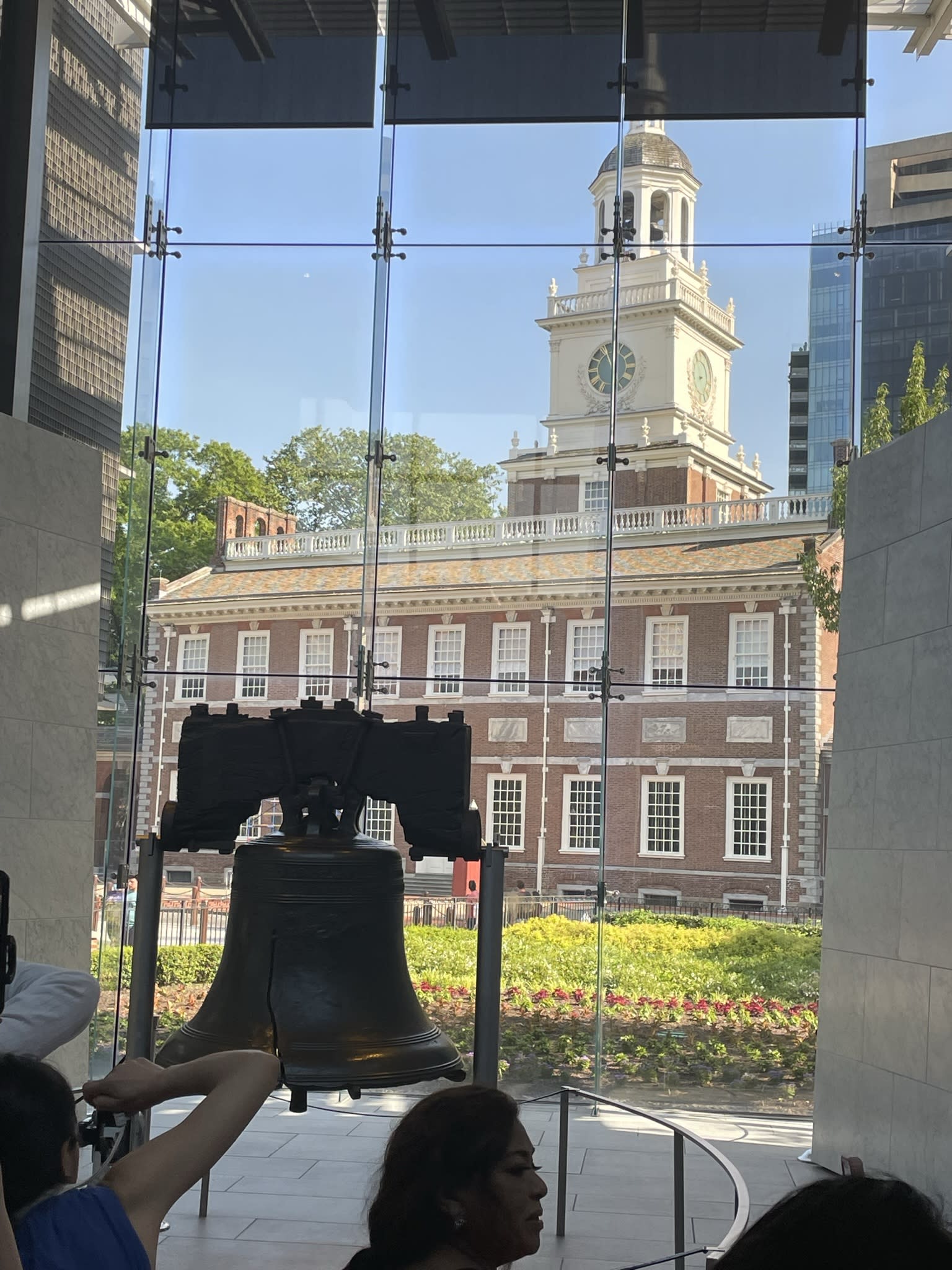
The Liberty Bell did not play a direct role in the Declaration of Independence or in the actual events of 1776. There’s a popular legend that the bell rang on July 4, 1776, to announce the signing of the Declaration of Independence; but this never happened.
Reading Terminal Market
This is a quirky market where we had lunch many times in breaks from the conference. Originally built for the Reading Railroad, it’s now extremely popular with locals and tourists.
[carousel]


[/carousel]
City Views
 Love Park, with flags from all over the world
 Love Park, surrounded by tall skyscrapers


ICRA 2022 Conference
The conference took place at this huge convention center:

 Me, very sleepy in the first morning of the convention
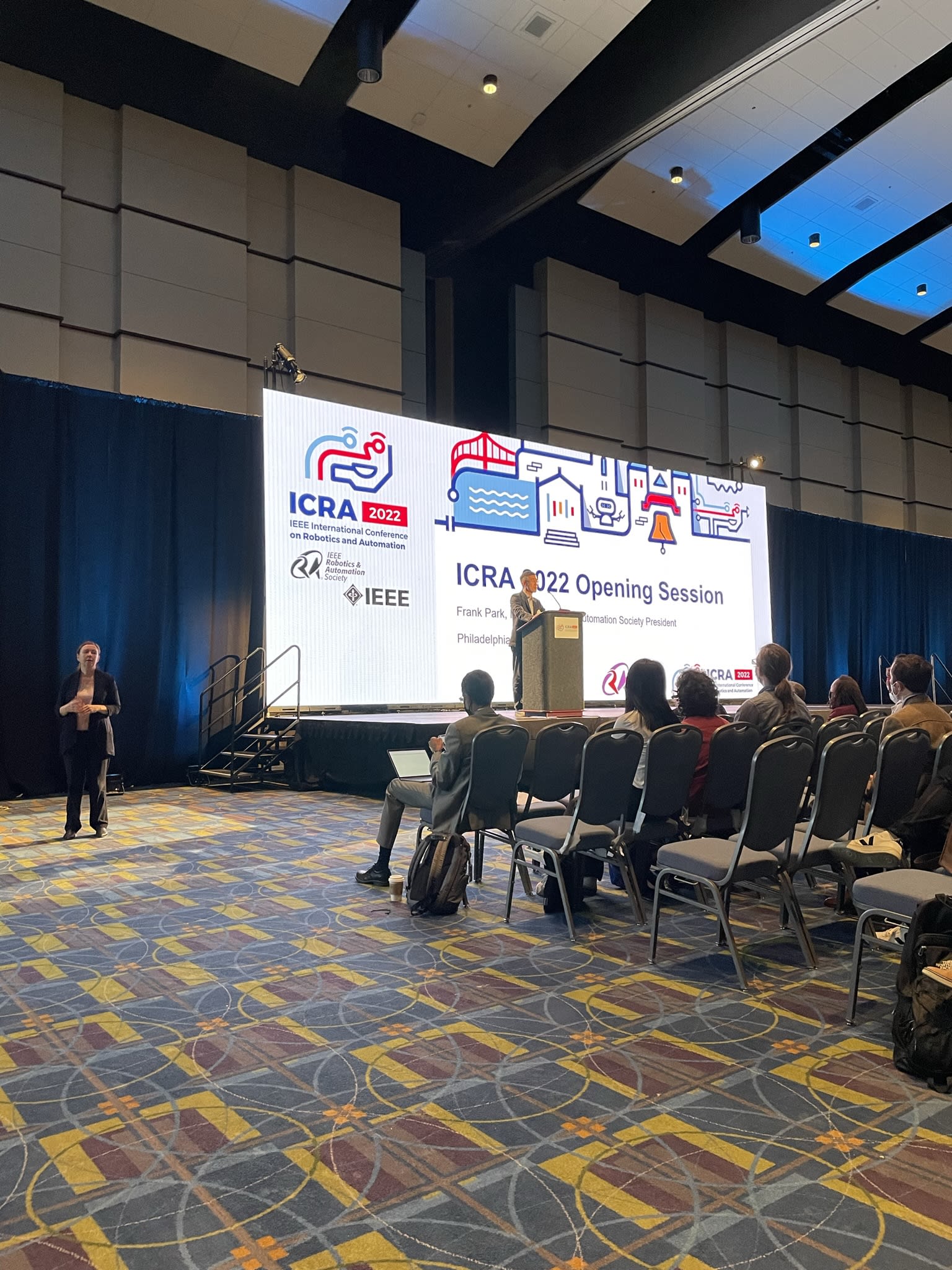

Attending ICRA was a turning point in my career. Here I realised I had to embrace and dive deep into machine learning, or else become obsolete as an engineer. Three years later I’m happy to have a full time machine learning engineer job!
During this trip I recall getting familiar with the details of popular fields like reinforcement learning. I struggled to follow many of the sessions in the conference because they laser focused on specific topics; but I do recall enjoying the more general sessions (Keynotes). There were poster sessions as well, autonomous vehicle races, dog-like robots, etc etc.
Four other iRobot colleagues attended, and we had dinner a few times. One day we went to a Chinese restaurant, another day we went rock-climbing to a climbing gym. It was fun to meet real life colleagues after so much covid isolation.
Washington DC
The capital of the USA is one of my favourite cities in the country, and I couldn’t miss the chance of a short visit before returning to the UK.

I rode a bus (a Megabus or similar) at around 9 AM, and arrived at DC at noon (about 3h15); and then took an Amtrak train the next day at noon as well. 24 hours to visit glimpse the American capital, which I had already visited in 2019.
What I love the most about DC are the Smithsonian Museums, a group of 21 US-funded museums and galleries, most of them in DC. Admission is completely free and they are top-notch!
In mi previous DC visit I spent two days walking The National Mall, a large open green space between the US Capitol and the Lincoln Memorial, which is surrounded by Smithsonian museums and filled with iconic monuments. The whole place is pristine, and I decided I’d spent my 24 hour allowance here.

The Postal Museum
On the 28th I focused on the Postal Museum. I intended to pay a short visit to this rather unusual museum, since it’s not one of the mainstream ones. Yet, I deeply loved it, and ended up spending hours browsing the exhibits!
My grandpa has always collected postal stamps and coins, and as a kid I would always help him organize his collection. I’m algo a geography nerd, and this museum has stamps from literally all over the world: countries that no longer exist, countries that I had never heard of, and the history of humanity told through stamps.

My favourite exhibits of the Postal Museum:
The Penny Black
I learned about the first postage stamp: the Penny Black, issued by Great Britain on May 1, 1840. It revolutionized postal services worldwide.
Before postage stamps, mail recipients—not senders—paid delivery fees, which varied by distance and were often refused, wasting time and money for postal services. To fix this, reformer Rowland Hill proposed a simple, uniform, prepaid system: one low rate for all domestic letters, with payment made in advance by the sender.
The Penny Black, issued in 1840, served as proof of payment through a small adhesive label. This innovation made mailing cheaper, fairer, and more reliable, causing postal use to skyrocket and inspiring similar systems worldwide.
The Penny Black is one of the most famous and sought-after stamps, being the very first postage stamp ever used. It shows a profile Queen Victoria.
 At the museum you can see the stamps upclose
In the US, the first postage stamps appeared a few years after the Penny Black in 1845: 5¢ Benjamin Franklin (for letters under 300 miles) and 10¢ George Washington

Monthly post between NY and Boston
“A post shall go monthly between New York and Boston”
Francis Lovelace (1618–1678)
colonial governor of New York and New Jersey, 1673
It’s 1673 and you need to send a letter. But wait—paper is still imported and very expensive. And postage stamps and envelopes will not appear for about 170 more years. There’s no mailbox and there’s not yet even a road connecting New York and Boston.
Early in 1673 Francis Lovelace, the British governor of New York and New Jersey, attempted to set up regular postal service between New York and Boston. Following Indian trails, his postal riders notched trees along the 268-mile journey; their path, known first as the “King’s Best Highway,” became the Boston Post Road and is now U.S. Route 1.
This exhibit blew my mind, it recreated the complex route that a piece of mail would have to go through to get from NY to Boston (~350 km).
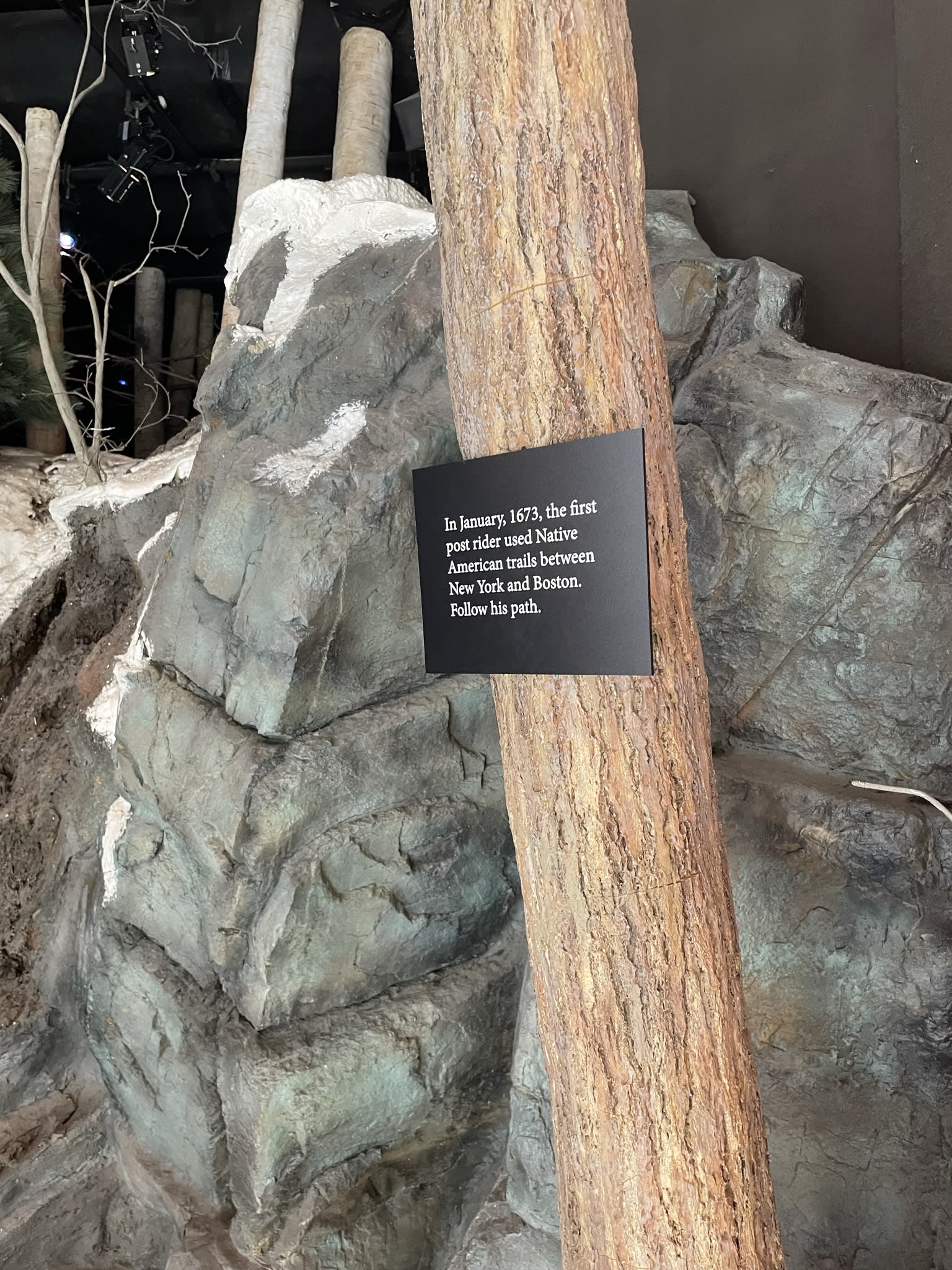
In Colonial America, mail was often brought to local taverns and inns which doubled as post offices. Local residents would gather to socialize and collect their mail- if there was any!
Newspaper collection
An astounding collection of newspapers - some of them from momentous historical events.


My favourite stamps!!
Of course, if there is something you can find here is stamps!
[carousel]
 *A Looney Tunes collection was issued in 1997 - link *
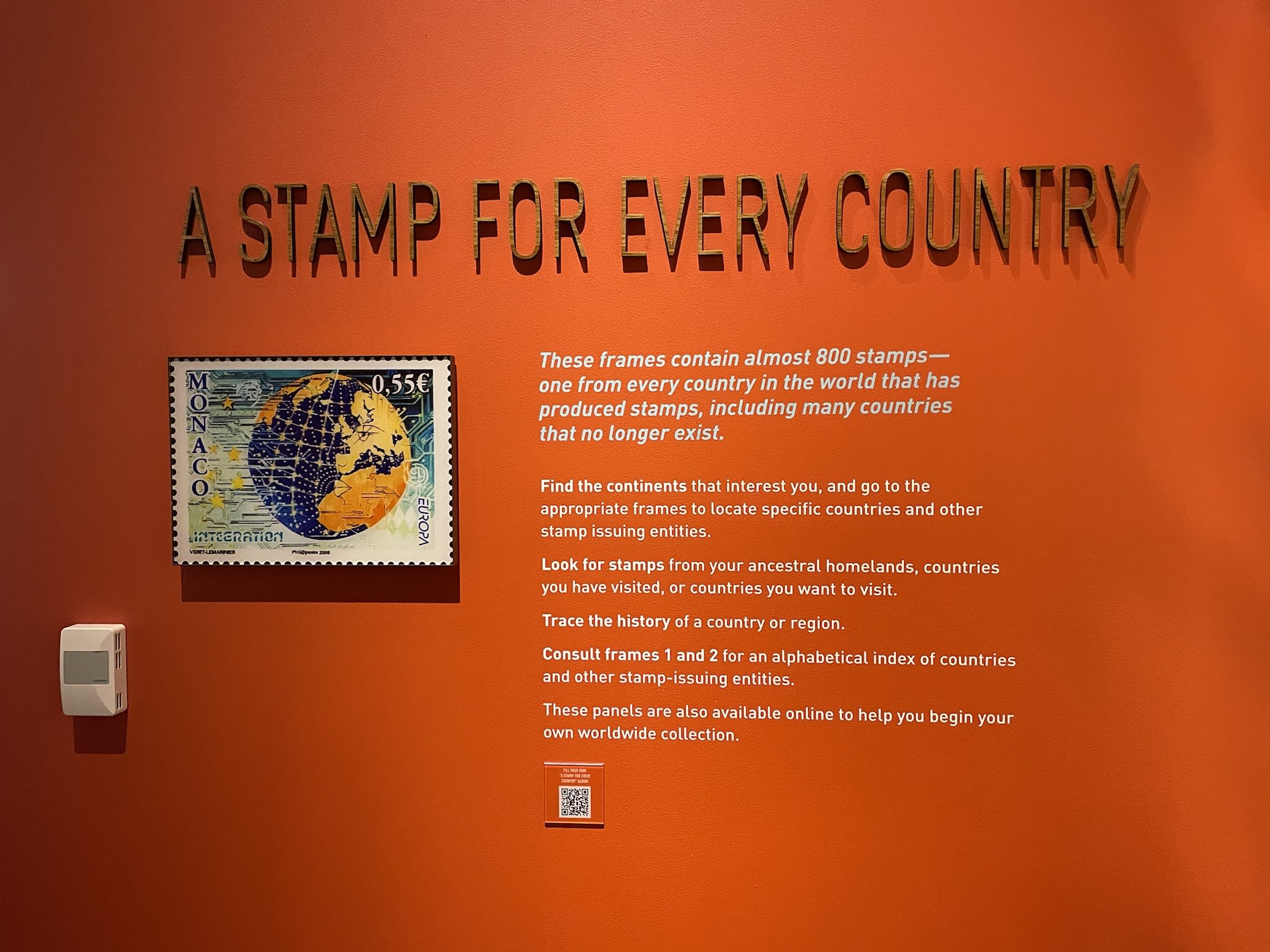 Astounding collection with stamps from every country!
 1847, USA

[/carousel]
The Bond of the Scattered Family
In the 1880s and 1890s, immigrants poured into U.S. cities, thousands of miles from family and friends. Letters became their only link with their past lives. In 1889 alone, nearly a billion letters and postcards were exchanged between Europe and America, 22 times the correspondence between the two continents during the Civil War. Letters connected them to the people and ways of life they had left behind. They enabled parents to follow their children and grandchildren as thes++e new American generations became a more important part of the family.
What did recent immigrants and their families back home think of life in the new country? Their letters reveal the hopes and fears, tragedy and triumph, eagerly sought and shared with other relatives and friends, sustaining family ties across continents and oceans.
[carousel]


[/carousel]
Other highlights
[carousel]
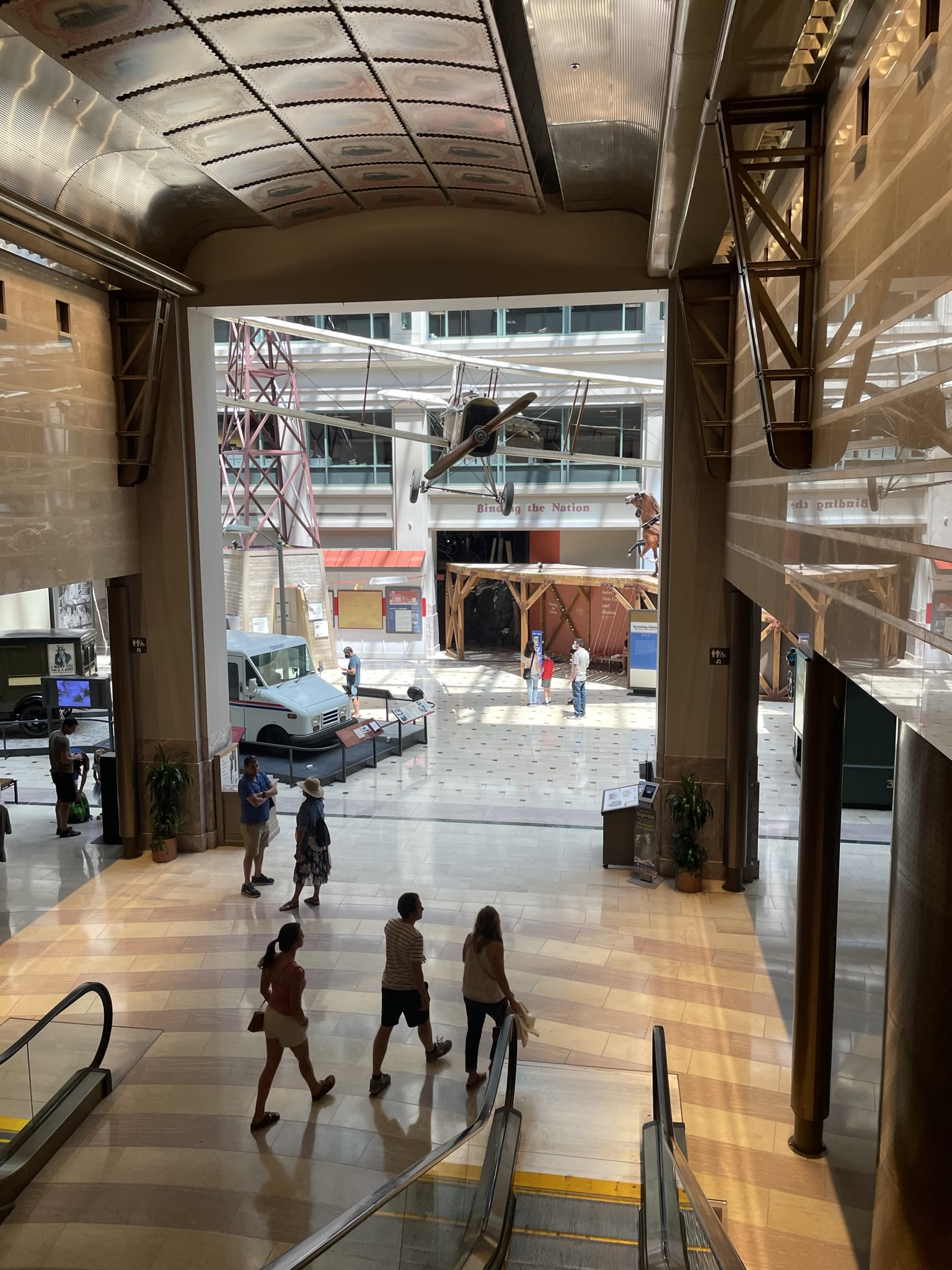 The museum showcases the history of postal service across the times. It feels like time traveling.


[/carousel]
Last but not least, there was a room full of stamps that you could take home for free - You were allowed to put ~10 stamps max in an envelope per person. I spent a while putting together a bunch for my grandpa.
The National Gallery
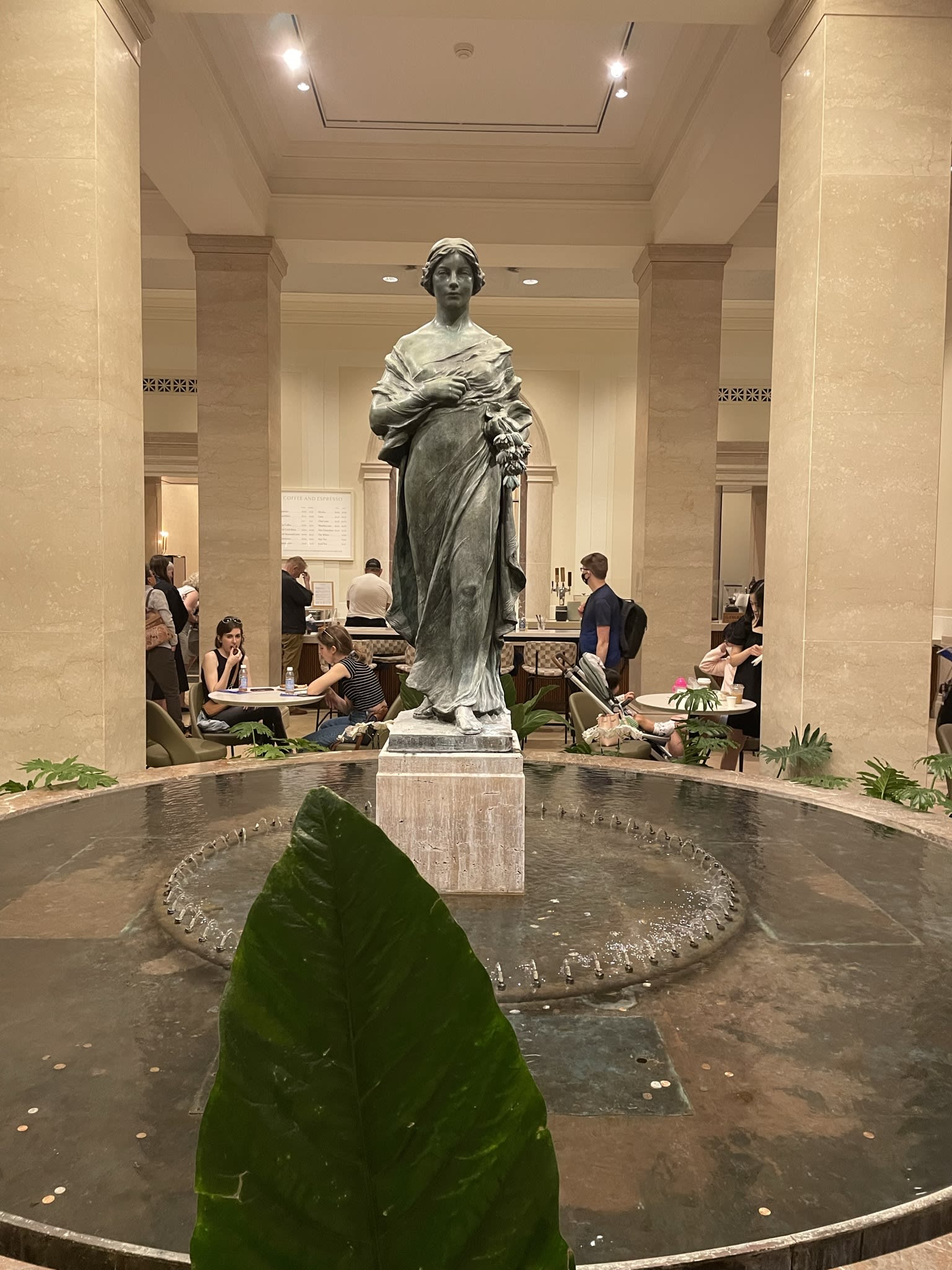
The second museum I visited in depth was The National Gallery of Art. Here are my highlights:
[carousel]
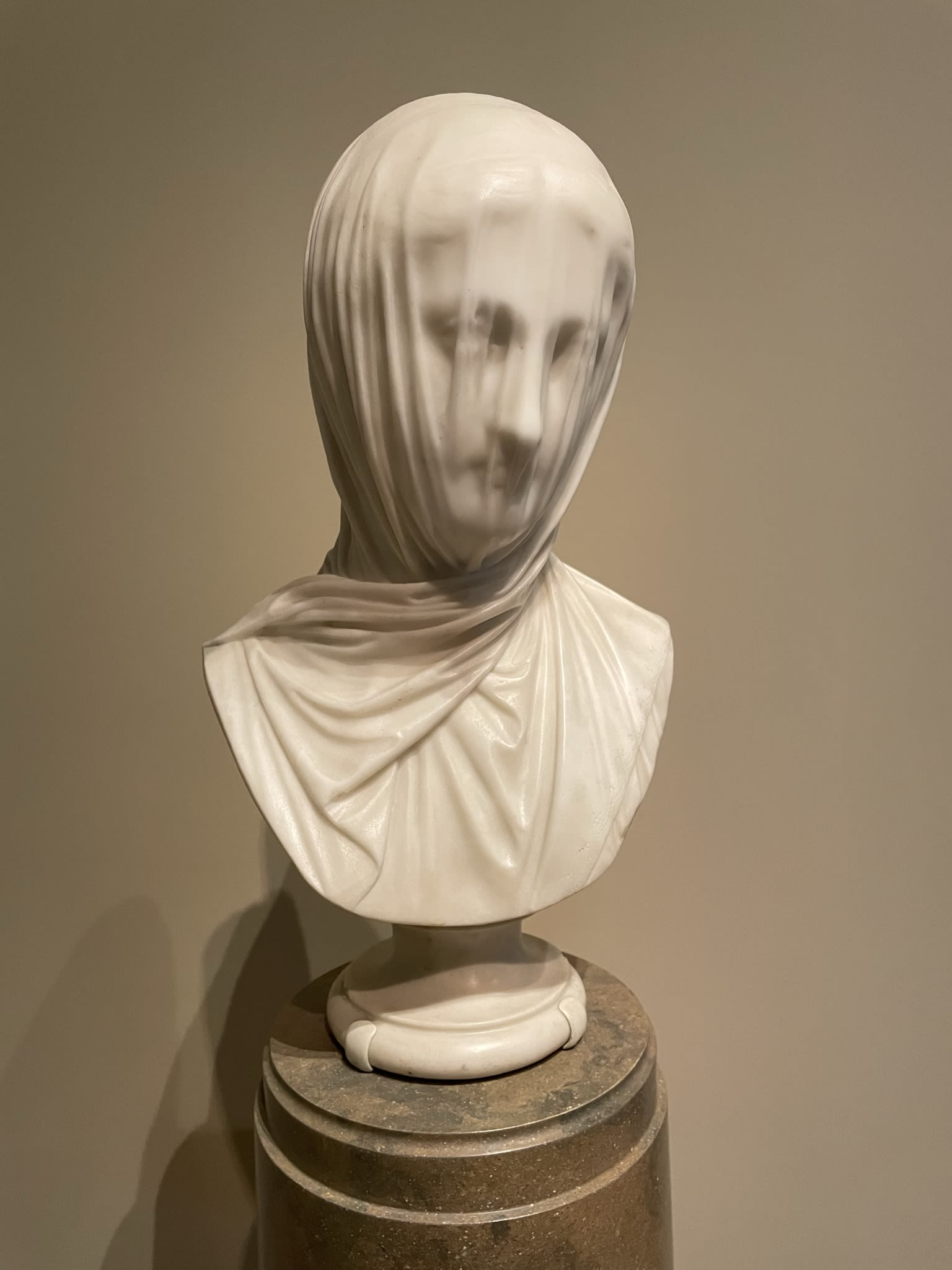 The Veiled Nun - c1863, Italian


[/carousel]
[carousel]
 “Four Seasons in One Head” - c1590, by Italian Giuseppe Arcimboldo. This looks very much like a fantasy roleplay portrait
 The sinking fleet of Selecus - 1532, Italian.
 The Square of St Mark’s, Venice - Canaletto, c1742. The artwork, created for wealthy Grand Tour visitors, captures the light and atmosphere of the piazza, with architectural elements like the Basilica di San Marco and the Campanile
[/carousel]
Note: The Grand Tour was a traditional trip through Europe, especially popular from the 16th to the 18th centuries, that young European aristocrats—mainly men—undertook as a kind of finishing education. Its purpose was to expose them to art, culture, history, and the classical heritage of Europe, particularly Italy, France, and sometimes Greece.
[carousel]
 Memorial to Admiral Sir Clowdisley Shovell - 1725, Sebastiano Ricci. Shortly before 1722, Owen McSwiny, a bankrupt Irishman who had settled in Italy to escape his creditors, commissioned twenty-four large canvases from prominent Venetian and Bolognese painters as a commercial venture. By profession a theater impresario, he concocted this series of allegorical monuments commemorating recently deceased British monarchs and aristocrats, hoping that their wealthy heirs might purchase the works. McSwiny’s “Tombs,” as they came to be called, proved to be unintelligible; no one, not even the artists who painted them, ever had a clear notion of what the pictures represented. This ornate and fanciful memorial, for example, alludes only vaguely to the subject’s naval career. The admiral himself does not appear, nor does the shield in the right foreground bear his exact coat-of-arms. Only the fountain hints at the maritime theme with its ancient ships’ prows and rudders, statues of tritons riding dolphins, and a bas-relief of Neptune, god of the sea.
 Interior of St Peter’s, Rome. Giovanni Paolo Panini, 1754.
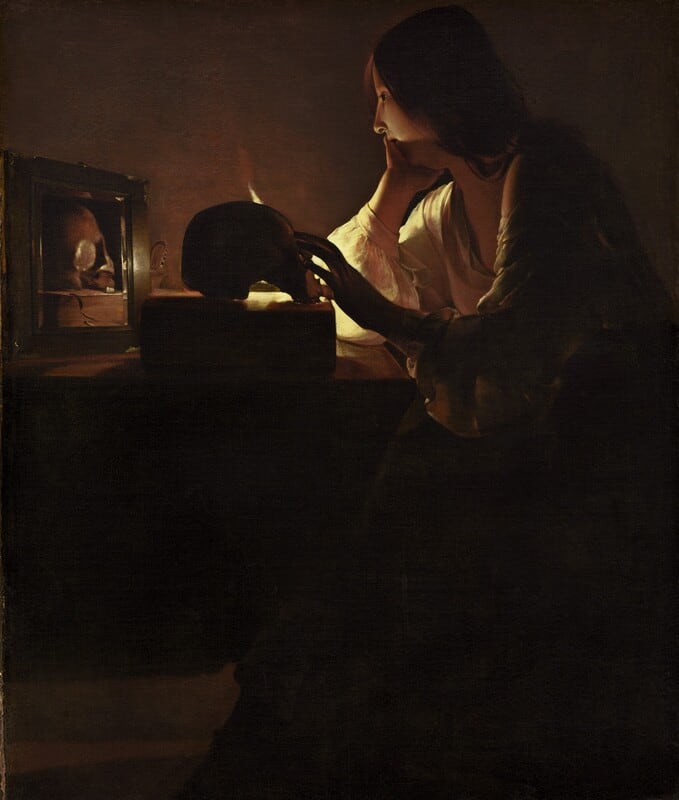 The Repentant Magdalen, c1635 - According to the tenets of the 17th–century Catholic church, Mary Magdalene was an example of the repentant sinner and consequently a symbol of the Sacrament of Penance. According to legend, Mary led a dissolute life until her sister Martha persuaded her to listen to Jesus Christ. She became one of Christ’s most devoted followers and he absolved her of her former sins.
[/carousel]
[carousel]
 “Ships in Distress off a Rocky Coast” (1667) by Ludolf Backhuysen is a dramatic Dutch Golden Age seascape depicting several ships struggling against a turbulent, stormy sea near jagged rocks. The painting captures the power and unpredictability of nature, with crashing waves and dark, brooding skies creating a sense of tension and danger. Backhuysen’s precise rendering of the ships and the dynamic movement of the water highlights both technical skill and emotional intensity, reflecting the Netherlands’ maritime culture and the perils faced by sailors in the 17th century
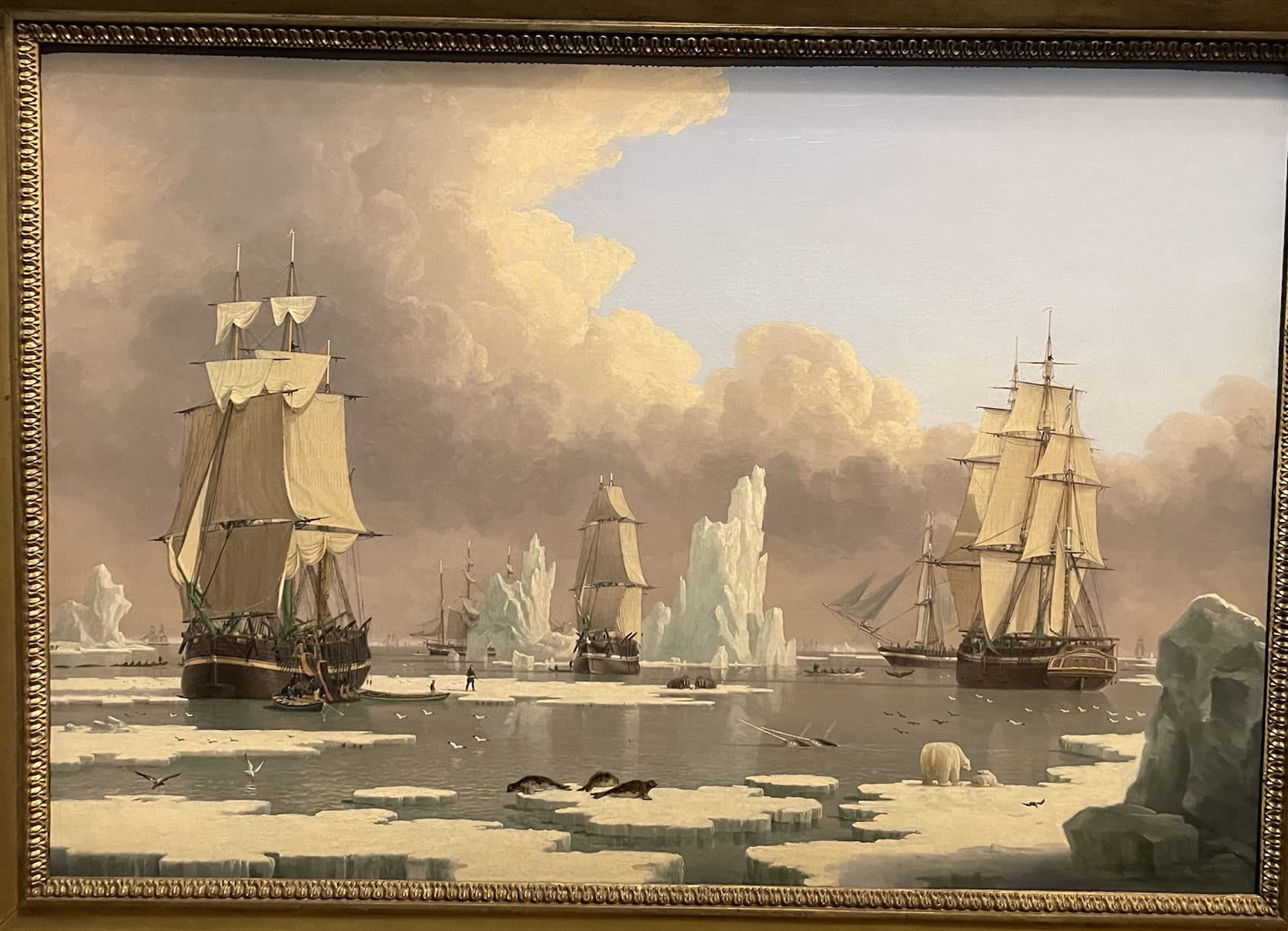 “The Northern Whale Fishery” by John Ward of Hull is a British painting depicting the whaling industry, which was an important part of Britain’s maritime economy in the 18th and 19th centuries. Arctic seas.
[/carousel]
The US Capitol, The National Mall and The White House
Last time I visited I booked a proper Capitol tour, and even attended a congress session. This time though it was already closing, and I only admired it from afar. It’s so beautiful!

A little more on DC. The city was built specifically to be the capital of the US, a deliberate act to establish a permanent seat of government that was distinct from any single state.
In the early years of the United States, the location of the nation’s capital was a point of major contention. Several cities, including Philadelphia, New York City, and Baltimore, served as temporary capitals. The decision to create a new federal city was born out of a famous political compromise in 1790 between Alexander Hamilton, Thomas Jefferson, and James Madison.
President Washington chose a site on land ceded by Maryland and Virginia. He envisioned a grand capital that would be a symbol of the new nation. To bring this vision to life, he appointed Pierre Charles L’Enfant, a French-American military engineer, to design the city in 1791.
L’Enfant’s plan was ambitious, featuring a grid system intersected by diagonal avenues, creating open spaces for monuments and federal buildings. His design laid the groundwork for the city’s iconic layout, including the placement of the Capitol Building on a prominent hill and the President’s House (now the White House).
 L’Enfant-Ellicott map of Washington, 1792
It took about a decade for Washington D.C. to become a functional capital, and the Capitol building was one of the very first projects and a priority from the very beginning.

DC’s National Mall was part of the city’s original plan, and it’s a pleasure to walk around it:
 View of the National Archives from the National Mall
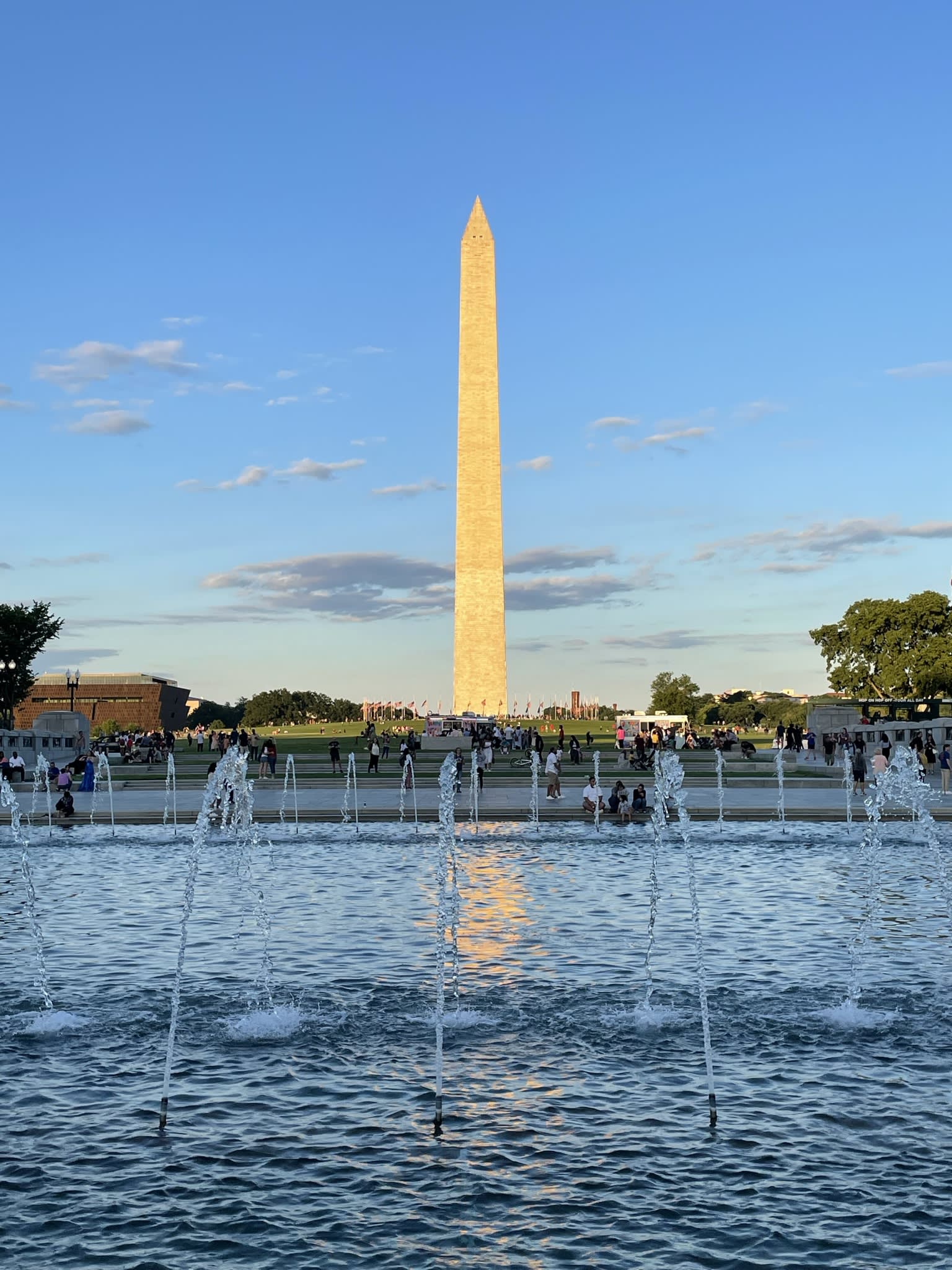
In the late afternoon, when all the museums had already closed, I enjoyed a beautiful walk around the west part of the National Mall, where you can find large green parks, scenic monuments, fountains and a huge reflective pool. I remember excellent weather, loads of young people and good vibes.
 Washington’s Monument
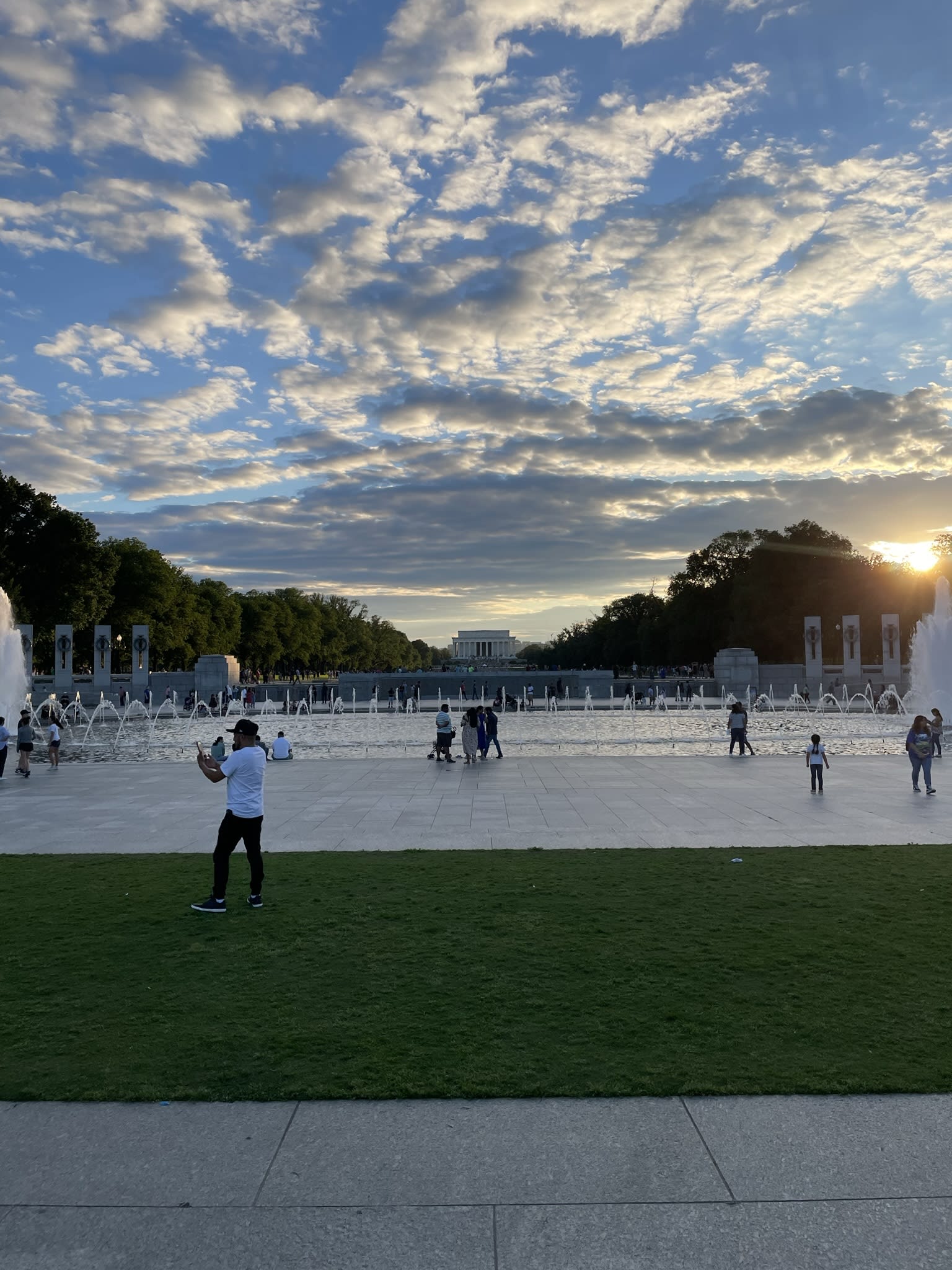 WW2 memorial
 The White House, always crowded, can only be seen from afar
The Natural History Museum
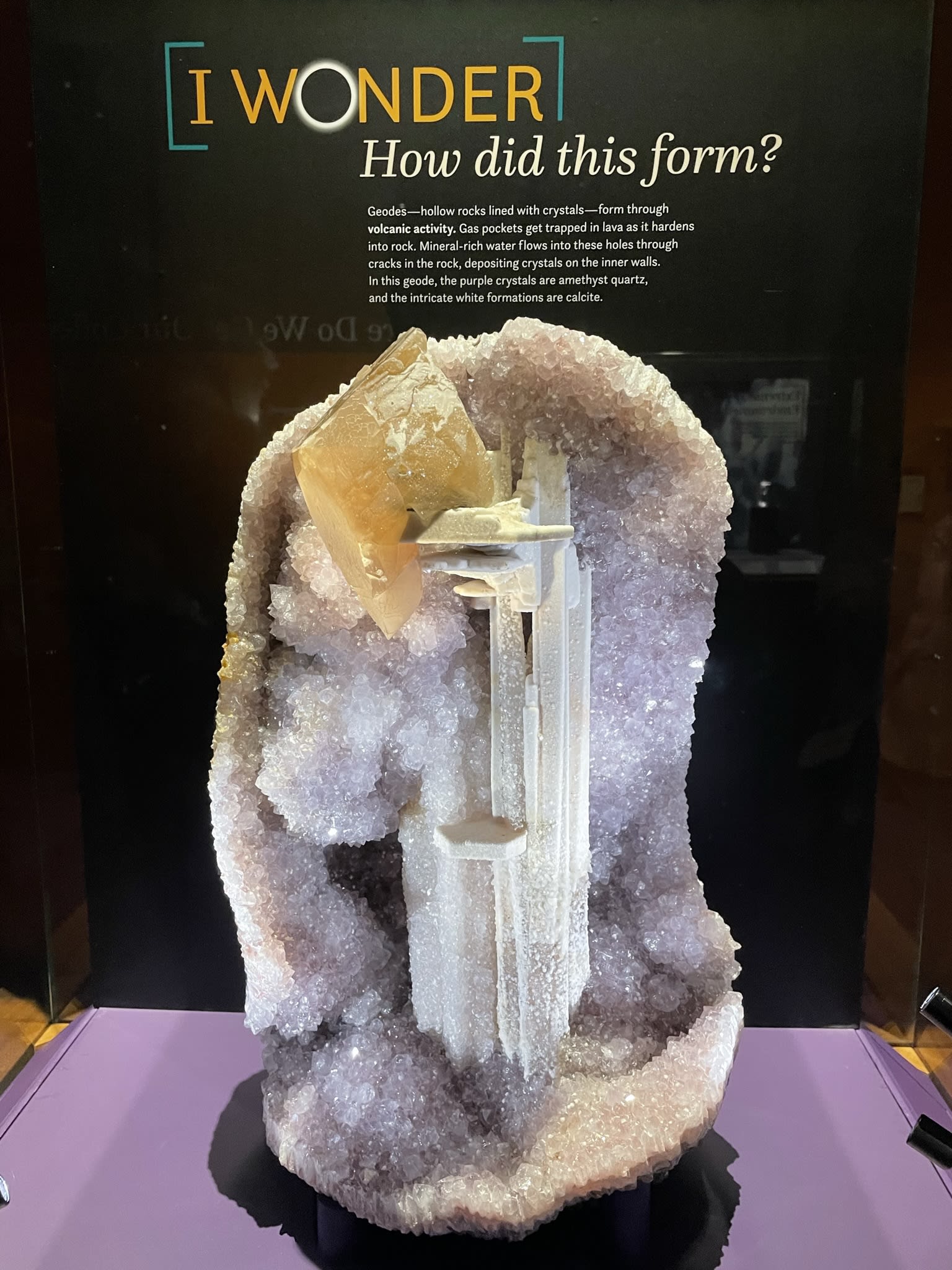
I dedicated my last morning on the 29th to the NHM, yet another of the Smithsonian Museums. Being a science nerd, I love all the exhibits, but here I’ll try to show my highlights
[carousel]
 *This graph is great. It puts into perspective how little time life as we know it has been around in Earth *
 *Earth’s atmosphere through time. The Great Oxidation Event (~2.4 B year ago) was when photosynthetic microbes flooded Earth’s atmosphere with oxygen for the first time, transforming the planet from an anaerobic to an aerobic world. *

[/carousel]
[carousel]
 This one is amazing, a Burgess Shale slab. Here we can see what ancient life forms, whose fossils are definitely not preserved, looked like.
 Again, perspective. How insignificant we humans are!
[/carousel]
Itinerary

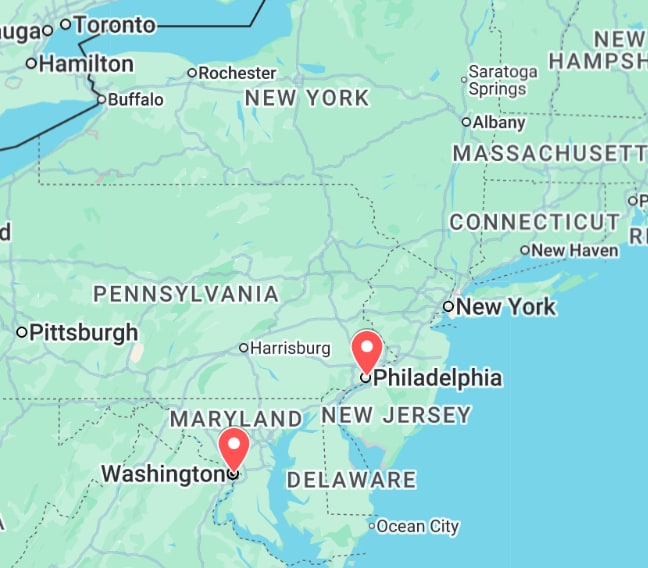
- May 22: Flew London -> PHL. Sightseeing Philly ; Liberty Hall
- May 23-27: ICRA conference and sightseeing in the evenings.
- May 28: Day trip to DC
- May 29: Half day in DC, train back to Philly and flight back to London
Random memories
- I stayed a fancy hotel, since this was a company trip: the Sheraton Philadelphia Downtown. One day, late at night, I was starving so I had the terrible idea to go down to a convenience store to buy a snack. My phone’s battery ran out, and I could not remember the way back, since I am very google maps dependent. I walked around for about an hour until I managed to see the S in a skyscraper: the hotel.
- It was in this trip that I became a fan of Starbucks. I used to dislike coffee, but I started to drink Caramel Macchiato daily here. Ultimately this led to me liking coffee more and more, and today being a must every morning.
- Philly was pretty boring but DC was fabulous, the museums are gorgeous and free, and the evening I spent in the park I remember a very youthful, lively atmosphere that was contagious.
- This trip was very momentous from a professional perspective. I realised I had to refocus my career towards AI, since literally 80% of the papers and the general trend was towards “let’s use ML to try to solve every task we have”. And this was BEFORE the explosion of LLMs!
Final Thoughts
I would not go back to Philly, I would not have visited at all had it not been for this conference. I would absolutely revisit DC though, it’s a wonderful city and I still have many museums I have not been to. DC is the ultimate museum geek destination!